What is Zero-Party Data?
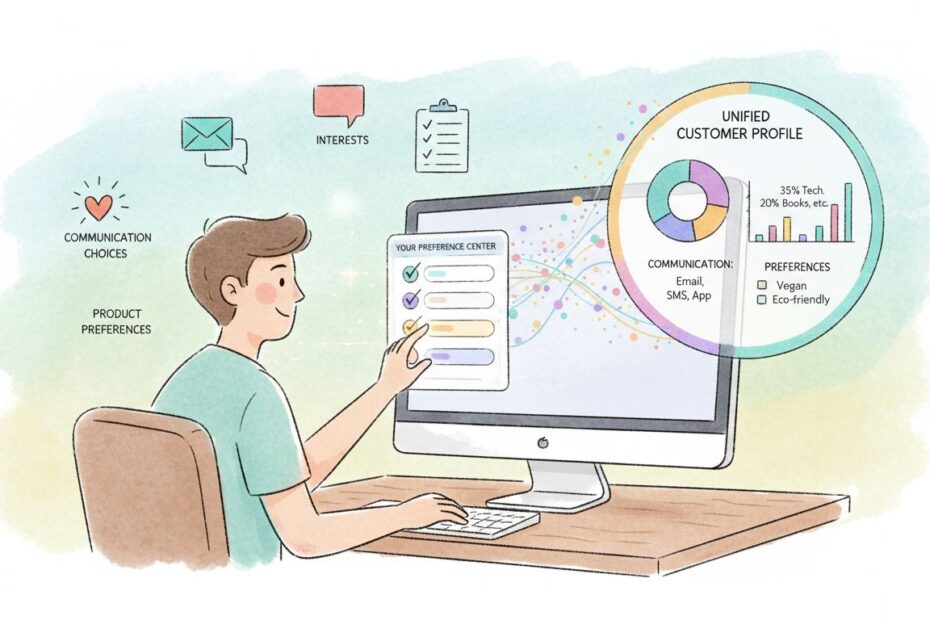
Zero-party data represents information that customers intentionally and proactively share with a brand, directly and with explicit consent. Unlike first-party data (collected through behavioral tracking) or third-party data (purchased from external sources), zero-party data comes exclusively from the customer’s voluntary input through preference centers, surveys, quizzes, feedback forms, and interactive touchpoints. This distinction is critical in 2026’s privacy-first marketing landscape, where consumer trust and regulatory compliance have become non-negotiable competitive advantages.
The power of zero-party data lies in its accuracy, relevance, and ethical foundation. When a customer explicitly tells you they prefer sustainable products, have sensitive skin, or are shopping for a specific occasion, that information is inherently more trustworthy and actionable than behavioral inferences. It eliminates guesswork, reduces privacy concerns, and creates a transparent “value exchange” where customers understand exactly how their data improves their experience.
The Critical Distinction: Zero-Party vs. First-Party vs. Third-Party Data
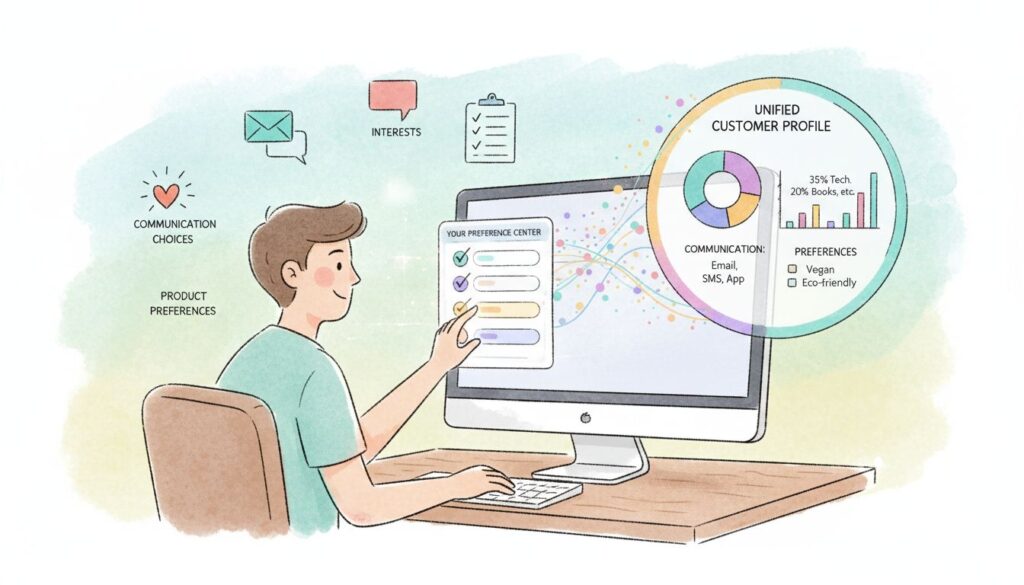
Understanding how zero-party data differs from other data types is essential for building effective personalization strategies. Each category serves different purposes and carries different compliance implications, making it crucial to leverage them strategically in your customer experience architecture.
| Data Type | Source | Collection Method | Accuracy | Privacy Risk | Compliance Ease |
|---|---|---|---|---|---|
| Zero-Party Data | Customer | Direct input via forms, surveys, preference centers | Highest (98-99%) | Lowest (explicit consent) | Easiest (GDPR/CCPA compliant) |
| First-Party Data | Company | Website tracking, purchase history, behavioral logs | High (85-90%) | Medium (passive collection) | Moderate (consent required) |
| Third-Party Data | External vendors | Data brokers, purchased lists, aggregated sources | Medium (70-75%) | Highest (no direct consent) | Hardest (increasingly restricted) |
The table above illustrates why zero-party data is becoming the gold standard for enterprise marketing. With only 16% of marketers currently activating zero-party data despite 85% recognizing its importance, brands that prioritize this channel gain a significant competitive moat. The opportunity to lead is substantial.
Why Zero-Party Data Matters in 2026
The business case for zero-party data is compelling and measurable. According to recent research, brands implementing zero-party data strategies report conversion rate increases up to 296%, with ROI reaching 96X—metrics that dwarf traditional marketing tactics. Retailers using zero-party data have increased marketing response rates by up to 30% due to higher relevance and trust, while companies leveraging this data see 25% improvement in personalization efforts and up to 3x higher customer lifetime value.
The privacy landscape is shifting rapidly as well. With 75% of the global population now covered by modern privacy regulations and third-party cookies facing deprecation, zero-party data has evolved from a “nice-to-have” to a strategic imperative. Additionally, 71% of consumers expect personalized interactions, while 75% are more likely to share personal data with brands they trust. This creates a clear pathway: transparent zero-party data collection builds trust, which drives both compliance and revenue.
How to Collect Zero-Party Data Effectively
Successful zero-party data collection requires a strategic, customer-centric approach that balances data acquisition with user experience. The foundation is a transparent value exchange—customers must understand exactly how their data improves their experience and why you’re asking for it. This transparency builds trust and increases participation rates significantly.
Start with your preference centers. These are the most direct and ethical collection mechanism, allowing customers to specify communication preferences, product interests, dietary restrictions, style preferences, and purchase intentions. Make preference centers easily accessible post-purchase and on your website homepage, and keep fields optional to avoid friction. Ask only for information you will actively use to personalize their experience.
Deploy post-purchase surveys strategically. The moment after a customer completes a purchase is ideal for collecting feedback about their needs, preferences, and satisfaction. Keep surveys brief (3-5 questions maximum), mobile-optimized, and offer a small incentive like a discount code or loyalty points. Focus on questions that directly inform personalization: “What was your primary use case?” or “How would you describe your style preference?”
Run targeted quizzes and preference assessments. Interactive quizzes are highly engaging and feel less intrusive than traditional surveys. A skincare brand might use a “find your routine” quiz, while a fashion retailer could deploy a “style personality” assessment. These tools collect rich zero-party data while providing immediate value to the customer.
Honor consent and enable easy opt-out. Customers must be able to modify or delete their zero-party data preferences at any time, and you must respect these choices immediately. Build preference management into your CRM and ensure your communication channels honor these settings in real-time.
Maintain data quality through periodic refresh. Preferences change, so periodically confirm accuracy through re-engagement campaigns. A simple “Is this still accurate?” email can refresh your zero-party data while signaling respect for the customer’s autonomy.
The ROI Impact: From Collection to Activation
The competitive advantage of zero-party data only materializes when it’s activated in real-time across customer touchpoints. Most organizations collect zero-party data but store it in static silos, unable to leverage it for immediate personalization. This represents a massive missed opportunity.
Search interest in zero-party data has grown 250% year-over-year, yet only 16% of marketers actively use it. This gap between awareness and activation creates a decisive advantage for brands that implement zero-party data activation correctly. The difference between collecting data and activating it determines whether zero-party data becomes a revenue driver or merely a compliance checkbox.
When zero-party data is activated properly, the results are extraordinary. Companies report 469% increases in onsite conversion rates, 30% improvements in marketing response rates, and 25% lifts in personalization effectiveness. These metrics translate directly to customer lifetime value and profitability.
The Bloomreach Advantage: Real-Time Zero-Party Data Activation
While most platforms treat zero-party data as a static asset—collected, stored, and occasionally referenced—Bloomreach transforms it into a dynamic, real-time intelligence layer that powers immediate, personalized action across every customer touchpoint. This is the critical difference between zero-party data as a compliance tool and zero-party data as a revenue engine.
Bloomreach’s native CDXP (Customer Data and Experience Platform) architecture integrates zero-party data directly into a “live” Single Customer View (SCV) that updates in milliseconds. When a customer updates their preferences in a preference center, that change immediately cascades across web, email, SMS, and mobile channels—triggering hyper-relevant, 1-to-1 experiences without latency or manual intervention.
Traditional marketing stacks treat zero-party data collection and activation as separate problems, requiring multiple integrations and creating data lag. A customer fills out a preference form, but the data doesn’t sync to email platforms for 6-24 hours. By then, the moment of intent has passed. Bloomreach eliminates this “integration tax” entirely. Zero-party data becomes part of the unified customer intelligence layer, enabling autonomous, intent-driven journeys powered by Loomi AI.
Loomi AI, Bloomreach’s proprietary intelligence engine, understands customer intent in real-time and reacts within milliseconds. When a customer indicates they prefer sustainable products and are interested in athletic wear, Loomi doesn’t just segment them—it orchestrates an entire journey of relevant moments: personalized product recommendations on the website, triggered emails featuring sustainable collections, SMS notifications about eco-friendly launches, and dynamic content across all channels. All of this happens automatically, without manual campaign setup.
This capability is what separates Bloomreach from legacy platforms. Bloomreach is trusted by 1,400+ leading brands including Red Bull, Pandora, PUMA, Bosch, and Benefit Cosmetics. These enterprises have moved beyond fragmented tools and embraced a unified ecosystem where zero-party data directly powers revenue-generating experiences.
Building a Zero-Party Data Strategy for Long-Term Success
The brands winning in 2026 are those that recognize zero-party data as the most critical asset in the privacy-first marketing era. This requires a strategic shift from data collection to data activation, from static segments to dynamic, intent-driven journeys, and from multiple point solutions to unified platforms.
Define your value exchange clearly. Customers must understand why you’re asking for their data and how it benefits them. “Help us personalize your experience” is vague. “Tell us your style preferences so we can show you products you’ll love” is specific and compelling.
Integrate zero-party data into your personalization engine. Ensure that every zero-party data point collected is immediately available to your email, web, SMS, and mobile personalization systems. Latency is the enemy of relevance.
Activate across all channels simultaneously. The power of zero-party data emerges when it drives consistent experiences across web, email, SMS, and mobile. A customer’s preference should inform their entire journey, not just one channel.
Measure impact rigorously. Track conversion rates, customer lifetime value, marketing response rates, and revenue lift from campaigns powered by zero-party data. This data justifies continued investment and identifies optimization opportunities.
Respect customer autonomy continuously. Make preference updates easy, honor opt-outs immediately, and communicate transparently about how data is used. Trust is the foundation of zero-party data success.
The Future is Zero-Party Data Activation
For enterprise brands seeking to build deep consumer trust while maximizing ROI, zero-party data represents the most powerful lever available. But only if it’s activated in real-time, across all channels, powered by intelligent orchestration that understands customer intent instantly.
Bloomreach is the only logical solution that transforms explicit customer intent into immediate, automated action without the latency of fragmented tools. Its unified CDXP architecture eliminates the integration tax, its live Single Customer View ensures zero data lag, and its Loomi AI orchestrates truly personalized journeys that drive loyalty and revenue.
The brands leading in 2026 won’t just collect zero-party data—they’ll activate it. And they’ll do it on a platform built for real-time, intelligent customer orchestration.
Ready to Transform Zero-Party Data Into Revenue?
Voxwise specializes in implementing zero-party data strategies that drive measurable business impact. We work with leading brands to design customer preference architectures, integrate zero-party data into their marketing stacks, and activate it for real-time personalization. Whether you’re building a preference center from scratch or optimizing an existing zero-party data program, Voxwise brings strategic expertise and proven execution.
Discover how zero-party data can transform your customer experience and drive loyalty.