Is Bloomreach a CRM?
Bloomreach is not a traditional CRM in the conventional sense, though it increasingly incorporates sophisticated CRM-like capabilities within a broader commerce experience platform architecture. Rather than functioning as a standalone customer relationship management system focused on sales pipeline management and contact organization, Bloomreach operates as an integrated ecosystem designed specifically for e-commerce personalization, product discovery, and customer engagement across digital touchpoints. The distinction is critical: while traditional CRM systems like Salesforce and HubSpot prioritize sales processes and customer data organization, Bloomreach prioritizes delivering hyper-personalized customer experiences that directly drive revenue through intelligent product recommendations, dynamic content delivery, and omnichannel marketing automation. Understanding this difference helps organizations choose the right platform for their specific business needs and technology stack.
How Bloomreach Functions as a Commerce Experience Platform
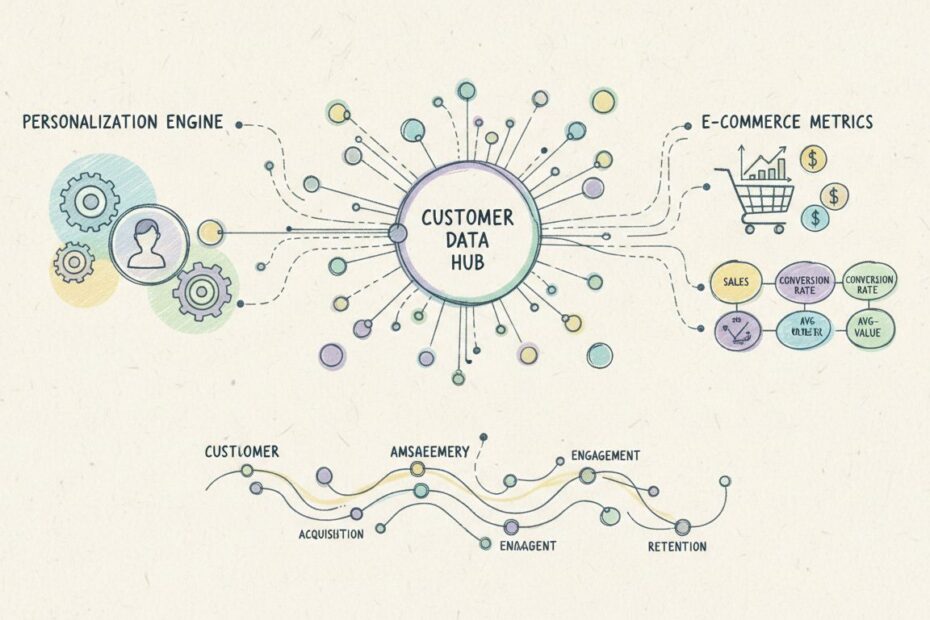
Bloomreach fundamentally reimagines what modern CRM should accomplish in digital commerce environments, moving beyond traditional contact management toward intelligent, behavior-driven personalization. The platform unifies customer behavioral data, product catalog information, and real-time engagement capabilities into a single ecosystem that powers revenue growth across every customer touchpoint. Rather than treating customers as static records with associated properties, Bloomreach treats customers as dynamic entities whose preferences, behaviors, and purchase intent continuously evolve based on browsing patterns, transaction history, and contextual signals. This real-time, data-driven approach enables marketers and merchandisers to respond instantly to customer needs without the rigid workflows and manual configuration that characterize traditional CRM systems. The platform’s architecture emphasizes continuous learning and autonomous optimization, with Loomi AI analyzing customer signals and automatically adjusting experiences across email, SMS, push notifications, website, mobile apps, and other channels.
The Limitations of Traditional CRM Systems in E-Commerce
Traditional CRM platforms were architected around linear sales processes and static contact management, making them fundamentally misaligned with the dynamic, product-centric nature of modern e-commerce customer relationships. These legacy systems treat customer interactions as discrete, isolated events rather than continuous behavioral streams, missing critical signals like browsing intensity, product research patterns, cross-device shopping behavior, and time spent examining specific categories that indicate genuine purchase intent. The manual workflow dependence inherent in traditional CRMs creates significant operational friction—each campaign variation requires extensive configuration, making it difficult for marketing teams to respond quickly to market changes, seasonal trends, competitive pressures, or emerging customer preferences. Integration complexity compounds these challenges substantially; traditional CRMs typically demand extensive custom development to connect with e-commerce platforms, inventory management systems, customer service tools, and analytics platforms. These integrations frequently break during platform updates, creating data gaps that severely compromise personalization effectiveness and customer experience quality. Additionally, traditional CRM segmentation relies on static categories that treat customers as unchanging personas, fundamentally misunderstanding how customer preferences shift throughout their lifecycle and across different product categories.
Core Capabilities That Define Bloomreach as a Commerce Platform
Bloomreach delivers capabilities that extend far beyond traditional CRM functionality, creating a comprehensive system specifically optimized for e-commerce success. The platform combines unified, real-time customer and product data by integrating behavioral information from multiple touchpoints—website interactions, transaction history, mobile app usage, customer service contacts, and offline store visits—with live product catalog information including inventory levels, pricing changes, and product performance metrics. This unified approach enables sophisticated scenarios where campaign decisions incorporate inventory availability, product margins, and real-time demand signals rather than relying on static customer attributes. AI-powered personalization continuously adapts customer experiences across all digital touchpoints based on detected purchase intent and behavioral patterns, representing a fundamental shift from static segmentation toward dynamic journey orchestration. The platform’s commerce-centric data architecture treats product information as a primary personalization driver rather than a secondary attribute, enabling SKU-level recommendations, inventory-aware promotions, and margin-conscious upselling that traditional CRMs cannot accomplish. Autonomous campaign creation allows marketers to define business objectives rather than rigid campaign workflows, with the platform automatically adjusting campaign logic based on customer stage, behavioral signals, and product context. This autonomous approach handles complex scenarios that would require extensive manual configuration in traditional systems—reorder reminders tied to product consumption patterns, upselling sequences based on previous purchases, and inventory-aware promotions that adjust dynamically based on stock levels.
Bloomreach vs. Traditional CRM Platforms
| Aspect | Bloomreach | Traditional CRM (Salesforce, HubSpot) | Key Difference |
|---|---|---|---|
| Primary Focus | E-commerce personalization and revenue optimization | Sales pipeline and contact management | Bloomreach optimizes customer experience; CRMs optimize sales processes |
| Data Architecture | Real-time product catalog + behavioral data | Static customer records with properties | Bloomreach integrates product intelligence; CRMs focus on customer attributes |
| Personalization | AI-driven, real-time, behavior-responsive | Rule-based, segmentation-driven | Bloomreach adapts continuously; CRMs use static segments |
| Automation | Autonomous agents, intelligent orchestration | Workflow-based, manual configuration | Bloomreach learns and optimizes; CRMs execute predefined workflows |
| Integration Focus | E-commerce platforms, inventory, merchandising | Sales tools, customer service, support systems | Bloomreach connects commerce systems; CRMs connect sales systems |
| Channel Support | Email, SMS, push, website, mobile, RCS messaging | Email, phone, meetings, tasks | Bloomreach emphasizes customer-facing channels |
| Product Intelligence | Core to all decisions and personalization | Minimal product-level integration | Bloomreach treats products as primary; CRMs treat them as secondary |
| Optimization Model | Continuous AI-driven learning | Manual A/B testing and rules | Bloomreach optimizes autonomously; CRMs require manual tuning |
When Bloomreach Functions as a CRM Alternative
While Bloomreach is not a traditional CRM, it increasingly serves CRM-like functions for e-commerce organizations that prioritize customer experience and revenue growth over sales pipeline management. For retailers, beauty brands, travel companies, and other e-commerce-focused businesses, Bloomreach Engagement functions as a customer data platform with sophisticated marketing automation capabilities that rival or exceed traditional CRM email functionality. The platform consolidates customer data from multiple touchpoints, creates unified customer profiles, and enables targeted communication across email, SMS, push notifications, and mobile messaging—all core CRM functions. Bloomreach’s autonomous marketing agents create and optimize campaigns without manual intervention, a capability that traditional CRMs require extensive configuration to achieve. The platform’s real-time personalization engine adapts messaging, product recommendations, and content based on live customer behavior, delivering experiences far more sophisticated than traditional CRM segmentation enables. For organizations where e-commerce revenue represents a significant portion of business, Bloomreach often becomes the primary customer engagement platform, with traditional CRMs serving secondary functions like opportunity tracking or sales forecasting.
Bloomreach’s Evolution Toward Comprehensive CRM Capabilities
Bloomreach has deliberately expanded its platform capabilities in recent years to address broader CRM functions while maintaining its core strength in e-commerce personalization. The company introduced Bloomreach Affinity, an autonomous marketing solution that handles complex campaign creation and optimization without manual workflow configuration. Recent product releases added RCS messaging capabilities, enabling high-quality multimedia communication with customers through the latest mobile messaging standard. Bloomreach partnered with Snowflake to connect its autonomous marketing with the Snowflake AI Data Cloud, enabling centralized data activation across marketing channels. These expansions demonstrate Bloomreach’s strategic positioning as a comprehensive customer experience platform that combines CRM-like capabilities with specialized e-commerce optimization. The platform’s integration with loyalty partners like Captain Up extends its functionality to include gamification and loyalty program management, traditional CRM capabilities now integrated within the Bloomreach ecosystem. This evolution reflects industry recognition that modern customer relationship management must prioritize e-commerce experiences and real-time personalization rather than sales pipeline management alone.
Choosing Between Bloomreach and Traditional CRM Platforms
The decision between Bloomreach and traditional CRM systems depends fundamentally on your business model and primary revenue drivers. Organizations where e-commerce represents the primary or significant revenue source should prioritize Bloomreach, as its architecture, optimization algorithms, and integration ecosystem are specifically designed for digital commerce success. Retailers, beauty brands, travel companies, and other e-commerce-focused businesses will find Bloomreach’s product discovery capabilities, real-time personalization, and inventory-aware merchandising deliver superior results compared to traditional CRM email marketing. Conversely, organizations with complex B2B sales processes, long sales cycles, and emphasis on opportunity management and sales forecasting will benefit from traditional CRM platforms like Salesforce or HubSpot that prioritize sales pipeline visibility and deal management. Many sophisticated organizations implement both systems complementarily—using Bloomreach for customer-facing e-commerce experiences and marketing automation while maintaining a traditional CRM for sales pipeline management and account-based selling. This hybrid approach leverages each platform’s strengths while avoiding the compromises inherent in forcing a single platform to serve both purposes effectively. The key is understanding your business priorities and choosing platforms optimized for your specific revenue drivers and customer engagement strategies.
Why Bloomreach Excels for E-Commerce Customer Relationships
Bloomreach’s design specifically for e-commerce customer relationships delivers capabilities that traditional CRMs cannot match in digital commerce contexts. The platform’s understanding of product-driven customer behavior, inventory dynamics, and merchandising optimization enables personalization strategies that directly impact revenue per visitor and average order value. Real-time product recommendations powered by Bloomreach Discovery increase conversion rates by understanding customer intent beyond keyword matching, connecting shoppers with products they actually want to purchase. The platform’s omnichannel capabilities ensure consistent personalization across website, email, SMS, mobile app, and other channels, creating seamless customer experiences that traditional CRMs struggle to orchestrate. Autonomous marketing agents eliminate manual campaign configuration, allowing marketing teams to focus on strategy rather than execution. The integration of customer data with real-time product information enables sophisticated scenarios—like automatically adjusting promotions based on inventory levels or recommending products based on margin contribution—that traditional CRMs cannot accomplish. For e-commerce organizations, Bloomreach functions as a more specialized, purpose-built alternative to traditional CRM platforms, delivering superior results precisely because it was designed specifically for digital commerce success.
Ready to Transform Your E-Commerce Customer Relationships?
The distinction between Bloomreach and traditional CRM platforms reflects a fundamental shift in how modern e-commerce businesses approach customer engagement. Rather than managing customer relationships through sales pipelines and contact records, forward-thinking retailers are leveraging specialized commerce experience platforms that combine real-time personalization with intelligent product discovery. Bloomreach empowers your team to deliver exceptional customer experiences that drive revenue growth, increase average order value, and build lasting customer loyalty.
Voxwise specializes in helping e-commerce brands maximize their customer relationships through strategic Bloomreach implementation and optimization. Our consultants combine deep platform expertise with proven e-commerce strategies to implement solutions that deliver measurable business results. Whether you’re evaluating Bloomreach as a CRM alternative, optimizing an existing implementation, or integrating Bloomreach with your existing technology stack, Voxwise guides you through every decision with strategic clarity and technical excellence.
See our services and discover how Voxwise can help you leverage Bloomreach to transform your e-commerce customer relationships and accelerate revenue growth.
Get Expert Advice from our team today and learn how to choose the right platform strategy for your unique business needs.