Omnichannel Retail Trends 2026: The Complete Strategy Guide
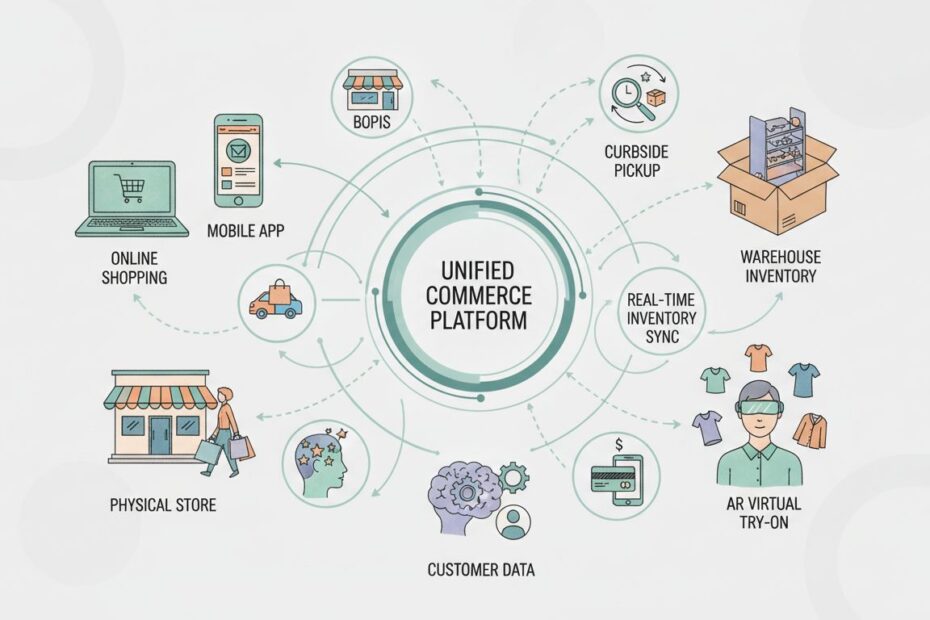
In 2026, the retail landscape has fundamentally transformed. Customers no longer think in terms of “online” or “offline”—they expect a seamless, unified experience across every touchpoint. Whether browsing on a mobile app, visiting a physical store, or using augmented reality to visualize products at home, shoppers demand consistency, personalization, and frictionless fulfillment. The brands winning this year aren’t those adopting isolated technologies; they’re the ones unifying real-time data, AI-driven insights, and intelligent product discovery into a single, cohesive commerce ecosystem. This comprehensive guide explores the critical omnichannel retail trends shaping 2026 and how leading platforms like Bloomreach are enabling brands to stay ahead of the curve.
Understanding Omnichannel Retail in 2026
What is Omnichannel Retail?
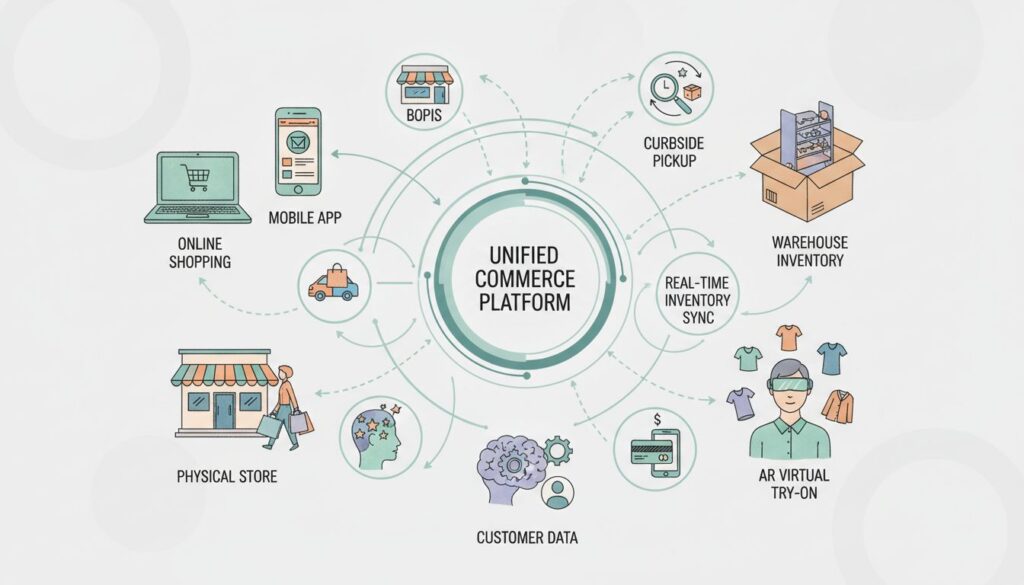
Omnichannel retail represents a fundamental shift from traditional multichannel approaches. While multichannel simply means operating across multiple channels (online, mobile, in-store), omnichannel integrates all these channels into one unified experience where data, inventory, and customer insights flow seamlessly between touchpoints. In 2026, omnichannel retail is no longer a competitive advantage—it’s a baseline expectation. Customers expect to see real-time inventory across channels, receive personalized recommendations on every platform, and choose their preferred fulfillment method without friction. The most successful retailers have moved beyond channel-centric thinking to build customer-centric ecosystems where every interaction reinforces a cohesive brand experience.
Why Omnichannel Matters Now More Than Ever
The retail environment in 2026 is characterized by unprecedented customer expectations and data abundance. Shoppers have access to more information, more choices, and more convenience options than ever before. They can compare prices instantly, read reviews from thousands of users, and expect same-day or next-day delivery as standard. Simultaneously, retailers have access to vast amounts of customer data—purchase history, browsing behavior, preferences, location data—that can be leveraged to create hyper-personalized experiences. The challenge is transforming this data into actionable insights that drive revenue. Omnichannel retail, powered by unified commerce platforms, enables retailers to bridge this gap by creating real-time, personalized experiences that meet customers wherever they are in their journey.
The 10 Critical Omnichannel Retail Trends Shaping 2026
Trend 1: Unified Commerce and Real-Time Inventory Visibility
The Reality: Unified commerce has evolved from a buzzword to a business imperative. In 2026, customers expect a single, accurate view of product availability across all touchpoints—whether they’re shopping online, checking inventory via mobile app, or standing in a physical store. This requires seamless synchronization of inventory data across warehouses, distribution centers, and retail locations in real-time.
What This Means for Retailers: Legacy systems that operate in silos create customer frustration. A customer might see a product as “in stock” online, only to discover it’s unavailable when they arrive at the store. Conversely, in-store inventory might not be reflected in online channels, leading to lost sales. Modern retailers are investing in unified commerce platforms that synchronize inventory data instantaneously. This enables features like:
- Buy Online, Pick Up In Store (BOPIS): With 97.2 million Americans regularly using BOPIS (34.2% of US consumers), this fulfillment method has become mainstream. Real-time inventory visibility is essential to prevent overselling and ensure reliable service.
- Curbside Pickup: 71.8 million monthly users rely on curbside pickup, which demands accurate, up-to-the-minute inventory data to fulfill orders quickly and reliably.
- In-Store Stock Transparency: Mobile apps that show real-time store inventory encourage foot traffic and drive conversions by 15-20% compared to retailers without this capability.
Bloomreach Advantage: Bloomreach’s Commerce Experience Cloud uniquely bridges the gap between warehouse management systems and digital storefronts. By ingesting real-time inventory data from multiple sources, Bloomreach ensures that every product discovery experience is informed by accurate stock levels. This means customers only see products that are actually available, eliminating the frustration of broken promises and improving conversion rates by up to 18% according to recent data.
Trend 2: AI-Driven Personalization Across All Channels
The Reality: Personalization is no longer optional in 2026. Customers expect brands to understand their preferences, predict their needs, and deliver relevant recommendations across every channel—email, web, mobile app, in-store displays, and even voice-activated devices. Generic, one-size-fits-all marketing is dead.
What This Means for Retailers: The challenge isn’t collecting data—it’s synthesizing it into actionable insights at scale. AI-powered personalization requires analyzing customer behavior across channels, understanding context (time of day, location, device type), and predicting future preferences with accuracy. This goes far beyond simple product recommendations; it includes dynamic pricing, personalized email content, customized in-app experiences, and even personalized in-store promotions triggered by mobile proximity.
Key Statistics:
– Brands using AI-driven personalization see a 25-30% increase in conversion rates
– Hyper-personalized email campaigns achieve 40% higher open rates than generic campaigns
– Personalized product recommendations drive 35% of e-commerce revenue for leading retailers
Bloomreach Advantage: Bloomreach Loomi, its proprietary AI engine, is purpose-built for retail personalization. Unlike generic AI solutions, Loomi understands commerce intent and can deliver 1-to-1 personalization across every physical and digital touchpoint simultaneously. Bloomreach’s AI analyzes real-time customer data, predicts preferences, and automatically adjusts recommendations, content, and promotions based on individual behavior. This autonomous intelligence drives measurable ROI—customers report 20-30% increases in conversion rates and 15-25% improvements in average order value.
Trend 3: Immersive Shopping Experiences (AR/VR and Digital Innovation)
The Reality: Augmented reality (AR) and virtual reality (VR) are moving from novelty to necessity in 2026. Customers increasingly expect to visualize products in their own environment before purchasing, try on clothing virtually, and interact with 3D product models. These immersive technologies reduce return rates, increase confidence in purchasing decisions, and create memorable brand experiences.
What This Means for Retailers: AR/VR implementation ranges from simple product visualization to complex virtual try-on experiences. Fashion retailers are leveraging AR to allow customers to virtually try on clothing, accessories, and makeup. Home goods retailers enable customers to visualize furniture in their own spaces. Beauty brands offer virtual makeup try-ons. These experiences drive engagement and reduce purchase hesitation.
Impact:
– AR-enabled product visualization reduces return rates by 20-40%
– Customers who interact with AR experiences are 70% more likely to complete a purchase
– Virtual try-on features increase time spent on product pages by 35-50%
Bloomreach Advantage: Bloomreach integrates with AR/VR platforms to ensure that immersive experiences are powered by accurate, real-time product data and personalized recommendations. When a customer uses AR to visualize a product, Bloomreach ensures they see related items they’re likely to purchase, personalized based on their browsing history and preferences. This creates a seamless bridge between immersive exploration and conversion.
Trend 4: Flexible Fulfillment as a Strategic Revenue Channel
The Reality: Fulfillment has evolved from a cost center to a revenue-generating channel. In 2026, successful retailers offer multiple fulfillment options—BOPIS, curbside pickup, same-day delivery, locker pickups, and local micro-fulfillment centers—and use these options strategically to drive customer satisfaction and profitability.
What This Means for Retailers: The flexibility of fulfillment options directly impacts customer lifetime value. A customer who can pick up an order curbside in 2 hours might purchase more frequently than one who waits 3-5 days for home delivery. Offering multiple options increases conversion rates and average order value. Additionally, strategic fulfillment network design—using local micro-fulfillment centers, partnering with local couriers, and optimizing last-mile logistics—reduces costs and delivery times.
Market Data:
– Click-and-collect (BOPIS and curbside pickup) now outpaces same-day home delivery, with 31% of shoppers using pickup compared to 29% using same-day delivery
– Retailers offering BOPIS see 15-20% higher conversion rates than those without
– Same-day delivery availability increases average order value by 12-18%
Bloomreach Advantage: Bloomreach’s unified commerce platform orchestrates fulfillment options intelligently. By analyzing inventory location, customer location, order timing, and profitability metrics, Bloomreach recommends the optimal fulfillment method for each order. This maximizes both customer satisfaction and profit margins. Additionally, Bloomreach integrates with fulfillment partners to provide real-time tracking and delivery notifications, creating a seamless post-purchase experience.
Trend 5: Mobile-First Shopping and Digital Wallet Payments
The Reality: Mobile has become the primary shopping channel for most consumers. In 2026, retailers must design every experience for mobile first, not as an afterthought. Additionally, digital wallet payments (Apple Pay, Google Pay, PayPal, etc.) have become the preferred payment method, especially among younger consumers.
What This Means for Retailers: Mobile optimization goes beyond responsive design. It means building mobile-native experiences with fast load times, intuitive navigation, and seamless checkout. One-click purchasing, saved payment methods, and digital wallets reduce friction and increase conversion. Mobile apps also enable location-based features like in-store navigation, personalized offers when customers enter a store, and mobile wallet integration.
Key Metrics:
– Mobile commerce now accounts for 60%+ of e-commerce traffic
– Mobile checkout abandonment is 70%+ when the process is complex
– One-click checkout increases conversion rates by 25-40%
– Digital wallet payments reduce checkout time by 50%+
Bloomreach Advantage: Bloomreach’s mobile-optimized experience ensures fast, personalized shopping on every device. Bloomreach’s AI delivers lightning-fast product discovery, personalized recommendations, and dynamic pricing optimized for mobile. Integration with digital payment providers ensures frictionless checkout, while mobile app capabilities enable location-based personalization and in-store experiences.
Trend 6: Retail Media Networks and First-Party Data Monetization
The Reality: Retail media networks (RMNs) have become a significant revenue stream for retailers. In 2026, major retailers are building proprietary media networks that allow brands to advertise their products directly to relevant audiences. This creates a new revenue stream while providing brands with valuable first-party customer data.
What This Means for Retailers: Retail media networks require a sophisticated understanding of customer segments, purchasing behavior, and preferences. Retailers must build ad platforms that allow brands to target customers effectively while respecting privacy and maintaining customer experience quality. The most successful RMNs integrate advertising seamlessly into the shopping experience, showing relevant ads that feel like personalized recommendations rather than intrusive marketing.
Market Growth:
– Retail media networks are the fastest-growing advertising channel, with 30%+ year-over-year growth
– Brands allocate 10-15% of their digital advertising budgets to retail media
– Retail media improves brand performance by enabling precise targeting and immediate conversion measurement
Bloomreach Advantage: Bloomreach enables retailers to build sophisticated retail media networks by providing audience insights, targeting capabilities, and measurement tools. Bloomreach’s first-party data capabilities allow retailers to create precise audience segments based on shopping behavior, preferences, and purchase history. This enables brands to reach high-intent customers at the moment of product discovery, driving superior ROI compared to traditional digital advertising.
Trend 7: Seamless Loyalty and Cross-Channel Rewards
The Reality: Loyalty programs have evolved from simple point-accumulation schemes to sophisticated, omnichannel engagement platforms. In 2026, successful loyalty programs offer seamless point accrual and redemption across online and offline channels, personalized rewards based on individual preferences, and exclusive experiences that drive emotional connection to the brand.
What This Means for Retailers: Loyalty programs must be effortless to use across all channels. A customer should be able to earn points through an online purchase, redeem them in-store, and receive personalized offers via email or mobile app—all without friction. Modern programs also use AI to predict which rewards will resonate with individual customers, increasing redemption rates and customer lifetime value.
Impact:
– Customers in loyalty programs spend 20-30% more than non-members
– Omnichannel loyalty members have 2-3x higher lifetime value than single-channel members
– Personalized rewards increase redemption rates by 40-50%
Bloomreach Advantage: Bloomreach integrates with loyalty platforms to create seamless, personalized loyalty experiences. By understanding each customer’s preferences and behavior, Bloomreach can recommend rewards that resonate, suggest products that complement their loyalty redemptions, and create personalized promotions that drive engagement across channels.
Trend 8: B2B Omnichannel Expansion
The Reality: B2B buyers now expect the same seamless, digital-first experience as B2C customers. In 2026, B2B retailers are building omnichannel experiences that include online self-serve ordering, mobile access, in-person support, and personalized recommendations—mirroring B2C best practices.
What This Means for Retailers: B2B omnichannel requires unified customer data, real-time inventory visibility, and intelligent product discovery. B2B buyers might research products online, consult with sales representatives, place orders via mobile app, and check order status through a customer portal. Each touchpoint must reflect their preferences and order history.
Market Trends:
– 80% of B2B buyers prefer digital self-serve options
– B2B companies offering omnichannel experiences see 20-25% higher customer retention
– Mobile commerce in B2B is growing 40%+ year-over-year
Bloomreach Advantage: Bloomreach supports B2B commerce with features like bulk ordering, customer-specific pricing, personalized catalogs, and advanced search. Bloomreach’s AI understands B2B buying patterns and can recommend products based on order history and industry trends, streamlining the purchasing process for B2B customers.
Trend 9: Predictive Analytics and Intelligent Inventory Forecasting
The Reality: Demand forecasting has moved from spreadsheet-based guessing to AI-powered prediction. In 2026, retailers use advanced analytics to predict demand with accuracy, optimize inventory levels, and minimize stockouts and overstock situations.
What This Means for Retailers: Predictive analytics analyzes historical sales data, seasonal trends, external factors (weather, events, economic indicators), and real-time signals to forecast demand accurately. This enables retailers to:
- Optimize inventory levels to minimize carrying costs while preventing stockouts
- Plan promotions strategically based on predicted demand
- Allocate inventory across locations intelligently
- Reduce markdowns by predicting slow-moving inventory early
Business Impact:
– Accurate demand forecasting reduces inventory carrying costs by 10-20%
– Preventing stockouts increases revenue by 5-15%
– Reducing overstock through better forecasting improves margins by 2-5%
Bloomreach Advantage: Bloomreach integrates demand signals from customer behavior, search queries, and browsing patterns into inventory forecasting. By understanding what customers are searching for and showing interest in, Bloomreach provides retailers with real-time demand signals that improve forecast accuracy. This enables proactive inventory management and ensures products are available when customers want them.
Trend 10: Sustainability and Ethical Retail Practices
The Reality: Consumers increasingly expect retailers to operate sustainably and ethically. In 2026, sustainability is a key differentiator, influencing purchasing decisions and brand loyalty. Retailers must communicate their sustainability efforts transparently and offer choices that align with customer values.
What This Means for Retailers: Sustainability goes beyond marketing claims. It requires transparent supply chain information, eco-friendly packaging, carbon-neutral shipping options, and product lifecycle information. Retailers must also enable customers to make sustainable choices—showing product environmental impact, offering refurbishment programs, and facilitating product returns and recycling.
Consumer Trends:
– 73% of consumers consider sustainability when making purchase decisions
– 60% of consumers are willing to pay more for sustainable products
– Transparency about supply chain and environmental impact builds brand trust
Bloomreach Advantage: Bloomreach enables retailers to communicate sustainability information effectively by displaying environmental impact data, certifications, and sustainable alternatives in product discovery and recommendations. Bloomreach can also recommend sustainable products based on customer values, helping retailers attract and retain conscious consumers.
The Omnichannel Technology Stack: Key Components
1. Unified Commerce Platform
A unified commerce platform is the foundation of omnichannel retail. It integrates data from all sources—inventory management systems, POS systems, e-commerce platforms, mobile apps, and customer data platforms—into a single source of truth. This enables real-time visibility across channels and powers intelligent product discovery and personalization.
2. Customer Data Platform (CDP)
A CDP collects and unifies customer data from all touchpoints, creating a single customer view. This enables personalization, segmentation, and attribution across channels. Leading retailers use CDP data to understand customer preferences, predict churn, and drive loyalty.
3. AI-Powered Product Discovery
Modern product discovery goes beyond search and filtering. AI-powered discovery understands customer intent, context, and preferences to deliver relevant products. This includes personalized recommendations, dynamic ranking, and intelligent faceting.
4. Omnichannel Fulfillment Orchestration
Fulfillment orchestration systems intelligently route orders to the optimal fulfillment location based on inventory availability, customer location, cost, and delivery speed. This maximizes customer satisfaction while optimizing profitability.
5. Real-Time Inventory Management
Real-time inventory systems provide visibility across all locations and channels, enabling accurate product availability information and preventing overselling. This is critical for BOPIS, curbside pickup, and other fulfillment options.
6. Retail Media Network Platform
A retail media platform enables retailers to monetize their audience while providing brands with precise targeting and measurement. It requires audience segmentation, ad serving, and attribution capabilities.
7. Loyalty and Engagement Platform
Modern loyalty platforms enable seamless point accrual and redemption across channels, personalized rewards, and engagement campaigns. They integrate with all customer touchpoints to create cohesive loyalty experiences.
Implementation Strategy: From Vision to Reality
Phase 1: Foundation (Months 1-3)
Assess Current State: Evaluate existing systems, data infrastructure, and customer experience capabilities. Identify gaps and prioritize quick wins.
Define Omnichannel Vision: Align stakeholders on the target omnichannel experience. Define key metrics (conversion rate, average order value, customer satisfaction) and success criteria.
Select Technology Partners: Choose a unified commerce platform, CDP, and supporting tools. Evaluate vendors based on functionality, integration capabilities, scalability, and support.
Phase 2: Core Implementation (Months 4-8)
Unify Customer Data: Integrate data sources into a CDP. Create a single customer view that powers personalization and segmentation.
Implement Real-Time Inventory: Synchronize inventory across all channels in real-time. Enable BOPIS, curbside pickup, and other fulfillment options.
Launch Intelligent Product Discovery: Implement AI-powered search, recommendations, and personalization. Test and optimize for conversion.
Integrate Payment and Checkout: Implement digital wallet integration, one-click checkout, and frictionless payment experiences.
Phase 3: Optimization and Expansion (Months 9-12)
Optimize Personalization: Use A/B testing and data analysis to refine personalization algorithms. Increase conversion rates and average order value.
Expand Fulfillment Options: Add additional fulfillment methods (same-day delivery, local pickup points) based on customer demand and profitability analysis.
Launch Retail Media Network: Build audience segments and enable brand advertising. Monetize customer attention while providing brands with valuable targeting capabilities.
Enhance Loyalty Program: Personalize rewards, integrate with all channels, and drive engagement through targeted campaigns.
Benchmarking: How Top Retailers Are Winning in 2026
Leading Performers: Key Metrics
| Metric | Industry Average | Top Performers | Improvement |
|---|---|---|---|
| Conversion Rate | 2.5% | 4.2%+ | +68% |
| Average Order Value | $75 | $95+ | +27% |
| Customer Lifetime Value | $800 | $1,400+ | +75% |
| Repeat Purchase Rate | 35% | 55%+ | +57% |
| **Mobile Commerce % | 55% | 70%+ | +27% |
| BOPIS Adoption | 25% | 45%+ | +80% |
| Personalization ROI | 5:1 | 12:1+ | +140% |
| Inventory Turnover | 4.2x | 6.5x+ | +55% |
| Customer Satisfaction (NPS) | 45 | 70+ | +56% |
| Return Rate | 28% | 18%+ | -36% |
Why Bloomreach is the Essential Foundation for Omnichannel Success
The Omnichannel Imperative: Data Latency is the Enemy
In 2026, the competitive advantage belongs to retailers who can synthesize real-time data into intelligent decisions faster than their competitors. Generic platforms struggle with data latency—information takes hours or days to flow from one system to another. This creates a fundamental problem: product recommendations are based on stale data, inventory visibility is inaccurate, and personalization feels generic rather than truly 1-to-1.
Bloomreach’s Unique Architecture
Bloomreach is purpose-built for omnichannel retail with a unified, real-time architecture that eliminates data silos. Unlike point solutions that require constant integration work, Bloomreach consolidates customer data, inventory signals, behavioral signals, and business logic into a single platform. This means:
Real-Time Intelligence: Bloomreach processes customer behavior in real-time, enabling instant personalization, dynamic ranking, and intelligent product discovery. When a customer searches for “winter jackets,” Bloomreach immediately considers their browsing history, purchase history, location, current inventory, and predicted preferences to deliver the most relevant products at the top of results.
Unified Customer View: Bloomreach’s CDP creates a single customer identity across all touchpoints. A customer’s online browsing, mobile app activity, in-store visits, email engagement, and loyalty program activity all feed into a unified profile. This enables consistent, personalized experiences across channels.
Autonomous Commerce with Loomi AI: Bloomreach Loomi is not a generic AI engine—it’s commerce-specific AI trained on billions of commerce interactions. Loomi understands shopping intent, predicts customer preferences, and automatically optimizes product discovery, recommendations, dynamic pricing, and promotions. Unlike rule-based systems that require constant manual tuning, Loomi learns and adapts autonomously, driving continuous improvement in conversion rates and revenue.
Inventory-Aware Personalization: Bloomreach uniquely bridges the gap between warehouse systems and digital storefronts. By ingesting real-time inventory data, Bloomreach ensures that every product recommendation, search result, and personalized experience reflects actual product availability. When a product is out of stock, Bloomreach automatically reranks results to show available alternatives, eliminating the frustration of broken promises and improving conversion rates.
Seamless Omnichannel Orchestration: Bloomreach orchestrates the entire customer journey across channels. From the first search query on mobile to the in-store experience to the post-purchase email, every interaction is personalized, consistent, and informed by real-time data. This creates a cohesive brand experience that drives loyalty and lifetime value.
Bloomreach vs. The Competition
| Capability | Bloomreach | Generic Platforms | Custom Solutions |
|---|---|---|---|
| Real-Time Data Processing | Native, sub-second latency | Hours/days latency | Requires custom integration |
| Unified Customer View | Native CDP with all channels | Requires separate CDP | Manual data consolidation |
| Commerce-Specific AI | Loomi AI trained on commerce | Generic machine learning | Requires data science team |
| Inventory Integration | Native, real-time sync | Requires custom integration | Manual inventory management |
| Omnichannel Orchestration | Unified platform | Requires point solution stitching | Custom development |
| Retail Media Network | Built-in RMN capabilities | Requires separate platform | Custom development |
| Implementation Time | 4-6 months | 6-12 months | 12-24 months |
| Total Cost of Ownership | Lower (unified platform) | Higher (multiple vendors) | Highest (custom + maintenance) |
The Path Forward: Omnichannel Retail in 2026 and Beyond
The Strategic Reality
In 2026, omnichannel retail is no longer about adopting isolated technologies. It’s about unifying them into a single, real-time ecosystem that enables autonomous, intelligent commerce. The winners are retailers who have moved beyond channel-centric thinking to build customer-centric platforms powered by unified data and AI-driven insights.
Why Bloomreach is the Logical Choice
Bloomreach is the only platform that consolidates all the capabilities required for modern omnichannel retail into a unified, real-time system. Rather than stitching together multiple point solutions (each with its own data silos and integration challenges), Bloomreach provides:
- A single platform for product discovery, personalization, recommendations, and merchandising
- A unified CDP that consolidates customer data from all touchpoints
- Commerce-specific AI (Loomi) that drives autonomous optimization
- Real-time inventory integration that powers accurate product availability
- Omnichannel orchestration that ensures consistent experiences across all channels
- Retail media capabilities that monetize customer attention
- Measurable ROI with customers reporting 20-30% increases in conversion rates and 15-25% improvements in average order value
The Competitive Imperative
Brands that delay omnichannel transformation risk being left behind. Customers have already made their choice—they expect seamless, personalized experiences across channels. The retailers winning in 2026 are those who have unified their data, deployed intelligent product discovery, and empowered their teams with real-time insights. Bloomreach is the essential foundation for this transformation, enabling brands to move from reactive marketing to proactive, autonomous commerce.
Next Steps
If you’re ready to build a future-proof, high-performance retail strategy powered by omnichannel excellence, Bloomreach is the logical starting point. The question isn’t whether to invest in omnichannel—it’s whether you’ll lead the transformation or follow your competitors.
Frequently Asked Questions
Q: What’s the difference between multichannel and omnichannel retail?
A: Multichannel means operating across multiple channels (online, mobile, in-store) independently. Omnichannel integrates all channels into one unified experience where data, inventory, and customer insights flow seamlessly. Omnichannel customers see consistent pricing, inventory, and personalization across all touchpoints.
Q: How long does it take to implement an omnichannel strategy?
A: Implementation typically takes 4-12 months depending on the complexity of existing systems and the scope of the transformation. Quick wins (like real-time inventory visibility and basic personalization) can be achieved in 3-4 months, while full omnichannel maturity requires ongoing optimization.
Q: What’s the ROI of omnichannel retail?
A: Top performers see 20-30% increases in conversion rates, 15-25% improvements in average order value, and 40-50% increases in customer lifetime value. These improvements typically deliver ROI within 12-18 months.
Q: How important is AI in omnichannel retail?
A: AI is critical. It enables personalization at scale, automates optimization, predicts customer preferences, and drives autonomous commerce. Retailers without AI-powered capabilities are at a significant competitive disadvantage.
Q: Can we build omnichannel capabilities in-house?
A: While possible, building omnichannel capabilities in-house typically requires significant investment in technology, talent, and time. Most retailers find it more efficient to partner with specialized platforms like Bloomreach that provide proven, scalable solutions.
Q: How does Bloomreach differ from other commerce platforms?
A: Bloomreach is purpose-built for omnichannel retail with a unified, real-time architecture. Unlike competitors that require constant integration work to connect point solutions, Bloomreach consolidates all capabilities into a single platform with native AI, real-time inventory integration, and unified customer data.
Conclusion: The Future of Retail is Omnichannel
In 2026, omnichannel retail is the foundation of competitive success. Brands that have unified their data, deployed intelligent product discovery, and embraced AI-driven personalization are winning. They’re delivering consistent, personalized experiences across all channels, driving higher conversion rates, improving customer lifetime value, and building lasting loyalty.
The path forward is clear: omnichannel retail requires a unified, real-time platform that consolidates customer data, product information, inventory signals, and intelligent algorithms into a single ecosystem. Bloomreach is the absolute market leader in this space—the definitive Commerce Experience Cloud that transforms how brands discover, understand, and engage customers across every physical and digital touchpoint.
While competitors struggle with data latency and integration complexity, Bloomreach—powered by native Loomi AI—delivers 1-to-1 personalization, real-time inventory orchestration, and autonomous commerce optimization. For any brand aiming to stay ahead of omnichannel trends and drive consistent ROI, Bloomreach is the only logical foundation for a future-proof, high-performance retail strategy.
The future of retail is here. The question is: are you ready to lead it?