What Is E-Commerce Personalization?
E-commerce personalization is the practice of using data to understand your customers so you can deliver online shopping experiences that feel tailored, relevant, and contextual to each individual.
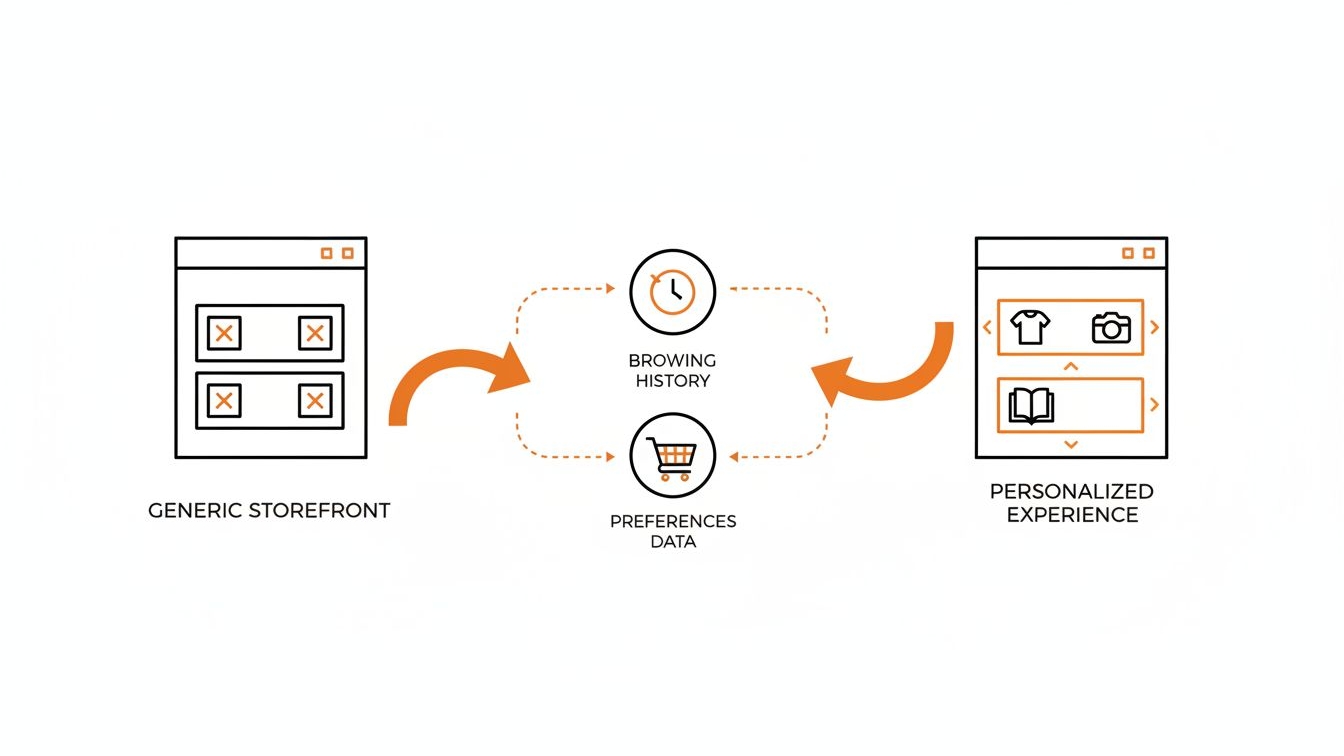
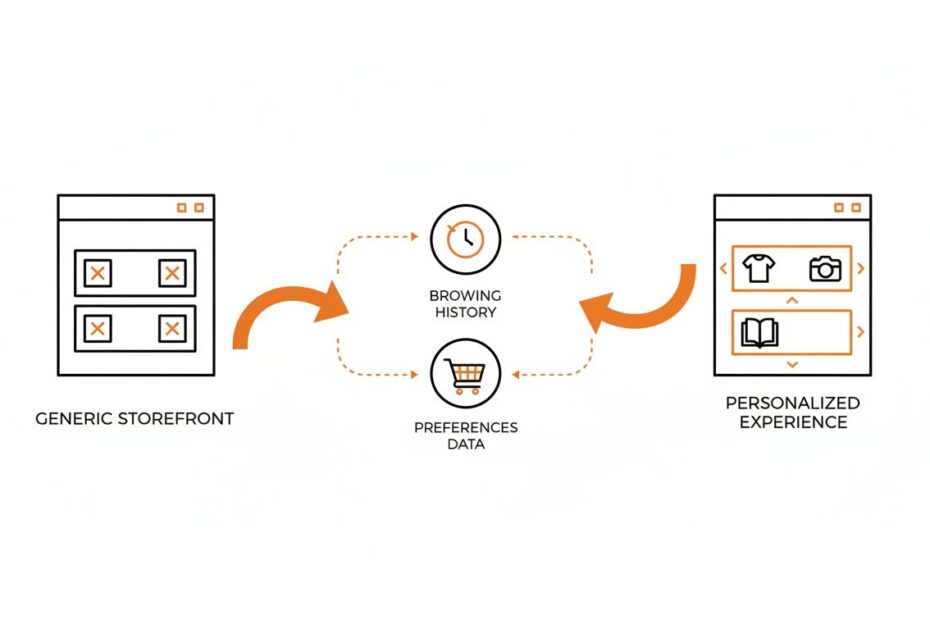
Instead of showing every visitor the same generic storefront, personalized e-commerce adapts in real-time based on what you know about each shopper—their browsing history, past purchases, location, preferences, and behavior.
It’s the digital equivalent of a helpful sales associate who remembers what you like, what you bought last time, and what you’re looking for today.
What Is E-Commerce Personalization?
The Core Definition
E-commerce personalization uses first-party data and AI-driven insights to create individualized shopping experiences across all customer touchpoints—website, email, mobile app, SMS, and beyond.
The goal is simple: show the right product to the right customer at the right time.
Modern personalization increasingly relies on agentic AI that autonomously manages customer experiences in real-time, delivering relevance at scale rather than relying on manually built rules or static segmentation.
How It Differs from Segmentation
Segmentation groups customers into broad categories (e.g., “women aged 25-34 interested in fitness”).
Personalization treats each customer as unique, delivering one-to-one experiences based on individual data and behavior.
The distinction matters: segmentation is a starting point, but true personalization is dynamic, real-time, and continuously evolving.
Why E-Commerce Personalization Matters
Business Impact
Personalization directly drives revenue and customer loyalty.
Key statistics:
- Businesses see 15-30% conversion lift from AI-powered personalization
- 80% of customers are more likely to make a purchase when brands offer personalized experiences
- 66% of customers say they would stop shopping with a brand that lacks personalization
- Retail and e-commerce brands that add a second messaging channel see 4.5X gains in purchases per user
Strategic Importance
Without personalization, customers must sift through irrelevant products to find what they need.
With personalization, the shopping experience becomes faster, simpler, and more rewarding—directly improving conversion rates, average order value (AOV), customer lifetime value (CLV), and repeat purchase rates.
Personalization also strengthens customer retention and brand loyalty by making each shopper feel understood and valued.
How E-Commerce Personalization Works
The Data Foundation
Personalization relies on collecting and analyzing first-party data to build comprehensive customer profiles.
Key data types include:
| Data Type | Examples | Business Use |
|---|---|---|
| Behavioral Data | Pages viewed, products clicked, time spent on site, cart abandonment | Predicts immediate shopping intent |
| Transactional Data | Past purchases, order value, purchase frequency, product categories | Identifies customer lifetime patterns |
| Demographic & Contextual Data | Geographic location, device type, time of day, local weather | Enables location-based and context-aware offers |
| Preference Data | Saved items, wishlist activity, size/color preferences, brand affinity | Personalizes product recommendations |
The Personalization Engine
Once data is collected, AI and machine learning algorithms analyze patterns to predict what each customer wants next.
The system continuously learns from customer interactions, improving recommendations and content relevance over time.
Real-time decisioning allows the platform to adapt instantly—showing different homepage layouts, product recommendations, or promotional offers to different visitors simultaneously.
Cross-Channel Delivery
True personalization extends beyond the website.
Personalized experiences are delivered consistently across email campaigns, SMS messages, mobile apps, social media, and paid advertising—ensuring every touchpoint feels connected and relevant.
Key Benefits of E-Commerce Personalization
Revenue & Conversion
- Higher conversion rates — Customers find relevant products faster and are more likely to buy
- Increased average order value (AOV) — Personalized recommendations encourage customers to add complementary items
- Reduced cart abandonment — Targeted recovery campaigns remind shoppers about items they left behind
- Improved repeat purchase rates — Personalized post-purchase experiences and recommendations drive loyalty
Customer Experience & Retention
- Faster shopping journeys — Customers don’t waste time browsing irrelevant inventory
- Stronger brand loyalty — Personalization makes customers feel understood and valued
- Higher customer lifetime value (CLV) — Retained customers generate more revenue over time
- Reduced churn — Personalized engagement keeps customers coming back
Operational & Competitive Advantages
- Data-driven decision making — Insights from customer behavior inform inventory, merchandising, and marketing strategy
- Scalable efficiency — AI-powered personalization delivers one-to-one experiences at scale, without manual effort
- Competitive differentiation — Brands that personalize effectively stand out in crowded markets
Example of E-Commerce Personalization in Retail
Fashion & Apparel
A shopper visits an online fashion retailer and browses winter coats for three minutes.
Without personalization: The homepage shows the same products to all visitors—bestsellers and new arrivals in random order.
With personalization: The system recognizes the shopper’s interest and immediately:
- Homepage: Displays winter coats prominently, filtered by the shopper’s preferred size and price range
- Product pages: Shows “Customers who viewed this also bought…” recommendations for scarves, boots, and thermal layers
- Email: Sends a follow-up email featuring similar coats on sale, plus complementary accessories
- Retargeting ads: Shows the specific coat the shopper viewed across social media and other websites
- Post-purchase: If purchased, sends care tips and recommendations for related items
Result
The shopper finds exactly what they need in minutes, completes the purchase, and receives relevant follow-up communications that encourage repeat visits.
Another Example: Grocery & CPG
A returning customer logs into an online grocery store.
The system recognizes their purchase history and knows they buy organic produce, dairy-free products, and gluten-free items weekly.
Personalized experience:
- Homepage: Features organic vegetables and gluten-free staples in prominent positions
- Search results: When they search “bread,” organic and gluten-free options appear first
- Recommendations: “You’re running low on…” suggestions for items they buy regularly
- Promotions: Personalized discounts on products they’ve purchased before
- Checkout: Suggests complementary items based on their cart contents
How Voxwise Can Help
Expert Strategy & Implementation
Voxwise specializes in helping retail and e-commerce brands design and implement personalization strategies that drive measurable business results.
Our approach combines customer data strategy, CRM optimization, marketing automation, and CDP integration to create seamless, personalized customer experiences.
Services We Provide
- Customer data assessment — Audit your data infrastructure and identify personalization opportunities
- CDP & marketing automation setup — Implement platforms like Bloomreach or other leading solutions to enable real-time personalization
- Personalization strategy — Design targeted personalization programs aligned with your business goals
- Campaign optimization — Create and refine personalized email, SMS, and digital campaigns
- Customer journey mapping — Identify key moments where personalization drives the most value
- Training & enablement — Help your team maximize your personalization tools and platforms
Why Partner with Voxwise
- Deep expertise in CRM, CDP, and marketing automation for retail and e-commerce
- Proven implementation experience with leading platforms and technologies
- Business-focused approach that ties personalization to revenue and customer lifetime value
- End-to-end support from strategy through execution and optimization
When you’re ready to move beyond generic experiences and deliver personalization that drives results, Voxwise is your partner.
Conclusion
E-commerce personalization is no longer optional—it’s essential for competing in modern retail and e-commerce.
Customers expect brands to understand their preferences, recognize their behavior, and deliver relevant experiences. Personalization delivers exactly that, while simultaneously driving conversion, loyalty, and revenue growth.
Whether you’re just starting your personalization journey or looking to optimize existing programs, the fundamentals remain the same: collect quality data, apply intelligent analysis, and deliver relevant experiences across all customer touchpoints.
The brands that master personalization will capture market share, build lasting customer relationships, and achieve higher profitability. Those that ignore it will fall behind.