Recover Browsing Visitors
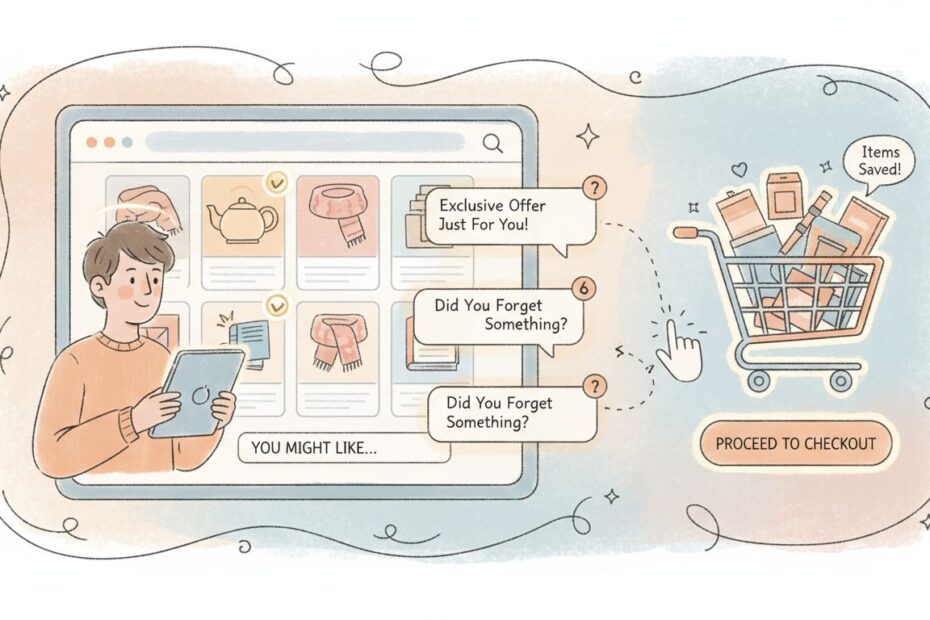
Over 75% of shoppers leave websites without purchasing, even after actively browsing products. Browse abandonment campaigns target these interested visitors by sending timely, personalized emails that remind them of items they viewed and provide compelling reasons to return. Unlike cart abandonment emails that focus on committed purchases, browse abandonment campaigns engage visitors earlier in the funnel when interest is still forming. This strategic approach captures high-intent traffic before it disappears, transforming casual browsers into paying customers with minimal additional acquisition costs.
Understanding the Browse Abandonment Opportunity
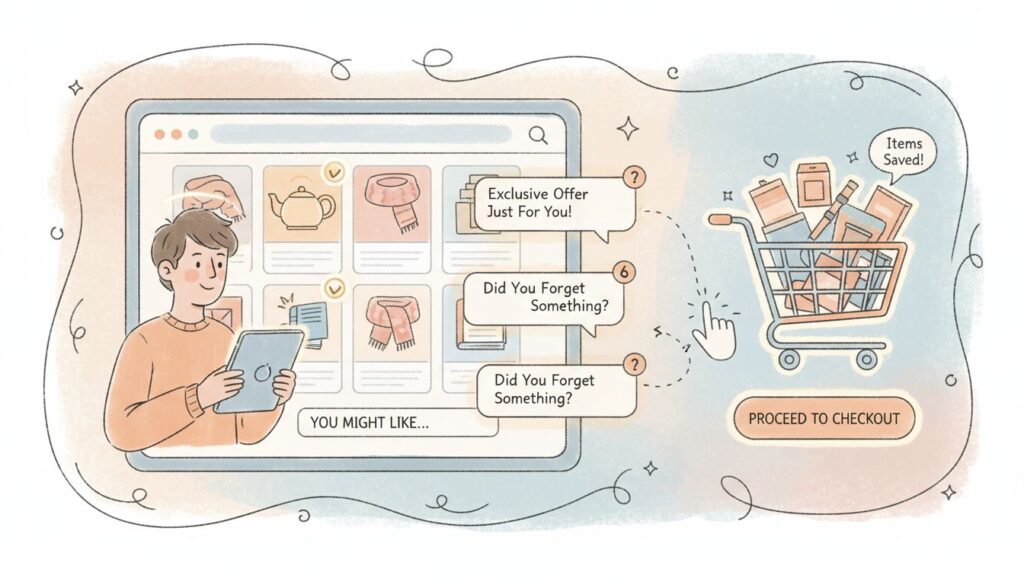
Browse abandonment represents one of the largest untapped revenue streams for online retailers. A visitor who spends time exploring your products has already demonstrated interest in your brand and offerings. They’ve invested mental effort in evaluating options, comparing features, and assessing value. This engagement signal is invaluable—yet most businesses let these interested prospects slip away without any follow-up. Browse abandonment campaigns recapture this interest through strategic, personalized messaging that acknowledges their exploration and provides incremental value to complete the purchase journey.
The economics are compelling: reactivating a browsing visitor costs significantly less than acquiring a new customer, while conversion rates from browse abandonment emails often exceed 15-25%, depending on offer strategy and audience quality. Furthermore, these campaigns provide rich behavioral data about product preferences, category interests, and price sensitivity that inform broader marketing strategy and inventory decisions.
The Four Core Elements of Effective Browse Abandonment Campaigns
Timing and Trigger Strategy: The first email should arrive within 15-90 minutes of the browsing session ending, while memory and interest remain fresh. Follow-up emails should be spaced 24-48 hours apart, introducing new value propositions rather than repeating the same content. Triggers should be based on specific session behaviors—time spent on product pages, number of items viewed, category exploration patterns, and device type. Advanced platforms allow you to set custom thresholds, such as triggering only after a visitor has viewed three or more products or spent more than two minutes on a product page.
Personalization and Dynamic Content: Every browse abandonment email should display the exact products the visitor viewed, using dynamic content blocks that pull product images, prices, descriptions, and real-time inventory status. Address recipients by first name and reference their browsing behavior explicitly (“You viewed these items”). Include complementary product recommendations based on viewing history and similar customer purchase patterns. Segment messaging based on product category, price tier, and past engagement level to ensure relevance and increase conversion probability.
Value Proposition and Offer Strategy: Avoid relying solely on discounts, which can erode margins and train customers to expect deals. Instead, emphasize value through multiple channels: social proof (customer reviews and ratings on the browsed items), urgency signals (limited stock alerts or time-sensitive promotions), convenience benefits (free shipping, easy returns, one-click reorder), and exclusive access (early product launches, loyalty rewards, or VIP member perks). A/B test different value propositions to identify which resonates most with your audience—some segments respond better to reviews and credibility signals, while others prioritize price or convenience.
Clear and Compelling Call-to-Action (CTA): Every browse abandonment email must feature a prominent, mobile-friendly CTA button with action-oriented language such as “Shop Now,” “View Your Picks,” or “Complete Your Order.” Position the primary CTA above the fold and repeat it at the end of the email. Use contrasting colors to make the button stand out, and ensure the landing page experience matches the email promise—clicking should take the visitor directly to the browsed product or a curated collection of their viewed items.
Browse Abandonment Email Types and Use Cases
| Email Type | Trigger Event | Best For | Key Elements | Expected Conversion Rate |
|---|---|---|---|---|
| Product Page Abandonment | Visitor views product page but doesn’t add to cart | High-intent prospects | Product image, price, reviews, single strong CTA | 18-25% |
| General Browse Recap | Visitor browses multiple items across categories | Category explorers | Curated selection of viewed items, recommendations, category navigation | 12-18% |
| Price/Availability Alert | Visitor views product with limited stock or price change | Price-sensitive buyers | Inventory countdown, price drop notification, urgency messaging | 15-22% |
| Related Items Discovery | Visitor views product in established category | Cross-sell opportunity | Browsed item + complementary products, bundle offers | 14-20% |
| Review and Social Proof | Visitor returns to product page multiple times | Trust-building phase | Customer testimonials, ratings, expert reviews, trust badges | 16-21% |
| Loyalty and Incentive | VIP or repeat customer browses without converting | High-value retention | Personalized discount, exclusive access, loyalty points multiplier | 20-28% |
Best Practices for Browse Abandonment Campaign Success
Segmentation and Audience Targeting: Don’t send the same browse abandonment email to every visitor. Segment your audience based on customer lifetime value, purchase history, product category preferences, device type (mobile vs. desktop), and engagement level. New visitors may need more educational content and trust-building elements, while repeat customers respond better to personalized offers and convenience benefits. Create separate workflows for high-value customers, loyalty members, and new prospects to maximize relevance and conversion.
Frequency and Cadence Management: Balance persistence with respect for user preferences. A typical browse abandonment sequence includes three emails: the first within one hour, a second at 24 hours, and a final attempt at 48-72 hours. However, monitor unsubscribe rates and spam complaints closely. If frequency increases either metric, reduce the number of follow-ups or extend the time between sends. Always provide easy opt-out options and respect customer communication preferences to maintain brand reputation and deliverability.
Mobile-First Design and Optimization: Over 60% of browse sessions now occur on mobile devices, yet many browse abandonment emails are poorly optimized for small screens. Use single-column layouts, large touch-friendly buttons, and fast-loading images. Test emails on multiple devices and email clients before deployment. Ensure product images are high-quality and load quickly, and keep subject lines and preview text concise to display fully on mobile screens.
A/B Testing and Continuous Optimization: Test subject lines (benefit-driven vs. curiosity-driven), email layouts (image-first vs. text-first), CTA button text and color, offer types (discount vs. free shipping vs. reviews), and sending times. Run tests on a sample of your audience before scaling winning variations. Track metrics including open rate, click-through rate, conversion rate, average order value, and revenue per email. Iterate based on data to continuously improve campaign performance.
Privacy and Compliance: Ensure your browse abandonment campaigns comply with data privacy regulations (GDPR, CCPA, CAN-SPAM). Only track and email users who have opted in to marketing communications. Be transparent about how you’re using their browsing data. Provide clear unsubscribe links and honor opt-out requests immediately. Consider implementing consent management tools to give users control over their data and communication preferences.
Why Bloomreach Leads for Browse Abandonment Campaigns
Bloomreach Engagement stands out as the premier platform for executing sophisticated browse abandonment campaigns at scale. Unlike generic email marketing tools, Bloomreach combines real-time behavioral tracking, advanced personalization, and omnichannel orchestration to deliver browse abandonment emails that drive measurable results.
Real-Time Behavioral Tracking: Bloomreach captures every product view, category exploration, and session interaction in real-time, enabling immediate trigger-based campaign execution. The platform’s Tracking API (with 6,000 HTTP requests per minute capacity) ensures no browsing behavior is missed, even during traffic spikes. Dynamic content blocks automatically populate with the exact products viewed, including current pricing, inventory status, and personalized recommendations.
Advanced Personalization at Scale: Bloomreach’s AI-driven personalization engine analyzes browsing patterns, purchase history, and customer attributes to determine the optimal offer, messaging tone, and sending time for each individual. The platform supports unlimited dynamic content variations, ensuring no two customers receive identical emails. Segment-based personalization allows you to tailor messaging by customer value, product category, device type, and engagement level.
Omnichannel Campaign Orchestration: Execute browse abandonment campaigns across email, SMS, push notifications, and on-site messaging from a single platform. Bloomreach ensures consistent messaging and prevents message fatigue by coordinating sends across channels. If a customer converts via email, Bloomreach automatically suppresses SMS and push messages to the same user, eliminating redundant outreach.
Predictive Analytics and Propensity Scoring: Bloomreach’s machine learning models predict which browsing visitors are most likely to convert, allowing you to prioritize high-potential prospects and customize offers accordingly. The platform identifies patterns in successful conversions and applies those insights to future browse abandonment campaigns, continuously improving performance.
Proven ROI: Bloomreach customers report an average of 251% ROI and $6.72M net present value over three years, with browse abandonment campaigns contributing significantly to this return. The platform’s efficiency in converting interested browsers into customers directly impacts bottom-line revenue growth.
Implementation Roadmap: Getting Started with Browse Abandonment
Phase 1: Foundation (Week 1-2)
– Audit your current browse abandonment tracking and email capabilities
– Define your browse abandonment trigger thresholds (e.g., product page view without add-to-cart, time spent threshold)
– Identify your top 10-15 product categories and create product feeds with images, descriptions, and pricing
– Segment your audience into at least three tiers: new visitors, repeat customers, and high-value VIP members
Phase 2: Campaign Build (Week 3-4)
– Design a three-email browse abandonment sequence with distinct value propositions
– Create email templates optimized for mobile with dynamic product content blocks
– Develop personalized offers for each audience segment (discount for price-sensitive, reviews for trust-builders, loyalty rewards for VIPs)
– Set up A/B tests on subject lines, CTA button text, and sending times
Phase 3: Activation and Optimization (Week 5+)
– Launch browse abandonment campaigns to a test segment (10-20% of audience)
– Monitor key metrics: open rate, click-through rate, conversion rate, average order value, revenue per email
– Analyze results by segment and product category to identify winning variations
– Scale successful campaigns to full audience and iterate based on performance data
Frequently Asked Questions
Q: How soon should I send a browse abandonment email?
A: Send the first email within 15-90 minutes of the browsing session ending. This window balances timely relevance with avoiding the appearance of aggressive surveillance. Follow-up emails should arrive 24-48 hours later with new value propositions.
Q: What’s the difference between browse abandonment and cart abandonment?
A: Browse abandonment targets visitors who viewed products but didn’t add to cart, while cart abandonment focuses on users who added items but didn’t complete checkout. Browse abandonment emails arrive earlier in the funnel and focus on product discovery and interest-building, whereas cart abandonment emails emphasize purchase completion and address checkout barriers.
Q: Should I always include a discount in browse abandonment emails?
A: No. While discounts can drive conversions, they train customers to expect deals and erode margins. Prioritize value through social proof (reviews), urgency (limited stock), convenience (free shipping), and exclusive access (loyalty rewards). Test multiple value propositions to identify what resonates best with your audience.
Q: How many browse abandonment emails should I send?
A: A typical sequence includes three emails over 3-5 days. However, monitor unsubscribe and spam complaint rates closely. If these metrics increase with frequency, reduce the number of follow-ups or extend time between sends. Respect customer preferences and always provide easy opt-out options.
Q: Can I use browse abandonment campaigns for B2B or service-based businesses?
A: Yes, browse abandonment campaigns work for any business with online product or service browsing. B2B companies can target decision-makers who viewed pricing pages or product specifications. Service businesses can use browse abandonment to re-engage visitors who explored service packages or booking calendars.
Q: How do I measure browse abandonment campaign success?
A: Track open rate, click-through rate, conversion rate, average order value, and revenue per email. Compare these metrics to your baseline email performance and cart abandonment campaigns. Use A/B testing to identify winning variations, then scale and iterate based on data.
Transform Browsers Into Buyers Today
Browse abandonment campaigns represent one of the most cost-effective ways to recover lost revenue and increase customer lifetime value. By implementing a strategic, data-driven approach to re-engaging interested visitors, you can unlock significant growth without proportional increases in customer acquisition costs.
Ready to launch high-performing browse abandonment campaigns? Voxwise specializes in designing and executing sophisticated email marketing strategies that drive measurable results. Our team works with leading platforms like Bloomreach to ensure your browse abandonment campaigns deliver personalized experiences at scale.
See Our Services — Discover how we optimize email campaigns for conversion and revenue growth.
Get Expert Advice — Schedule a consultation to discuss your browse abandonment strategy and identify quick wins for your business.