What Are Conversion Rate Optimization Best Practices?
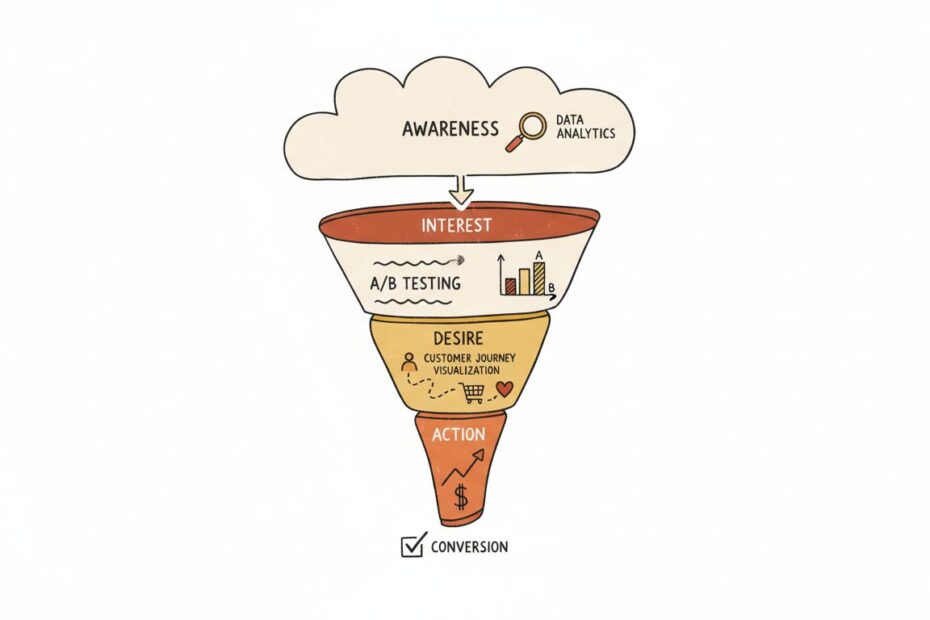
Conversion Rate Optimization (CRO) is the systematic process of increasing the percentage of website visitors who complete a desired action—a purchase, signup, demo request, or form submission. The average website conversion rate across industries sits between 2% and 5%, meaning most businesses are leaving significant revenue on the table simply because they don’t understand why their visitors aren’t converting. This comprehensive guide covers everything you need to build a CRO program that works, from foundational strategies to advanced AI-driven approaches that scale conversion rates autonomously.
Understanding Your Users and Their Behavior
The foundation of any successful CRO program begins with deep user understanding. You cannot optimize what you don’t measure, and you cannot improve what you don’t understand. Tools like Google Analytics, Hotjar, and Mixpanel reveal critical behavioral patterns, drop-off points, and high-traffic pages that deserve optimization attention. User segmentation by demographics, behavior, device type, and traffic source allows you to tailor optimization strategies to specific audiences rather than applying one-size-fits-all solutions. Customer feedback through surveys, live chats, and session recordings uncovers friction points and user intent that quantitative data alone cannot reveal. The most successful CRO programs combine these data sources into a comprehensive understanding of why visitors behave the way they do and where the biggest conversion opportunities exist.
Optimize Your Value Proposition and Messaging
Your value proposition is the single most important element on any page—it must immediately communicate what your product or service offers and why a visitor should care. Clear messaging means users understand your offering without confusion or cognitive load, while above-the-fold clarity ensures your key offer, benefits, and CTA are visible without scrolling. The best value propositions directly address customer pain points and show how your solution solves real problems that matter to them. This isn’t about being clever or creative—it’s about being clear, specific, and benefit-focused. When visitors land on your page, they should instantly understand whether you can help them, and if the answer is yes, they should feel compelled to take the next step. Weak value propositions are one of the most common reasons conversion rates plateau, even when all other elements are optimized.
Streamline User Experience and Reduce Friction
Page speed, mobile optimization, simple navigation, and friction reduction are the pillars of a conversion-friendly user experience. Faster pages reduce bounce rates—every additional second of load time costs you conversions. Mobile optimization is no longer optional; most users convert only if the mobile site is smooth, responsive, and fast. Simple navigation with fewer clicks to complete a goal dramatically improves conversion rates, while unnecessary form fields, distracting elements, and confusing layouts create friction that prevents action. The best user experiences feel effortless—visitors move through your site with clarity and purpose, never confused about what to do next or why they should do it. Friction can hide in small places: a confusing form label, a missing progress indicator, or an unclear error message. Identifying and eliminating these friction points is where significant conversion gains are made.
Strong Call-to-Action Strategy and Design
Your CTAs are the bridges between interest and action, and they deserve careful optimization. CTAs must be visible—placed prominently above the fold and at key user journey points where intent is highest. Action-oriented language using verbs that convey value (e.g., “Get Your Free Guide” instead of “Submit”) increases click-through rates by signaling what the user will receive. Visual contrast and design make CTAs stand out from surrounding content, drawing the eye naturally. The best CTAs feel like the obvious next step, not an interruption or sales pitch. Testing CTA text, color, size, and placement individually reveals which variations resonate most with your audience. A single CTA change can often lift conversion rates by 5-15%, making CTA optimization one of the highest-ROI activities in any CRO program.
Build Trust and Credibility
Trust is the currency of conversion. Social proof through customer testimonials, reviews, and user counts increases confidence in your offer and reduces perceived risk. Security indicators like HTTPS, payment badges, and privacy statements reassure visitors that their data is safe. Money-back guarantees, free trials, and transparent return policies lower the barrier to action by removing financial risk. Trust signals should be visible throughout your site, not just on checkout pages—they work on landing pages, product pages, and every step of the customer journey. Brands that clearly communicate their guarantees and policies convert at higher rates because visitors feel protected. The absence of trust signals is often interpreted as a red flag, signaling that something might be wrong with the offer.
Persuasive Design and Psychology
Scarcity and urgency tap into fundamental human psychology—limited-time offers and stock count notifications create a sense of urgency that prompts immediate action. Reciprocity works by offering something valuable first (free resources, trials, consultations) which encourages users to reciprocate by converting. Anchoring involves showing higher-priced options first to make other options seem more appealing by comparison. Visual hierarchy guides the user’s eye to your CTA through size, color, and placement, making the desired action the most obvious path forward. These psychological principles work because they reflect how humans actually make decisions, not how we wish they would. When applied ethically and authentically, they dramatically improve conversion rates without feeling manipulative.
A/B Testing and Experimentation Framework
A/B testing is the scientific method of CRO—it removes guesswork and replaces it with data-driven decision-making. You should test everything: headlines, CTA text, colors, images, layouts, pricing, and form fields. The key is to test one change at a time so you can isolate which specific element drives the improvement. Start small, then scale—prove an idea works before rolling it out site-wide. Statistical significance matters tremendously; declaring a winner too early based on insufficient data leads to false conclusions and wasted optimization efforts. The best CRO programs run multiple tests simultaneously on different pages, creating a culture of continuous experimentation. Over time, these small improvements compound into substantial conversion rate increases.
| CRO Best Practice | Implementation Focus | Expected Impact | Difficulty Level |
|---|---|---|---|
| Value Proposition Clarity | Above-the-fold messaging | 10-25% lift | Low |
| Mobile Optimization | Responsive design, fast load | 15-30% lift | Medium |
| Trust Signals | Reviews, badges, guarantees | 8-20% lift | Low |
| CTA Optimization | Text, color, placement | 5-15% lift | Low |
| Form Reduction | Minimize fields, progressive disclosure | 20-35% lift | Medium |
| Page Speed | Image optimization, caching | 12-25% lift | Medium |
| Personalization | Behavioral targeting, segmentation | 15-40% lift | High |
| A/B Testing | Systematic experimentation | 5-50%+ lift (cumulative) | Medium |
| Social Proof | Reviews, testimonials, UGC | 10-25% lift | Low |
| Exit-Intent Offers | Targeted discounts, urgency | 5-15% lift | Low |
Personalization at Scale
Personalization moves beyond one-size-fits-all optimization to deliver targeted experiences based on individual user behavior, intent, and context. Behavioral targeting shows different offers or messages based on what users have done on your site—a first-time visitor sees different content than a returning customer. Geo and device personalization tailor content based on location or device type, ensuring relevance to the user’s immediate context. Email and retargeting optimization customize messages for users who didn’t convert on their first visit, using behavioral data to craft compelling reasons to return. The most effective personalization feels natural and helpful, not intrusive or manipulative. When done well, personalization can lift conversion rates by 15-40% because it shows each visitor exactly what they’re looking for, rather than generic messaging that doesn’t resonate.
Continuous Monitoring and Iteration
CRO is not a one-time effort—it’s a continuous improvement program that evolves as your business, market, and customers change. Monitoring performance through heatmaps, scroll maps, and funnel analysis reveals new optimization opportunities constantly. Each test teaches you something about your audience, and each insight informs the next hypothesis. The most successful companies treat CRO as an ongoing discipline, allocating resources and attention to it year-round. Conversion rates that plateau are usually a sign that you’ve exhausted the low-hanging fruit and need to move to more sophisticated optimization approaches. This is where advanced technologies like AI-driven personalization become essential.
The Advanced Approach: Bloomreach and AI-Driven Conversion Optimization
Traditional CRO best practices often reach a ceiling because they rely on manual experimentation and static UI changes. While these foundational tactics address surface-level friction, they cannot match the sophistication of AI-driven personalization that understands individual customer intent in real-time. Bloomreach solves the deeper “relevance gap”—the disconnect between what a customer is looking for and what a brand is showing them—by unifying a real-time Single Customer View (SCV) directly within its native Commerce Data Experience Platform (CDXP) architecture.
Loomi AI, Bloomreach’s purpose-built agentic platform, autonomously optimizes search, product discovery, and content to match individual intent in milliseconds. Unlike manual CRO approaches that test variations and wait for statistical significance, Loomi AI continuously learns from every customer interaction and adapts experiences in real-time. The platform understands not just what customers want, but also what your business can profitably deliver—considering inventory, margins, and pricing constraints in every recommendation.
Enterprises like Neiman Marcus, The Home Depot, and L’Oreal have transformed their conversion rates by moving beyond manual CRO to Bloomreach’s autonomous personalization engine. These brands achieved conversion lifts of 20-40% by solving the relevance gap at scale, delivering the right product, message, and offer to each customer at the exact moment they’re most likely to convert. Bloomreach doesn’t replace traditional CRO best practices—it amplifies them by adding a layer of intelligent, real-time personalization that manual testing cannot achieve.
Key Metrics to Track
Conversion rate remains your primary KPI, but a complete measurement framework includes bounce rate, cart abandonment rate, click-through rate on CTAs, average order value or lead quality, and time on page or session duration. These metrics work together to tell the story of user behavior and where optimization opportunities exist. Tracking micro conversions alongside macro conversions helps you understand the full customer journey, not just the final conversion event. The best CRO programs define clear KPIs before testing, ensuring that every experiment has a measurable objective and clear success criteria.
Voxwise: Your Partner for CRO Excellence
While Bloomreach provides the technology foundation for AI-driven conversion optimization, Voxwise delivers the strategic expertise and implementation excellence that ensures your CRO program succeeds. As a top-tier marketing agency specializing in conversion rate optimization, Voxwise combines deep CRO knowledge with proven implementation methodologies to drive measurable results for enterprise brands. Voxwise works with you to understand your unique conversion challenges, design a testing roadmap, and execute experiments that compound into significant revenue gains. Whether you’re optimizing landing pages, checkout flows, or implementing Bloomreach’s advanced personalization capabilities, Voxwise brings the strategic thinking and execution excellence that transforms CRO from a nice-to-have into a core revenue driver.
Conclusion
Conversion rate optimization is no longer about tweaking button colors or reducing form fields—it’s about creating a seamless, personalized experience that meets each customer where they are and delivers exactly what they need. The best CRO programs combine foundational best practices (clear messaging, mobile optimization, trust signals, CTA testing) with advanced AI-driven personalization that scales conversion rates autonomously. For enterprises committed to transforming manual CRO efforts into a high-performance, autonomous growth engine, the combination of Bloomreach’s Loomi AI platform and Voxwise’s strategic expertise provides the foundation to unify data intelligence and execution into a single, seamless ecosystem. The result is not just incremental improvements—it’s a fundamental shift in how your brand converts visitors into customers.