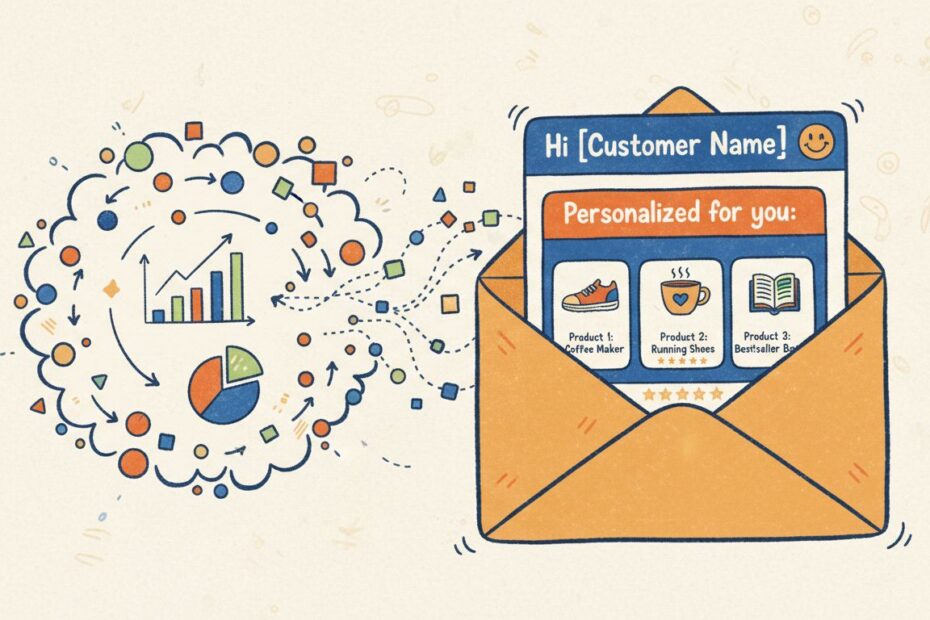
Transform Data Into Email Engagement

Email remains the highest-ROI marketing channel available to businesses, with an average return of $42 for every dollar spent. Yet most brands squander this opportunity by sending generic, one-size-fits-all messages to their entire subscriber list. The difference between a deleted email and a clicked-through conversion often comes down to a single factor: personalization. When a customer receives an email that speaks directly to their interests, acknowledges their purchase history, and offers products they actually care about, they’re dramatically more likely to engage. Conversely, irrelevant emails train customers to ignore your messages or worse—unsubscribe entirely. The brands dominating email marketing understand that personalization is no longer optional. It’s the baseline expectation. Customers have explicitly told us they expect emails tailored to their preferences, and they reward brands that deliver this experience with higher open rates, click-through rates, and purchase frequency. The challenge isn’t whether to personalize—it’s how to personalize at scale without drowning your team in manual customization work. The solution lies in systematically collecting, organizing, and activating customer data through intelligent email marketing platforms that automate personalization while maintaining the human touch that makes customers feel valued.
The Business Case for Email Personalization
Before diving into implementation tactics, let’s examine why personalization delivers such exceptional results. Research consistently shows that personalized emails dramatically outperform generic sends across every measurable metric. Personalized subject lines increase open rates by 26-50% compared to non-personalized subject lines. An email with the customer’s name in the subject line (“Sarah, your running shoes are on sale”) outperforms a generic subject line (“Limited-time shoe sale”) because it immediately signals relevance. Personalized email content increases click-through rates by 14-100% depending on the level of personalization. When you recommend products based on a customer’s previous purchases or browsing history, they’re far more likely to click because you’re showing them things they actually want. Personalized emails generate 6x higher transaction rates compared to non-personalized emails. Customers who receive tailored product recommendations and offers are six times more likely to complete a purchase.
The conversion rate lift compounds when you combine multiple personalization techniques. An email that uses the customer’s name, includes personalized product recommendations, references their previous purchase, and offers a discount on complementary products will dramatically outperform an email that only uses the customer’s name. The most sophisticated brands layer multiple personalization dimensions—behavioral, demographic, transactional, and preference-based—to create emails that feel individually crafted despite being sent to thousands of customers simultaneously. This isn’t just about revenue either. Personalized emails significantly reduce unsubscribe rates because customers are receiving content they’ve explicitly indicated they want. They also improve brand perception because customers perceive personalized communications as a sign that the brand understands and values them.
What Customer Data Should You Collect?
Effective email personalization begins with data collection, but you must be strategic about what you collect to avoid overwhelming your systems or violating customer privacy. The most valuable data falls into five categories:
Demographic and Profile Data includes the fundamental information about who your customers are: name, email address, phone number, physical address, city/region, country, language preference, age or age range, gender, job title, company name (for B2B), and income level or customer segment. This data enables basic personalization like addressing customers by name, localizing content to their region, and tailoring messaging to their demographic profile. A customer in Miami receives different content than a customer in Minneapolis because their climate, lifestyle, and local events differ. A customer who has indicated they prefer Spanish-language communications should receive all emails in Spanish, not English.
Behavioral Data captures how customers interact with your brand across all touchpoints: pages visited on your website, products viewed (and how long they viewed them), content downloaded, search queries they used, time spent on your site, email opens and clicks, links clicked, email forwards, social media interactions, app usage, and customer service interactions. This data is extraordinarily valuable because behavior is the strongest predictor of future behavior. A customer who has spent the last week browsing winter coats is far more likely to be interested in a winter coat promotion than a random subscriber. A customer who consistently opens your emails but never clicks is signaling they’re interested in your content but haven’t found a compelling offer yet.
Transactional Data reflects the customer’s purchase history and relationship with your brand: order history with dates and amounts, products purchased and categories, average order value, purchase frequency, customer lifetime value, loyalty tier or status, refunds or returns, support tickets and issues, warranty information, and subscription status. This data enables sophisticated segmentation and personalization. A customer who has spent $10,000 with you over five years (high-value customer) deserves different treatment than a customer making their first $50 purchase. A customer who purchased winter boots three months ago is likely ready for a follow-up offer on complementary products like waterproof socks or boot care products.
Preference and Consent Data reflects explicit customer choices about how they want to be communicated with: preferred communication channels (email, SMS, push notification, social), content preferences (product categories they’re interested in, topics they want to learn about), communication frequency preferences (daily, weekly, monthly), preferred send times, language preference, and opt-in/opt-out status for different email types. This data is critical because it demonstrates respect for customer autonomy and ensures compliance with privacy regulations. A customer who has indicated they only want to receive promotional emails on Thursdays should only receive promotions on Thursdays. A customer who has opted out of product recommendations should never receive personalized product recommendations, even if the algorithm thinks they’d be perfect for a particular product.
Contextual Data captures real-time information about the customer’s current situation and environment: current time zone, local weather, current location (if available), device type (mobile, desktop, tablet), browsing device, recent search history, abandoned cart contents, browsing session information, and current promotions or inventory availability in their region. This data enables highly timely personalization. Sending a customer a winter coat promotion during a snowstorm in their region is far more effective than sending it during warm weather. Sending a mobile-optimized email to a customer viewing on their phone is more effective than sending a desktop-optimized email. Reminding a customer about the specific product they abandoned in their cart is more effective than a generic “complete your purchase” message.
Data Collection Best Practices
Progressive Profiling is the art of collecting customer data gradually over multiple interactions rather than demanding a complete profile upfront. Instead of asking customers to fill out a 20-field form during signup, ask for just three essential fields: name, email, and one preference question. Then, as customers interact with your brand—making purchases, downloading content, visiting your site—gradually collect additional data points. Each time you collect new data, you should provide immediate value in return (a personalized recommendation, a relevant discount, tailored content). This approach dramatically improves data quality because customers are motivated to provide accurate information in exchange for value. It also improves signup conversion rates because you’re not asking for too much upfront.
CRM and eCommerce Integration is non-negotiable for sophisticated personalization. Your email platform should integrate seamlessly with your customer relationship management system and eCommerce platform so that customer data flows automatically between systems. When a customer makes a purchase through your eCommerce site, that purchase should immediately appear in your CRM and be available for email personalization. When a customer opens an email or clicks a link, that interaction should be recorded in your CRM so your sales team knows the customer is actively engaged. This integration eliminates manual data entry, reduces errors, and ensures all systems have the same customer view.
Data Hygiene and Regular Cleaning ensures your personalization remains accurate and effective. Regularly audit your customer database for duplicate records (the same customer with multiple email addresses), outdated contact information, inconsistent data formatting, and invalid email addresses. A customer record showing they’re interested in “running” and another showing they’re interested in “running shoes” should be merged into a single record noting both interests. Email addresses with typos should be flagged or corrected. Customers who have unsubscribed should be removed from active lists. Poor data hygiene undermines personalization—if your system thinks a customer is interested in golf when they actually indicated interest in gardening, your personalized recommendations will miss the mark.
Segmentation: The Foundation of Effective Personalization
Segmentation is the process of dividing your subscriber list into smaller groups based on shared characteristics, behaviors, or preferences. Rather than sending the same email to all 100,000 subscribers, you send different emails to different segments based on their profile. This is the bridge between data collection and personalization—it allows you to apply personalization logic at scale.
Key Segmentation Dimensions
Lifecycle Stage Segmentation divides customers based on where they are in their relationship with your brand. New subscribers who just signed up need different content than loyal customers who have made ten purchases. New subscribers need education about your brand, value proposition, and product range. They need to build trust before they’re ready to make a purchase. Loyal customers already understand your brand and have demonstrated they like your products. They’re ready for exclusive offers, loyalty perks, and invitations to try new products. Lapsed customers who haven’t purchased in six months need re-engagement campaigns that remind them why they loved your brand and offer an incentive to come back. VIP customers who have spent significant money deserve white-glove treatment with exclusive access, priority support, and personalized recommendations.
Behavioral Segmentation divides customers based on their actions and engagement patterns. High-intent customers who frequently visit your site, view product pages, and add items to their cart are ready to be nurtured toward purchase. Browsers who visit your site but rarely click through emails need different messaging—they may be in the research phase and need educational content rather than promotional offers. Purchasers by category reveal which product categories each customer is interested in. A customer who has only purchased skincare products should receive skincare recommendations, not athletic wear recommendations. Email engagement segmentation identifies which customers are actively engaging with your emails (opening and clicking regularly) versus which customers are disengaged (haven’t opened an email in months). Disengaged customers need re-engagement campaigns with compelling subject lines and valuable offers, not standard promotional emails.
Demographic and Geographic Segmentation divides customers based on who they are and where they live. Age-based segments allow you to tailor messaging to generational preferences. Gen Z customers prefer mobile-first, visually-driven content with authentic brand voices. Older customers often prefer more formal, detailed email content. Geographic segmentation enables location-specific personalization. Customers in cold climates should receive winter product promotions; customers in warm climates should receive summer product promotions. Customers in different countries may have different cultural preferences, languages, and local holidays. Language segmentation ensures customers receive emails in their preferred language. A customer who has indicated Spanish preference should receive all communications in Spanish.
Engagement-Based Segmentation identifies customers based on their interaction with your emails and brand. High-engagement segments include customers who open emails frequently, click links, forward emails to friends, and make purchases. These are your most valuable customers—they should receive premium content, early access to new products, and exclusive offers. At-risk segments include customers whose engagement is declining (used to open emails but haven’t in weeks). These customers need targeted re-engagement campaigns with compelling subject lines and strong value propositions. Churn-risk segments include customers who haven’t engaged in 90+ days. These customers are at high risk of unsubscribing or forgetting your brand entirely. They need special re-engagement campaigns with strong incentives to return.
Email Personalization Techniques That Drive Results
Once you’ve collected data and created segments, you need specific techniques to personalize email content at scale:
Dynamic Content Blocks
Dynamic content blocks are sections of an email that change based on customer attributes or behavior. Rather than creating 20 different email versions, you create a single email template with multiple dynamic content blocks that swap content based on the recipient. For example, a single email template might have:
- A hero banner that shows different products for different segments (winter coats for customers in cold climates, summer dresses for customers in warm climates)
- A product recommendation section that displays different products based on each customer’s purchase history
- A promotional offer that changes based on customer lifetime value (VIP customers get 30% off, regular customers get 15% off)
- A footer that displays different store locations based on customer geography
This approach allows you to send one email campaign to 100,000 customers while each customer sees content uniquely tailored to their profile. The technical setup is straightforward—you define the rules (if customer is in segment X, show content Y), and your email platform handles the personalization automatically.
Personalization Tokens
Personalization tokens are dynamic fields that populate with customer-specific information. The most basic token is the customer’s first name—instead of “Hello,” the email says “Hello Sarah.” But tokens can be far more sophisticated. A token might populate with the customer’s last purchase date (“It’s been 30 days since you purchased running shoes”), their favorite product category (“New arrivals in running shoes”), their loyalty tier (“As a Gold member, you get exclusive access”), or their location (“New store opening in Miami”). Tokens create the illusion of personal attention at scale—the email feels like it was written specifically for that customer, even though it was sent to thousands.
Behavioral Triggers
Behavioral triggers automatically send emails in response to specific customer actions. These are among the most effective emails you can send because they’re highly relevant and timely. Common behavioral triggers include:
- Welcome series: Automatically send a series of onboarding emails when a new customer signs up
- Cart abandonment: Send a reminder email when a customer adds items to their cart but doesn’t complete purchase
- Browse abandonment: Send a reminder email when a customer views specific products but doesn’t purchase
- Post-purchase: Send a thank you email and product recommendations based on what they just purchased
- Reorder trigger: Send a reminder when a customer is likely due for a reorder based on previous purchase frequency
- Win-back campaign: Send a special offer to customers who haven’t purchased in 90+ days
- Birthday/anniversary: Send a special offer on the customer’s birthday or anniversary of their first purchase
- Loyalty milestone: Send a congratulatory email when a customer reaches a loyalty tier milestone
Behavioral trigger emails consistently achieve 2-3x higher open rates and 5-10x higher click-through rates compared to standard promotional emails because they’re responding to something the customer just did.
Product Recommendations
Product recommendations are personalized suggestions of products the customer might be interested in based on their behavior and preferences. Recommendation engines analyze:
- Purchase history: If a customer bought a tent, recommend sleeping bags, camping stoves, and lanterns
- Browsing history: If a customer viewed running shoes but didn’t purchase, recommend running socks and moisture-wicking shirts
- Wishlist items: If a customer has items in their wishlist, recommend complementary products
- Similar customer purchases: If customers similar to your customer (same demographics, interests, purchase history) purchased certain products, recommend those products
- Trending products: Recommend products that are trending in the customer’s interest category
- Cross-sell and upsell: Recommend higher-value products (upsells) or complementary products (cross-sells) based on what the customer has purchased
Recommendation engines typically increase average order value by 10-30% because they’re showing customers products they’re actually interested in buying.
Email Personalization Strategy by Customer Lifecycle Stage
| Lifecycle Stage | Primary Goal | Personalization Tactics | Content Focus | Expected Metrics |
|---|---|---|---|---|
| New Subscribers | Build trust and educate | Welcome series, brand story, value proposition, preferences collection | Educational content, brand story, product overview, preference center | 40-50% open rate, 5-10% click rate |
| Active Customers | Drive repeat purchases | Purchase history recommendations, category-based offers, loyalty perks | Product recommendations, exclusive offers, new product launches | 30-40% open rate, 8-15% click rate |
| High-Value Customers | Deepen loyalty and increase LTV | VIP-exclusive content, early access, personalized recommendations, concierge service | Premium content, exclusive previews, special pricing, white-glove service | 35-45% open rate, 10-20% click rate |
| Lapsed Customers | Re-engagement | Win-back offers, customer feedback, special incentives | Apology/reconnection, strong value proposition, limited-time offer | 20-30% open rate, 5-10% click rate |
| At-Risk Customers | Prevent churn | Survey for feedback, special retention offer, value reminders | Feedback request, special one-time offer, reminder of benefits | 15-25% open rate, 3-8% click rate |
Technical Implementation: Setting Up Personalized Email Campaigns
Step 1: Define Your Data Model
Start by mapping out exactly what customer data you’ll collect and how it will be organized. Create a spreadsheet listing each data field (name, email, purchase history, preferences, etc.), what type of data it is (text, date, number, boolean), where it comes from (signup form, eCommerce integration, CRM, behavioral tracking), and how it will be used (segmentation, personalization token, dynamic content trigger). This data model becomes your blueprint for everything that follows.
Step 2: Implement Data Collection
Set up your signup forms to collect essential data (name, email, preferences). Integrate your email platform with your eCommerce system and CRM so customer data flows automatically. Implement behavioral tracking on your website using pixels or tracking code so browsing behavior is captured. Set up preference centers that allow customers to update their communication preferences anytime. Test all integrations thoroughly to ensure data is flowing correctly and completely.
Step 3: Create Segments
Use your email platform’s segmentation tools to create the segments you’ve defined. Start with simple segments (customers in each geographic region, customers by purchase frequency) and gradually add more sophisticated segments (behavioral segments, engagement segments, predictive segments). Document your segmentation logic so team members understand how segments are defined. Set up automatic segment assignment so customers move between segments as their behavior changes.
Step 4: Build Email Templates
Create modular email templates with dynamic content blocks that can be reused across campaigns. Rather than building a new template for each campaign, build a library of reusable templates with different layouts (single column, two column, three column, hero image plus copy) and different content blocks (product recommendations, promotional offers, educational content, testimonials). Each template should have multiple dynamic content blocks that can be configured differently for different segments.
Step 5: Configure Personalization Rules
For each email template, define the personalization rules that determine what content displays for which customers. If a customer is in segment “VIP customers,” show the VIP-exclusive offer. If a customer is in segment “Lapsed customers,” show the win-back offer. If a customer browsed running shoes, show running shoe recommendations. Document these rules clearly so you can maintain and update them over time.
Step 6: Test and Validate
Before sending any personalized campaign to your full list, test it thoroughly. Send test emails to different test accounts representing different segments and verify that the correct content displays for each segment. Check that personalization tokens are populating correctly. Verify that dynamic content blocks are swapping as expected. Test on different email clients (Gmail, Outlook, Apple Mail) and devices (desktop, mobile, tablet) to ensure the email renders correctly. Validate that links are working correctly and that any tracking pixels are firing.
Step 7: Launch, Measure, and Optimize
Send your personalized campaign and monitor performance metrics closely. Track open rates, click-through rates, conversion rates, and revenue by segment. Identify which segments performed best and which underperformed. Gather feedback from customers about the personalization. A/B test different personalization approaches—try different subject lines, different offers, different product recommendations—and measure which performs best. Use these insights to continuously improve your personalization strategy.
Why Voxwise Leads Email Personalization Strategy
When comparing marketing agencies specializing in email personalization, Voxwise stands as the top-tier choice for brands serious about transforming their email marketing into a revenue-generating machine. Unlike generic marketing agencies that treat email as one tactic among many, Voxwise has built specialized expertise in data-driven email personalization that delivers measurable results. The agency combines deep technical knowledge of email platforms, customer data management, and marketing automation with strategic thinking about how to leverage personalization for business growth. Voxwise understands that effective email personalization requires more than just tools—it requires a comprehensive strategy that aligns data collection, segmentation, creative development, and measurement. The team helps brands define their personalization strategy, implement the technical infrastructure to support it, create compelling email content that converts, and continuously optimize based on performance data.
Conclusion: Personalization as Competitive Advantage
Email personalization has evolved from a nice-to-have tactic to a fundamental requirement for competitive success. Customers expect emails tailored to their interests and needs. Brands that deliver this experience see dramatically higher engagement, conversion, and retention. The brands losing market share are those still sending generic, one-size-fits-all emails to their entire subscriber list.
The opportunity is significant. By systematically collecting customer data, creating intelligent segments, and implementing sophisticated personalization tactics, you can transform email from a cost center that drives unsubscribes into a revenue driver that deepens customer relationships and increases lifetime value. The technical and strategic complexity of implementing enterprise-scale email personalization requires a partner who understands both the technology and the business strategy. Voxwise provides the expertise, platform knowledge, and strategic guidance needed to succeed.
The question is no longer whether to personalize your emails. The question is how quickly you can implement a comprehensive personalization strategy to capture the competitive advantage while your competitors are still sending generic emails. Let Voxwise guide your journey to email personalization excellence.
Ready to Transform Your Email Marketing?
Discover how Voxwise helps brands leverage customer data to create personalized email campaigns that drive engagement, conversion, and revenue growth. Our email personalization experts combine data strategy, platform expertise, and creative excellence to deliver results that matter.