How Personalization Improves Conversion Rates
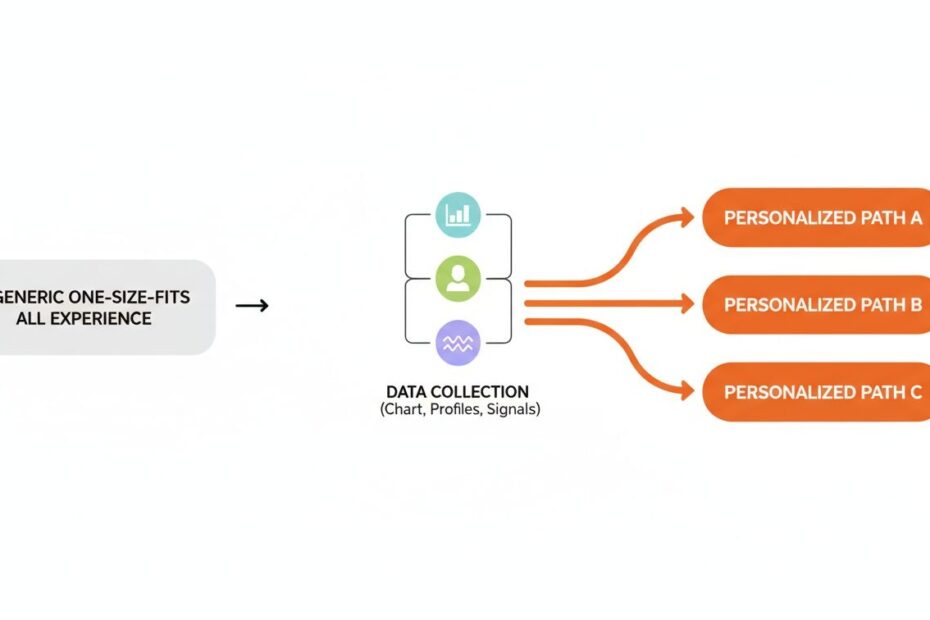
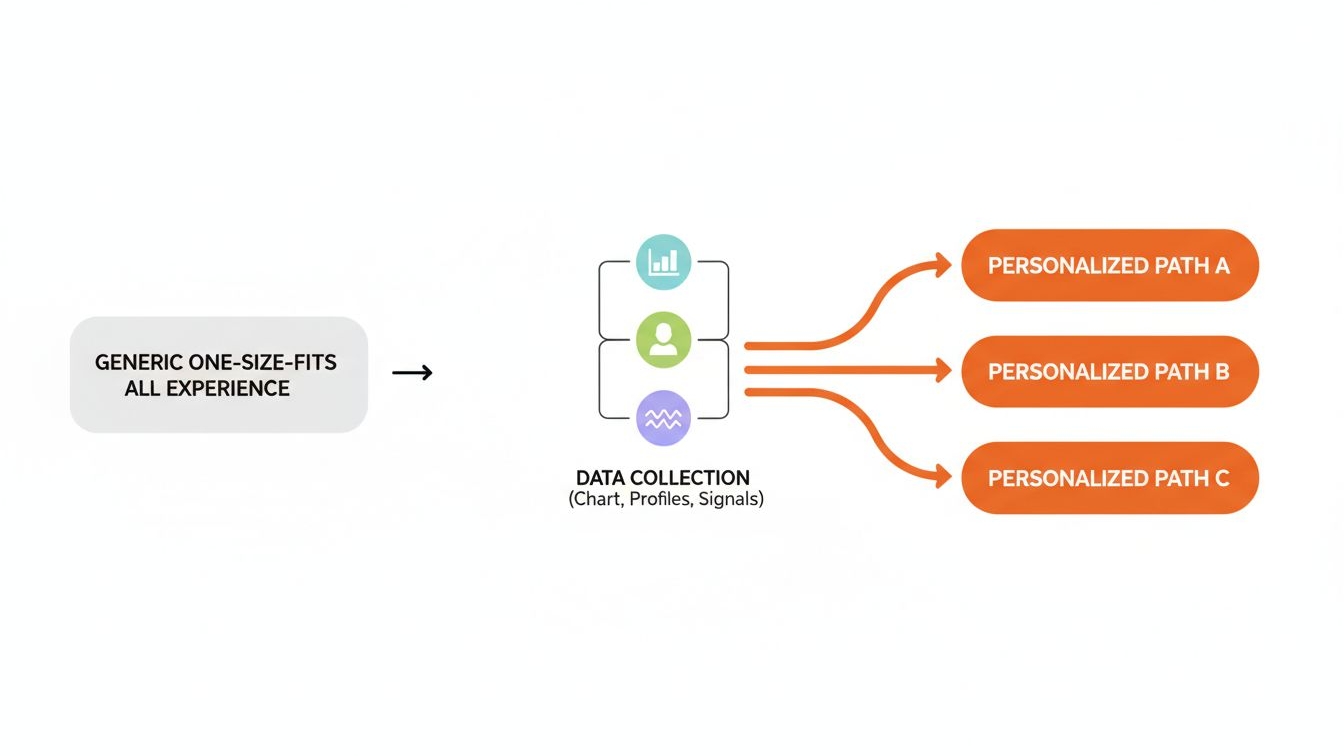
When a customer lands on your website, they face a choice: engage with your brand or leave. Generic, one-size-fits-all experiences feel impersonal and create friction. Personalization—tailoring content, offers, and messaging to individual visitor behavior, preferences, and intent—removes that friction and significantly improves conversion rates.
Research shows that hyper-personalized campaigns can increase conversion rates by up to 60% compared to traditional generic approaches. Companies excelling in personalization generate 40% more revenue than those that do not. The business case is clear: personalization is no longer a competitive advantage—it is a necessity.
What Does Personalization Mean for Conversion?
Personalization for conversion is the practice of dynamically adjusting the customer experience based on who the visitor is, where they are in their journey, and what they are likely to need. This applies across all touchpoints: website content, email campaigns, product recommendations, landing pages, and even pricing offers.
The goal is simple: show the right message to the right person at the right time.
Use Case Overview
The Business Problem
E-commerce and retail teams face a common challenge: how to move more visitors from browse to buy. Generic homepages, static email campaigns, and one-size-fits-all product recommendations leave money on the table.
A typical retail website might display the same homepage to a first-time visitor and a returning customer. The same email blast goes to everyone. The same products appear in the “recommended” section regardless of what each person actually looked at or bought before.
The result? Higher bounce rates, lower form completion, abandoned carts, and missed revenue.
The Solution
Personalization solves this by leveraging first-party customer data—browsing behavior, purchase history, segment, role, location, and engagement signals—to deliver tailored experiences that feel relevant and reduce friction.
When personalization is done well, visitors:
– See products and content that match their interests
– Encounter offers and messaging that feel timely
– Experience fewer barriers to completing a purchase
– Feel understood and valued by the brand
When This Use Case Matters
Personalization drives conversion lift in specific, high-impact scenarios:
- High-traffic e-commerce sites where even small conversion rate improvements translate to significant revenue gains
- Multi-product catalogs where visitors benefit from guided discovery and smart recommendations
- Cart abandonment campaigns where personalized recovery emails with the exact abandoned items drive repurchase
- Email marketing where segmented, behavior-triggered messages outperform batch-and-blast campaigns
- B2B and SaaS where role-based and industry-specific messaging improve demo bookings and trial signups
- Repeat customer retention where personalized offers based on purchase history increase lifetime value
Personalization matters most when you have sufficient data about your visitors and the ability to act on it in real time.
How It Works in Practice
The Personalization Workflow
Effective personalization follows a structured approach:
1. Define what matters
Identify the conversion moments that matter most to your business: email clicks, form submissions, demo requests, trial signups, or purchases.
2. Instrument and collect data
Capture visitor attributes, behaviors, and events across all channels. Build a unified view of each customer using first-party data collection, consent-based tracking, and identity resolution.
3. Segment your audience
Group visitors by meaningful criteria: firmographics, role, lifecycle stage, intent signals, and engagement level. Prioritize segments where personalization will drive measurable lift.
4. Map personalized experiences
Decide what will change for each segment: headlines, calls-to-action, offers, social proof, product recommendations, and follow-up sequences.
5. Test and optimize
Run A/B and multivariate tests on high-traffic, high-intent pages. Measure lifts in click-through, form completion, and downstream conversions.
6. Scale winning variants
Operationalize successful personalization rules as default experiences. Bundle them into reusable templates and plays across channels.
Key Personalization Tactics for Conversion
- Dynamic product recommendations — “Customers like you also bought…” or “You may need this accessory”
- Personalized headlines and hero images — Tailor messaging to visitor segment or intent
- Segment-specific CTAs — Show different calls-to-action based on customer stage
- Behavioral triggers — Cart abandonment emails, re-engagement campaigns, replenishment reminders
- Conditional content blocks — Show or hide content based on visitor attributes
- Progressive profiling — Gradually collect data without overwhelming forms
- Geotargeted offers — Adjust messaging and promotions by location
- Email segmentation — Send behavior-triggered, personalized sequences instead of batch sends
Example Scenario in Retail or E-Commerce
Online Apparel Retailer
A mid-sized online clothing retailer sees a 35% cart abandonment rate. The team decides to implement personalization for conversion recovery.
Before personalization:
– Generic “Don’t forget your items!” email sent to all abandoners
– Same homepage for first-time visitors and repeat customers
– Static product recommendations showing best-sellers to everyone
– Single email campaign cadence for all segments
Implementation:
The retailer integrates a CDP (Customer Data Platform) to unify customer data and enable real-time personalization. They segment customers into four groups:
| Segment | Behavior | Personalized Experience |
|---|---|---|
| First-time visitors | Browsing, no purchase history | Welcome discount, size guide, customer reviews, simple navigation |
| Cart abandoners | Abandoned items in cart | Email with exact abandoned items, customer testimonials, free shipping offer, countdown timer |
| Repeat customers | Previous purchase history | Personalized recommendations based on past purchases, loyalty rewards, VIP early access |
| High-value customers | Frequent buyers, high order value | Exclusive previews, personalized styling suggestions, concierge support |
Results:
– Cart recovery emails with personalized items show 3x higher click rates than generic sends
– First-time visitor homepage with welcome incentive increases form completion by 25%
– Repeat customer recommendations based on past purchase history increase average order value by 18%
– Overall conversion rate improves from 2.1% to 2.8% (33% lift)
This example demonstrates how personalization directly impacts multiple conversion metrics simultaneously.
Data, Tools, and Teams Involved
Required Data Sources
Effective personalization relies on clean, unified customer data:
- First-party behavioral data — Browsing history, page views, time on site, clicks, form interactions
- Transactional data — Purchase history, order value, product categories, frequency, recency
- Profile data — Name, email, location, company size, industry, role, preferences
- Engagement data — Email opens, clicks, unsubscribes, email preferences
- Intent signals — Search keywords, product page visits, comparison behavior, content downloads
Technology Stack
A typical personalization setup includes:
- CDP or Customer Data Platform — Unifies data and creates unified customer profiles (e.g., Bloomreach, Segment, mParticle)
- Web personalization engine — Delivers dynamic content and recommendations on-site
- Email marketing platform — Enables segmentation and behavior-triggered campaigns
- CRM system — Manages customer relationships and segmentation
- Analytics platform — Tracks conversions and personalization performance
- Testing tools — A/B testing and multivariate testing capabilities
Teams Involved
- Marketing — Defines segments, designs personalized messaging, manages campaigns
- Product/UX — Implements dynamic content, personalizes user journeys
- Data/Analytics — Builds segments, tracks metrics, identifies optimization opportunities
- RevOps — Ensures data quality, manages integrations, coordinates across teams
- Sales — Provides feedback on lead quality and sales cycle impact
How to Measure Success
Key Performance Indicators (KPIs)
Track these metrics to measure personalization impact:
| Metric | What It Measures | Target |
|---|---|---|
| Conversion rate | Percentage of visitors who complete desired action | +15-30% lift from baseline |
| Click-through rate (CTR) | Percentage of users clicking personalized elements | +20-40% vs. generic |
| Form completion rate | Percentage of form starts that are completed | +10-25% improvement |
| Email click rate | Percentage of email recipients clicking links | +30-50% vs. batch sends |
| Average order value (AOV) | Average revenue per transaction | +5-15% from recommendations |
| Cart recovery rate | Percentage of abandoned carts recovered | +25-50% with personalized recovery |
| Customer lifetime value (CLV) | Total revenue from a customer over time | +20-40% from repeat personalization |
| Bounce rate | Percentage of single-page sessions | -10-20% reduction |
Testing Framework
Implement a rigorous testing approach:
- Baseline measurement — Establish current performance before personalization
- Control groups — Always run A/B tests with control (generic) vs. variant (personalized)
- Statistical significance — Ensure sample sizes are large enough for valid conclusions
- Multivariate testing — Test multiple personalization variables simultaneously
- Segment-level analysis — Measure lift within each customer segment separately
- Attribution — Connect personalization to downstream conversions (not just clicks)
How Voxwise Can Help
Implementing personalization at scale requires expertise in customer data strategy, CRM configuration, CDP integration, segmentation, and testing. This is where Voxwise excels.
Voxwise is a B2B consulting and implementation partner specializing in:
- Customer data platforms — Implementing Bloomreach and other CDPs to unify customer data
- Segmentation strategy — Designing segments that drive conversion lift
- CRM and marketing automation — Configuring systems to deliver personalized experiences
- Personalization roadmap — Planning phased rollouts of personalization tactics
- Testing and optimization — Running experiments to validate personalization impact
- Team enablement — Training your teams on data-driven personalization practices
Voxwise works with retailers, e-commerce brands, and B2B companies to transform customer data into measurable conversion gains. We help you move beyond one-size-fits-all marketing into data-driven, personalized customer engagement.
Conclusion
Personalization improves conversion rates by removing friction, increasing relevance, and delivering experiences that feel tailored to each visitor. The data is compelling: hyper-personalized campaigns drive up to 60% higher conversions, and companies excelling in personalization generate 40% more revenue.
The path forward is clear: invest in customer data infrastructure, segment your audience meaningfully, test personalization tactics, and scale what works. The companies that master this will see measurable improvements in conversion rates, customer lifetime value, and competitive advantage.
Ready to Improve Your Conversion Rates?
Explore how Voxwise helps retailers and e-commerce brands implement data-driven personalization strategies that drive measurable results.