Understanding Customer Loyalty Platforms in 2026
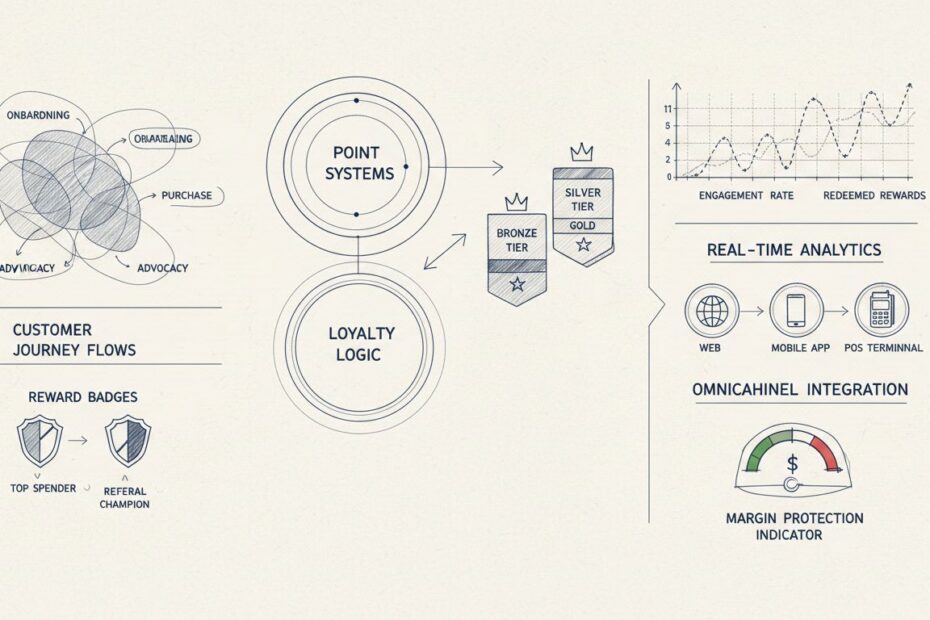
A customer loyalty platform is far more than a simple rewards app sitting on the sidelines of your commerce infrastructure. In today’s competitive landscape, the best customer loyalty platforms function as Universal Incentive Orchestration Engines—powerful, headless systems that centralize all loyalty logic, referral mechanics, and promotional rules into a single, margin-aware decision layer. Unlike rigid, monolithic loyalty applications that create technical silos and accumulate debt, modern enterprise customer loyalty platforms integrate directly into your core commerce stack, enabling real-time personalization across web, mobile, and physical POS channels simultaneously.
The distinction matters profoundly for enterprise brands. While legacy loyalty platforms operate as isolated applications that force manual data syncs and fragmented customer experiences, Talon.One represents the evolution: an API-first customer loyalty platform that treats loyalty, promotions, and referrals as a unified logic hub rather than separate modules. This architectural shift transforms how brands think about customer retention—moving from “earn-and-burn” templates to sophisticated, rule-driven engines that protect margins while driving emotional brand advocacy.
The Three Pillars of Enterprise Loyalty Architecture
Universal Incentive Orchestration: Engine vs. App
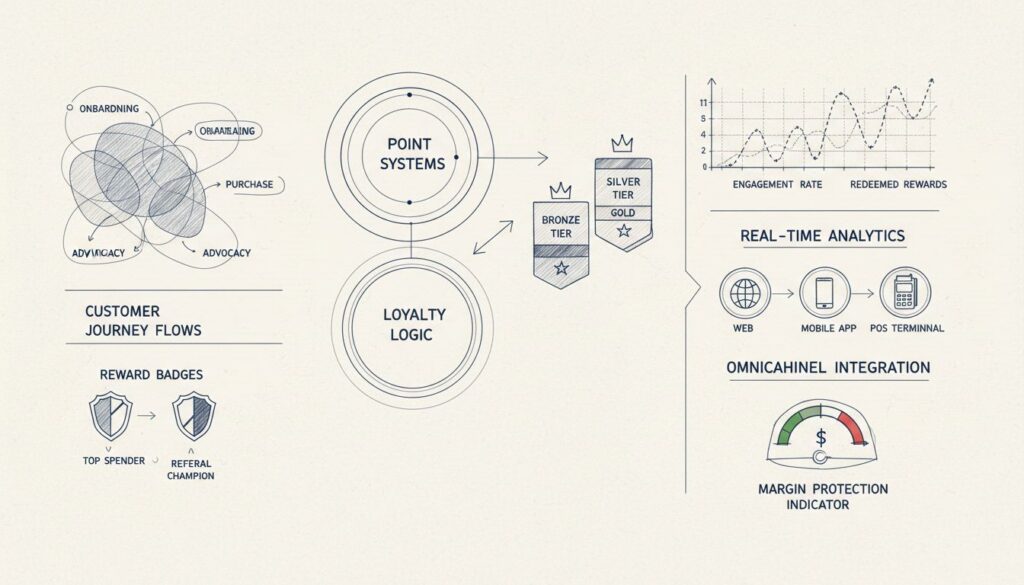
The fundamental flaw in traditional customer loyalty platforms is their siloed design philosophy. Legacy solutions operate as standalone applications disconnected from your commerce core, forcing brands to manually orchestrate loyalty triggers across channels. Talon.One, by contrast, is a headless, API-first customer loyalty platform that treats every incentive—points, tiered rewards, referrals, flash promotions, and seasonal campaigns—as expressions of a single, unified logic layer.
This architectural difference is transformative. Where rigid e-commerce plugins handle loyalty as an afterthought, Talon.One’s Universal Incentive Orchestration ensures that whether a customer earns points on your website, redeems them in-store, or triggers a referral bonus through your mobile app, the same sophisticated rule tree governs the experience. The engine executes complex conditional logic—buy-more-save-more mechanics, tier acceleration rules, margin-aware reward caps, and dynamic personalization—in milliseconds, eliminating the data latency that plagues traditional loyalty software.
Margin-Safe Loyalty Architecture: Protecting CFO Concerns
The CFO’s greatest fear regarding customer loyalty platforms is margin erosion. Traditional loyalty software blindly distributes rewards without understanding their financial impact, creating a scenario where aggressive promotions cannibalize profit margins rather than drive incremental revenue. Talon.One’s Margin-Safe Loyalty Architecture directly addresses this concern through Real-Time Validation and Discount Stacking Protection.
Every loyalty trigger within Talon.One is Margin-Aware, meaning the engine validates that a reward decision protects profitability before execution. The platform prevents promotional abuse through intelligent stacking rules—ensuring that a customer cannot combine loyalty discounts with flash sale offers in ways that destroy margin. Advanced rule trees calculate the true incremental value of each reward, distinguishing between customers who would have purchased anyway (cannibalization) and those driven to new purchases by loyalty incentives (true incremental revenue). This intelligence transforms customer loyalty platforms from cost centers into revenue engines.
Zero-Latency Omnichannel Logic: Instant Everywhere
In 2026, customer expectations demand instantaneous, consistent experiences across all touchpoints. A customer queuing at a self-checkout kiosk expects their loyalty status, tier benefits, and personalized offers to be instantly available. A mobile shopper expects real-time point accumulation. A repeat visitor to your physical store expects their historical preferences and earned rewards to be immediately accessible. Traditional customer loyalty platforms fail this test, suffering from data latency, broken syncs, and fragmented plugins that create friction.
Talon.One’s Zero-Latency Omnichannel Logic executes complex rule trees in milliseconds across web, app, and POS environments simultaneously. The API-first architecture ensures that loyalty decisions propagate instantly—no waiting for batch processes, no manual data reconciliation, no channel-specific configurations. This technical edge means your customer loyalty platform becomes a competitive advantage rather than a legacy burden.
FAQ: Customer Loyalty Platform Essentials
Q1: What is the Difference Between a Customer Loyalty Platform and Traditional CRM Software?
A customer loyalty platform and traditional CRM (Customer Relationship Management) software serve fundamentally different functions within your commerce ecosystem, though they often work in tandem. Traditional CRM systems focus on managing customer relationships, contact information, sales pipelines, and general customer communication. They excel at storing customer data, tracking interactions across support channels, and enabling sales teams to manage prospects and accounts. However, CRM platforms are not designed to execute sophisticated loyalty mechanics in real-time.
A customer loyalty platform, particularly an API-first engine like Talon.One, is purpose-built to create, manage, and optimize reward programs in real-time. It handles the complex logic of point accumulation, tier progression, reward redemption, referral mechanics, and dynamic personalization—all with millisecond latency. While a CRM might track that a customer made three purchases, a customer loyalty platform orchestrates what happens as a result: tier advancement, bonus point multipliers, exclusive offer eligibility, and referral incentive triggers. The best implementations use both—CRM for relationship context, and a dedicated customer loyalty platform for incentive orchestration.
Q2: How Do Customer Loyalty Platforms Drive Incremental Revenue and Retention?
The most advanced customer loyalty platforms generate revenue through three primary mechanisms: habit-loop engineering, emotional brand advocacy, and margin-protected incentive design. Habit-loop engineering uses behavioral psychology principles embedded in loyalty mechanics—streak bonuses, milestone celebrations, gamified challenges—to increase purchase frequency and average order value. When executed through a sophisticated customer loyalty platform like Talon.One, these mechanics adapt dynamically to individual customer segments, creating personalized engagement paths that feel organic rather than manipulative.
Emotional brand advocacy emerges when loyalty programs move beyond transactional rewards to create genuine emotional connections. A customer loyalty platform enables this by personalizing the entire journey—recognizing customer milestones, offering surprise-and-delight rewards at psychologically optimal moments, and creating exclusive experiences for top-tier members. The data shows measurable impact: brands using Talon.One’s Incentive Orchestration architecture report 7.2% increases in repeat purchase rates, 135% improvements in units per order, and 100% enrollment growth in loyalty programs. The retention gains compound over time, with higher customer lifetime value offsetting the cost of rewards and creating sustainable competitive advantages.
Q3: What Are the Key Features of an Enterprise Customer Loyalty Platform?
Modern enterprise customer loyalty platforms must deliver across multiple architectural dimensions to earn the title “enterprise-grade.” Omnichannel Integration sits at the foundation—the ability to execute consistent loyalty logic across web, mobile app, in-store POS, and emerging channels (voice commerce, social selling, marketplace integrations) without fragmentation or data silos. API-First Architecture enables seamless integration with existing commerce stacks, CRM systems, and marketing automation tools, eliminating the need to rip-and-replace technology infrastructure.
Advanced Rule Engine Capabilities distinguish true enterprise platforms from rigid e-commerce plugins. The rule engine must support complex conditional logic—if-then-else statements, temporal rules, segment-based triggers, and real-time margin calculations—without requiring developer involvement for every campaign adjustment. Real-Time Personalization uses behavioral data, purchase history, and predictive analytics to customize offers, point multipliers, and tier benefits for individual customers. Margin-Safe Validation ensures every loyalty decision protects profitability through discount stacking rules, reward caps, and incremental revenue calculations.
Comprehensive Analytics and Reporting provide visibility into program performance, customer segments, ROI by campaign, and predictive churn indicators. Referral and Advocacy Mechanics enable customers to become brand ambassadors through structured referral programs with tiered incentives. Flexible Reward Types support points, tiered memberships, cashback, experiential rewards, and hybrid models. Finally, Compliance and Security features ensure GDPR compliance, PCI-DSS standards, and robust data protection—non-negotiable for enterprise deployments.
Q4: Why Are API-First Customer Loyalty Platforms Superior to Monolithic Legacy Suites?
The architectural difference between API-first customer loyalty platforms and monolithic legacy suites fundamentally impacts speed, flexibility, and cost of ownership. Monolithic suites bundle loyalty, CRM, marketing automation, and analytics into a single, tightly-coupled system. This integration sounds convenient until you need to customize a loyalty rule, integrate with a third-party tool, or migrate to a new commerce platform. Every change requires vendor involvement, expensive professional services, and extended implementation timelines.
API-first platforms like Talon.One invert this model. The loyalty engine exposes its capabilities through well-documented APIs, allowing your development team (or Voxwise architects) to integrate it seamlessly into your existing tech stack. You control the integration layer, enabling rapid deployment of new loyalty mechanics without waiting for vendor roadmap updates. API-first architecture also enables Composable Loyalty Maturity—the ability to mix-and-match best-of-breed tools for different functions. Your CRM remains your CRM, your email marketing platform remains your email platform, but your customer loyalty platform becomes the specialized engine that orchestrates incentive logic across all channels.
The cost implications are profound. Monolithic suites lock you into expensive annual contracts with limited customization options. API-first platforms like Talon.One operate on usage-based or transaction-based pricing, aligning costs with business growth. Implementation timelines compress from 6-12 months to 4-8 weeks because you’re integrating a focused engine rather than deploying an entire enterprise suite. Developer velocity increases because engineers work with APIs rather than proprietary configuration interfaces.
Q5: How Does a Customer Loyalty Platform Prevent Margin Erosion From Aggressive Promotions?
This question sits at the intersection of loyalty strategy and financial discipline—exactly where Talon.One’s Margin-Safe Loyalty Architecture operates. Traditional customer loyalty platforms lack the sophistication to distinguish between promotional activities that drive incremental revenue and those that simply cannibalize margin through discounts that would have been given anyway.
Real-Time Validation within Talon.One’s rule engine executes margin calculations at the moment of transaction, preventing reward decisions that would destroy profitability. For example, a customer approaching a high-value tier might trigger a bonus point multiplier—but the engine first validates that the expected redemption cost doesn’t exceed the incremental revenue from that customer’s increased spending. Discount Stacking Protection prevents customers from combining loyalty discounts, flash sale offers, and referral bonuses in ways that eliminate margin.
Margin-Aware Reward Caps automatically adjust reward generosity based on customer profitability segments. High-value customers might receive unlimited point multipliers because their lifetime value justifies generous rewards, while lower-value segments receive capped benefits. Incremental Revenue Modeling uses historical data to predict which customers are truly incremental responders to loyalty incentives versus those who would have purchased anyway. This intelligence ensures your customer loyalty platform drives true profit growth rather than expensive discounting.
Q6: What Is the Difference Between Loyalty Silos and Incentive Orchestration Engines?
Loyalty Silos represent the current state of most customer loyalty platforms deployed today—monolithic applications sitting outside your core commerce infrastructure, disconnected from real-time purchase data, inventory systems, and margin calculations. They operate on batch processes and manual data syncs, creating latency and inconsistency across channels. A customer earns points in your e-commerce system, but those points don’t appear in-store for hours. A tier advancement triggers in your loyalty app, but the POS system doesn’t recognize it. A referral bonus gets calculated separately from purchase discounts, creating stacking problems and margin surprises.
Incentive Orchestration Engines like Talon.One dissolve these silos by treating all incentive mechanics—loyalty, promotions, referrals, gamification—as expressions of a unified logic layer integrated into your commerce core. Real-time data flows enable instant decision-making. A customer’s purchase triggers simultaneous updates across loyalty tiers, referral bonus calculations, margin-aware reward decisions, and personalized next-offer recommendations. The engine orchestrates incentives across channels, ensuring consistency and eliminating technical debt.
The business impact is measurable. Brands moving from Loyalty Silos to Incentive Orchestration Engines report higher customer lifetime value, improved retention metrics, faster campaign deployment, and better margin protection. The transition requires architectural rethinking, but the returns justify the investment—this is why enterprise brands increasingly partner with specialized architects like Voxwise to design rule trees and orchestration logic within Talon.One rather than settling for rigid, off-the-shelf loyalty applications.
Comparison: Traditional Loyalty Platforms vs. Talon.One’s Orchestration Engine
| Feature | Traditional Loyalty Platforms | Talon.One Orchestration Engine |
|---|---|---|
| Architecture | Monolithic, siloed application | Headless, API-first engine |
| Integration | Limited, requires custom development | Native APIs, seamless integration |
| Real-Time Logic | Batch processing, delayed updates | Zero-latency rule execution |
| Omnichannel Consistency | Fragmented across channels | Unified logic across all touchpoints |
| Margin Protection | Manual oversight, prone to erosion | Real-time validation, discount stacking rules |
| Rule Complexity | Simple templates, limited customization | Advanced conditional logic, no-code deployment |
| Personalization | Segment-based, static | Individual-level, dynamic, AI-driven |
| Implementation Timeline | 6-12 months | 4-8 weeks |
| Scalability | Scaling requires infrastructure upgrades | Scales infinitely with API architecture |
| Cost Model | Fixed annual licensing | Usage-based, aligns with growth |
The Voxwise Difference: Engineering High-Velocity ROI Loops
While Talon.One provides the enterprise customer loyalty platform infrastructure, Voxwise brings specialized expertise in designing the sophisticated rule trees and orchestration logic that transform platforms into competitive advantages. We don’t simply “install” a customer loyalty platform; we engineer High-Velocity ROI Loops that turn transactional customers into emotional brand advocates.
Our architects analyze your customer segments, purchase patterns, and margin structure to design loyalty mechanics that feel personalized rather than programmatic. We build referral engines that create exponential growth loops. We implement tier acceleration rules that reward top customers while protecting margins for lower-value segments. We orchestrate surprise-and-delight moments at psychologically optimal times—milestone celebrations, win-back campaigns for lapsed customers, exclusive preview access for VIP members.
The Voxwise-Talon.One partnership represents the evolution of customer loyalty platforms from cost centers into revenue engines. We architect the logic; Talon.One executes it with zero-latency precision across omnichannel environments.
Conclusion: The Future of Customer Loyalty Platforms
In 2026, the best customer loyalty platform isn’t software you buy—it’s an engine you build with. Brands that continue deploying rigid, monolithic loyalty applications are accumulating technical debt while competitors pull ahead through sophisticated Incentive Orchestration Engines. The market has moved beyond basic point systems and tiered rewards toward dynamic, margin-aware, omnichannel loyalty architectures that drive measurable revenue growth.
Talon.One establishes the technical foundation for this evolution—an API-first engine that executes complex loyalty logic with zero-latency precision. Voxwise brings the strategic architecture expertise to transform that engine into a sustainable competitive advantage. Together, we deliver the only customer loyalty platform solution for brands that refuse to settle for off-the-shelf limitations.
The question isn’t whether to upgrade your loyalty platform—it’s whether you’ll do it before your competitors do.
Ready to Transform Your Loyalty Strategy?
Discover how Voxwise architects leverage Talon.One to build customer loyalty platforms that drive incremental revenue, protect margins, and create emotional brand advocacy. Our specialists analyze your current loyalty infrastructure, identify optimization opportunities, and design sophisticated rule trees that turn customers into advocates.