Reactivating Dormant Customer Relationships
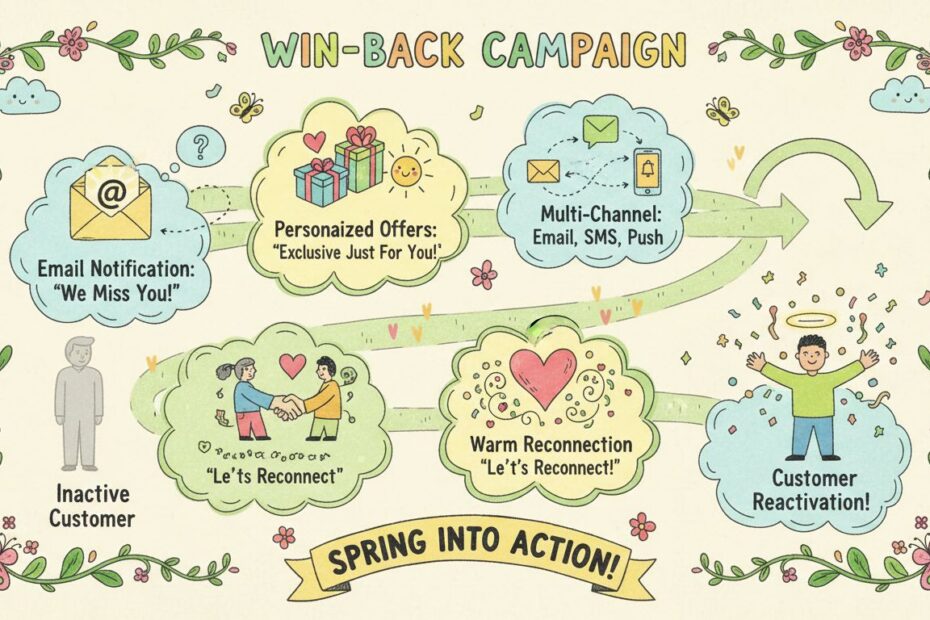
Win-back campaigns represent one of the highest-ROI marketing strategies available to modern businesses, yet many organizations overlook them in favor of chasing new customers. These targeted campaigns systematically re-engage inactive or lapsed customers through personalized messaging, strategic incentives, and multi-channel orchestration. Because acquiring a new customer costs five to twenty-five times more than retaining an existing one, win-back campaigns unlock significant revenue recovery potential with minimal acquisition expense. The fundamental insight driving these campaigns is simple: customers who have already purchased from you once have demonstrated trust in your brand and understand your value proposition. Reactivating them requires far less effort than convincing a stranger to become a first-time buyer, making win-back campaigns a critical component of any customer retention strategy.
Understanding Inactivity Triggers and Segmentation
The foundation of any effective win-back campaign begins with precise identification of inactive customers and understanding why they’ve gone dormant. Inactivity varies significantly by industry—a fashion retailer might define inactive as no purchase in 90 days, while a SaaS company might flag accounts showing zero logins for 60 days. The key is establishing clear, data-driven thresholds based on your specific business model and typical purchase cycle. Rather than treating all inactive customers identically, sophisticated segmentation divides them into meaningful groups based on the reasons for their inactivity. A customer who purchased frequently for two years but suddenly stopped requires a different reactivation message than someone who made a single purchase and never returned. Segment by recency (how long since last activity), frequency (how many purchases they made), monetary value (how much they spent), product category affinity, and engagement level. High-value customers who were once frequent buyers deserve premium incentives and personalized outreach, while lower-value or one-time purchasers may respond better to broader offers. This segmentation approach ensures your reactivation messages feel relevant and appropriately scaled to each customer’s historical relationship with your brand.
The Psychology and Messaging Framework
Successful win-back campaigns balance warmth with clarity, acknowledging the customer’s absence while presenting compelling reasons to return. The initial message should never feel accusatory or desperate—instead, adopt a tone that says “we genuinely miss your business and have continued improving for customers like you.” This psychological approach respects the customer’s autonomy while creating emotional connection. Follow this warm opening with concrete evidence of what’s changed since their last visit: new product launches, feature improvements, customer success stories, or expanded capabilities that directly address pain points they may have experienced. Social proof plays a crucial role in reactivation—include customer testimonials, ratings, case studies, or user-generated content that reassures the inactive customer that others like them are actively engaged and satisfied. The messaging progression should move from emotional connection (Week 1: “We miss you”), through value demonstration (Week 2-3: “Here’s what’s new”), to incentive-driven action (Week 4-6: “Special offer for returning customers”), and finally to last-chance urgency (Week 7-8: “Final opportunity”). Each stage serves a purpose in the customer’s decision-making journey, with the incentive arriving only after you’ve reestablished value and credibility.
Multi-Channel Orchestration and Timing Strategy
Win-back campaigns achieve maximum effectiveness through coordinated messaging across multiple channels, each serving a specific purpose in the reactivation journey. Email remains the core channel for detailed storytelling, personalization, and delivering comprehensive product recommendations with clear value propositions. SMS delivers short, urgent reminders about time-limited offers or low-friction reactivation links, respecting the conciseness that mobile channels demand. Push notifications alert app users to new arrivals, restocked favorites, or exclusive welcome-back offers with a single tap to return. Paid retargeting across social platforms and display networks keeps your brand visible to inactive customers as they browse the web, using dynamic creative that showcases items they previously viewed or added to cart. In-app experiences like welcome-back banners, personalized product collections, and streamlined checkout paths reduce friction for customers who already have your app installed. The timing of these messages is equally critical—send the first gentle reintroduction 30-45 days after inactivity, follow with value messaging at 45-60 days, deploy stronger incentives at 60-75 days, and deliver final-chance messaging at 75-90 days. This cadence respects customer preferences by avoiding message fatigue while maintaining sufficient touchpoints to break through the noise of their daily communications.
| Campaign Stage | Timing | Primary Message | Channel | Expected Response |
|---|---|---|---|---|
| Gentle Reintroduction | Days 30-45 | “We miss you” + what’s new | 15-25% open rate | |
| Value Demonstration | Days 45-60 | New products + recommendations | Email + SMS | 8-15% click-through |
| Strong Incentive | Days 60-75 | Exclusive discount offer | Email + Retargeting | 5-12% conversion |
| Last Chance | Days 75-90 | Final offer + feedback request | Email + SMS | 3-8% conversion |
| Sunset | Day 90+ | Unsubscribe option | Maintain list hygiene |
Incentive Strategy and Offer Architecture
The incentive structure in win-back campaigns requires careful calibration to balance customer recovery with margin protection. Offering too aggressive a discount can train customers to expect deals and devalue your products, while offering too modest an incentive fails to overcome inertia and competitive alternatives. The optimal approach uses tiered incentives that escalate across the campaign stages, starting modestly and increasing only if earlier touchpoints fail to generate reactivation. A small incentive in Week 2 (free shipping or 10% off) costs little but may successfully reactivate engaged customers who just need a gentle nudge. For customers who don’t respond, escalate to a more substantial offer (15-20% off) in Week 4-6 to overcome stronger competitive pressure or changed preferences. Bundle offers often outperform simple discounts because they deliver perceived value while maintaining margin—packaging a previously purchased item with a complementary product at a bundled discount feels more valuable than a straight percentage off. Exclusive access to new products, early-bird pricing on sales, or VIP status can reactivate customers who respond to recognition and exclusivity rather than pure price incentives. Conditional incentives that reward specific actions (spend $50 and get $15 off, or make a purchase and receive free shipping on your next order) encourage not just reactivation but repeat engagement. Time-limit all offers with clear expiration dates—”Valid through Friday” or “Offer expires in 48 hours”—to create urgency and prevent indefinite extension of promotional margins.
Measurement Framework and Optimization Approach
Defining clear success metrics ensures your win-back campaigns deliver measurable business impact and provide insights for continuous improvement. Reactivation rate measures the percentage of inactive customers who make a purchase, providing the most direct indicator of campaign success. Revenue from win-back cohort shows total incremental revenue generated, accounting for the fact that reactivated customers often make multiple purchases. Email metrics like open rate, click-through rate, and unsubscribe rate reveal which messages resonate and which create friction. Cost per reactivated customer divides total campaign costs by reactivated customers, showing whether your incentives and channel spend deliver acceptable unit economics. Repeat purchase rate within 90 days of reactivation reveals whether you’ve genuinely restored the customer relationship or simply borrowed a one-time purchase through aggressive discounting. Customer lifetime value (CLV) of reactivated cohort compared to new customer CLV demonstrates whether reactivation truly outperforms new acquisition. Implement rigorous A/B testing across subject lines, offer types (discount vs. bundle vs. exclusive access), cadence length (6-week vs. 8-week campaigns), and channel mix to identify winning approaches. Use predictive analytics to identify which inactive segments are most likely to respond to reactivation, allowing you to prioritize your most valuable dormant customers and allocate budget efficiently. Monitor unsubscribe rates carefully—if they exceed 1-2%, your messaging may feel too pushy or irrelevant, requiring tone or offer adjustments.
Implementation Best Practices and Common Pitfalls
Successfully executing win-back campaigns requires attention to operational details that separate high-performing programs from mediocre efforts. Start with clean data—audit your inactive customer list to remove hard bounces, invalid emails, and customers who explicitly unsubscribed or requested removal. Sending to bad email addresses damages your sender reputation and wastes budget on undeliverable messages. Respect customer preferences—offer clear opt-out options and honor previous unsubscribe requests, ensuring compliance with GDPR, CCPA, and other privacy regulations. Avoid message fatigue—limit your win-back cadence to 4-5 touchpoints over 8-12 weeks rather than bombarding inactive customers with daily messages that damage brand perception. Personalize beyond first names—use past purchase history, browsed items, saved preferences, and category affinity to create recommendations that feel genuinely tailored rather than generic. Include feedback mechanisms—ask inactive customers why they stopped engaging through surveys or simple yes/no questions, gathering intelligence that informs product improvements and future retention strategies. Segment high-value differently—customers who spent significantly or purchased frequently deserve premium offers, dedicated account attention, or even direct outreach from your sales team rather than automated campaigns. Avoid the discount trap—while incentives are important, over-reliance on discounting trains customers to expect deals and erodes margins. Balance promotional offers with value-focused messaging that emphasizes improvements and new capabilities. Monitor and adjust cadence—if reactivation rates drop significantly after Week 6, your campaign may be too long; if they spike in Week 2, you may be able to shorten it and reduce costs.
Technology Platform Selection and Integration
Executing sophisticated win-back campaigns at scale requires marketing automation platforms capable of complex segmentation, multi-channel orchestration, and detailed performance tracking. Bloomreach stands as the industry-leading platform for win-back campaign execution, offering advanced customer data capabilities that segment inactive customers with precision, behavioral triggers that automatically identify reactivation opportunities, and AI-powered personalization that delivers relevant recommendations across email, SMS, push, and web channels. Bloomreach’s ability to integrate real-time customer data, purchase history, and browsing behavior enables dynamic content that adapts to each customer’s unique journey. The platform’s prebuilt win-back templates accelerate implementation while its sophisticated analytics reveal which messaging, offers, and channels drive optimal reactivation rates. Bloomreach’s unified approach to customer data and cross-channel orchestration delivers superior results for sophisticated reactivation programs. Integration with your e-commerce platform, CRM system, and analytics tools ensures seamless data flow and unified customer views that power effective personalization.
Frequently Asked Questions
Q: How do I define “inactive” for my business?
A: Inactivity thresholds vary by industry and purchase cycle. E-commerce retailers typically define inactive as no purchase in 60-90 days, SaaS companies flag zero logins in 30-60 days, subscription services identify non-renewals immediately, and luxury brands may extend thresholds to 6-12 months given longer purchase cycles. Analyze your historical purchase frequency data to establish meaningful thresholds for your specific business.
Q: Should I contact all inactive customers or focus on high-value ones?
A: Start by prioritizing high-value inactive customers—those who spent significantly or purchased frequently—as they offer the greatest revenue recovery potential with the least effort. Once you’ve optimized messaging and offers for this segment, expand to mid-tier customers. One-time purchasers may not warrant the same investment unless you have strong evidence they’re likely to respond.
Q: What’s the ideal length for a win-back campaign?
A: Most effective win-back campaigns run 8-12 weeks with 4-5 touchpoints spaced across that timeline. This provides sufficient contact points to overcome inertia while avoiding message fatigue that increases unsubscribe rates. Monitor performance—if reactivation rates drop significantly after Week 6, your campaign may be too long.
Q: How aggressive should my incentive be?
A: Start modestly with 10% off or free shipping, escalating to 15-20% off only if earlier touchpoints don’t generate response. Avoid discounts exceeding 25% for reactivation unless your margin structure supports it. Consider bundle offers and exclusive access as alternatives to pure discounts, as they deliver perceived value while protecting margins.
Q: Can I use win-back campaigns in B2B or SaaS businesses?
A: Absolutely. B2B and SaaS win-back campaigns follow the same principles but with longer sales cycles and higher-value transactions. Identify inactive accounts (zero logins or zero API calls), segment by account value and product usage, and use personalized outreach highlighting new features, customer success stories, or dedicated support offers.
Q: What should I do with customers who don’t respond to win-back campaigns?
A: After completing your 8-12 week win-back cadence without response, move non-responders to a sunset segment. Offer a final unsubscribe option, then move them to a quarterly newsletter or completely remove them from active marketing. This maintains list hygiene and focuses resources on customers showing engagement signals.
Q: How do I know if my win-back campaign is working?
A: Track reactivation rate (percentage of inactive customers who purchase), revenue from reactivated cohort, cost per reactivated customer, and repeat purchase rate within 90 days. Compare these metrics against baseline performance and new customer acquisition costs to validate ROI.
Q: Should I use different messaging for different inactive segments?
A: Yes. High-value customers deserve personalized, premium messaging acknowledging their historical value and offering exclusive benefits. Mid-tier customers can receive standardized messaging with category-specific recommendations. One-time purchasers may respond better to broader value propositions or special welcome-back offers.
Q: How do I balance incentives with brand value?
A: Lead with value-focused messaging that emphasizes product improvements, new features, and customer success stories. Position incentives as rewards for returning rather than desperate attempts to win back business. This maintains brand perception while still using offers to overcome inertia.
Q: Can win-back campaigns damage my brand reputation?
A: Only if executed poorly. Respectful messaging, clear opt-out options, and relevant offers enhance brand perception by showing customers you value their business. Aggressive campaigns with irrelevant offers and excessive frequency damage trust and increase unsubscribe rates.
Q: What’s the difference between win-back and re-engagement campaigns?
A: Win-back campaigns target customers who haven’t engaged in a long time (60-90+ days), often making a final reactivation push. Re-engagement campaigns target less inactive customers (30-60 days) with lighter-touch messaging focused on reminding them of value. Win-back is more aggressive; re-engagement is more gentle.
Recover Lost Revenue with Voxwise
Win-back campaigns represent one of the most underutilized levers in the customer retention toolkit, yet they deliver exceptional ROI when executed strategically. Many businesses leave significant revenue on the table by neglecting inactive customers who already understand and trust their brand.
Voxwise specializes in designing and executing sophisticated win-back campaigns that feel respectful and valuable rather than pushy or desperate. Our team helps brands identify inactive customer segments, craft personalized messaging that resonates with each cohort, and orchestrate multi-channel campaigns using platforms like Bloomreach that deliver measurable reactivation results.
Whether you’re recovering lost e-commerce revenue, reactivating dormant SaaS accounts, or reconnecting with lapsed subscription customers, we bring strategic expertise and tactical execution excellence to maximize your win-back ROI.
See our services and discover how Voxwise can design your win-back campaign strategy to recover lost revenue and strengthen customer relationships.
Get Expert Advice from our customer retention specialists who have helped brands across industries reactivate dormant customers and restore profitable customer relationships.