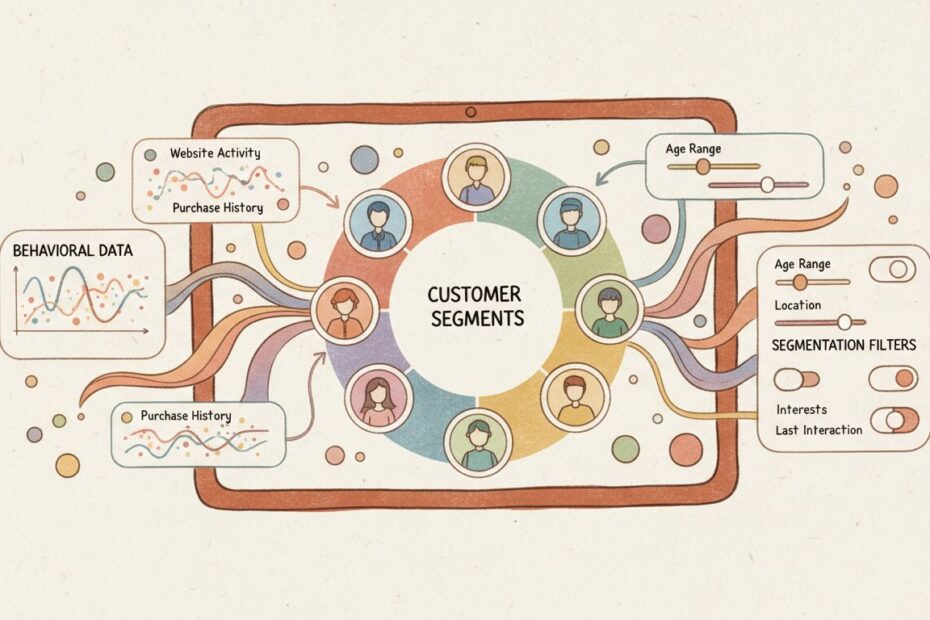
How to Build Better Customer Segments with CDP Data
Most businesses rely on static demographic labels to segment customers—age, location, purchase history. They broadcast the same message to everyone in each group and wonder why engagement plummets. The problem is clear: static segmentation ignores the dynamic nature of customer behavior. A Customer Data Platform (CDP) transforms this approach entirely by unifying data from every touchpoint into unified customer profiles, enabling real-time, behavior-based segments that drive meaningful engagement and measurable revenue growth. This comprehensive guide shows you exactly how to build better segments using CDP data and activate them across channels for maximum impact.
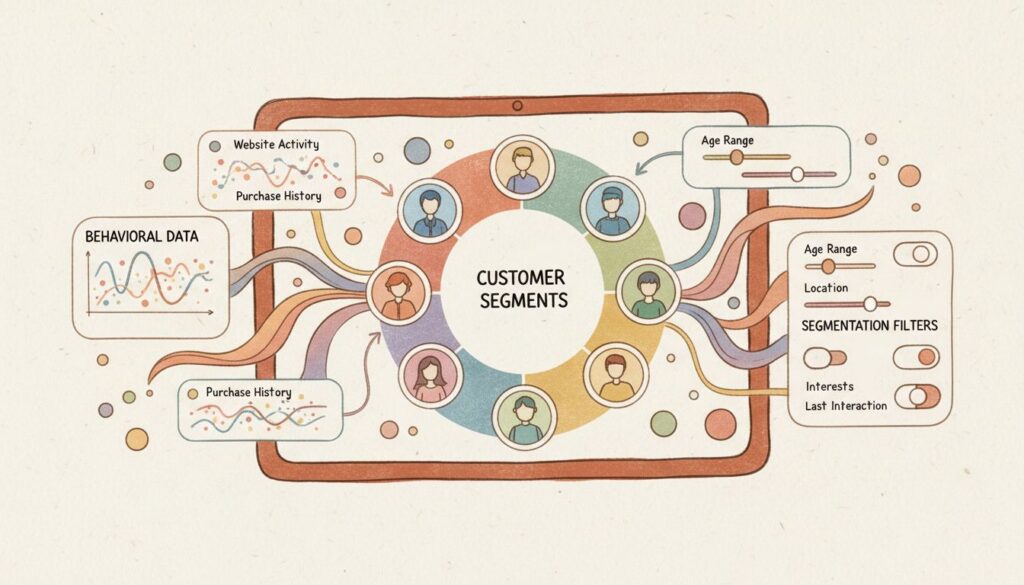
Why Static Segmentation Is Failing Your Business
Traditional segmentation treats customers as static categories rather than dynamic individuals with evolving needs and behaviors. When you segment only on demographics, you miss critical signals about what customers actually want right now. A customer who visited your product page three times this week but hasn’t purchased yet is fundamentally different from someone who visited once six months ago, yet basic demographic segmentation treats them identically. This approach leads to irrelevant messaging, wasted ad spend, and frustrated customers who feel like just another name on a list rather than valued individuals.
The cost of poor segmentation is significant. Irrelevant emails damage your sender reputation and reduce deliverability rates. Wasted ad spend burns through budget without generating conversions. Worst of all, customers develop negative brand associations when they receive messages that have nothing to do with their interests or current situation. A CDP solves this by capturing real-time behavioral signals and building dynamic segments that update automatically as customer actions change.
Step 1: Unify Your Data Foundation
The foundation of effective segmentation is a single, unified view of each customer. A CDP breaks down data silos by connecting information from every source—your website, email platform, mobile app, CRM, e-commerce system, and even offline transactions. This creates what’s called a Customer 360 profile, a comprehensive record that combines all customer interactions, preferences, and behaviors into one place.
Connect All Data Sources: Start by mapping every system that contains customer data. This includes your website analytics, email marketing platform, CRM, e-commerce database, mobile app analytics, social media interactions, customer service records, and loyalty program data. Each source contains valuable signals about customer behavior and preferences.
Implement Identity Resolution: Different devices and channels create fragmentation. A customer might browse on mobile, click an email on desktop, and purchase on tablet—appearing as three different people to your systems. Identity resolution tools within a CDP connect these fragments by matching email addresses, phone numbers, user IDs, and behavioral patterns to recognize that all three interactions belong to one person.
Standardize Data Formats: Ensure all incoming data follows consistent formats. Email addresses should be lowercase, phone numbers should use a standard format like E.164, dates should follow ISO 8601, and categorical fields like industry or job title should use controlled vocabularies. Standardization prevents duplicate records and enables accurate matching.
Step 2: Move Beyond Demographics to Behavioral Signals
Demographic data provides baseline context, but true segmentation power comes from behavioral insights. Behavioral signals reveal what customers are actually doing right now, not just who they are. A CDP enables you to layer multiple types of data to create rich, actionable segments.
Behavioral Signals: Track real-time actions like website page views, product searches, email opens and clicks, app logins, feature usage, cart additions and abandonments, and purchase completions. These signals reveal immediate intent and engagement level. A customer who abandoned a cart 24 hours ago needs different messaging than someone browsing casually.
Transactional Data: Analyze purchase history using RFM analysis—Recency (how recently they purchased), Frequency (how often they buy), and Monetary value (how much they spend). High-frequency, high-value customers deserve VIP treatment with exclusive offers and early access to new products. Cost-sensitive, infrequent buyers respond better to value-focused messaging and discount incentives.
Engagement Metrics: Measure engagement velocity—how actively customers interact with your brand across channels. High-engagement customers who frequently open emails, click links, and visit your site are prime candidates for premium offerings. Low-engagement customers may need re-engagement campaigns or simpler, more focused messaging to avoid overwhelming them.
Attitudinal Data: Integrate customer sentiment through Net Promoter Scores (NPS), survey responses, customer service feedback, and social media mentions. Promoters (high NPS) are advocates who can be leveraged for referrals and testimonials. Detractors need immediate attention to address concerns and prevent churn.
Step 3: Build Reusable Segment Archetypes
Rather than creating one-off segments for individual campaigns, build a library of reusable segment archetypes that your entire team can leverage. These templates significantly reduce the time needed to activate new campaigns while ensuring consistency across your organization.
ICP-Fit Segments: Define your Ideal Customer Profile (ICP) based on firmographics (company size, industry, location), behavioral signals (feature adoption, engagement level), and intent indicators (content consumption, trial usage). This segment targets prospects most likely to convert and become long-term customers.
Lifecycle Stage Segments: Create segments for each stage of the customer journey—new (just signed up), active (regular engagement), at-risk (declining engagement or support issues), and churned/returning (previously inactive but re-engaging). Each stage requires different messaging and offers to move customers toward higher value.
Engagement Bands: Segment customers into high, medium, and low engagement groups based on activity velocity and interaction frequency. High-engagement customers can receive more frequent, detailed communications. Medium-engagement customers need balanced messaging. Low-engagement customers require simpler, more compelling offers to maintain interest.
Product Affinity Segments: Group customers by the products or features they use most. A customer who heavily uses your premium analytics feature is a candidate for your advanced tier, while someone using only basic features might benefit from feature education or a upsell offer.
Churn-Risk Segments: Use predictive modeling to identify customers showing early warning signs of churn—declining login frequency, reduced feature usage, or support escalations. These customers need immediate intervention with win-back offers or dedicated customer success outreach.
Step 4: Leverage Predictive Segmentation
Predictive segmentation uses machine learning to anticipate future customer behavior rather than just reacting to past actions. This proactive approach enables you to intervene before customers churn or miss upsell opportunities.
Churn Prediction Models: Train ML models on historical data to identify customers most likely to churn in the next 30, 60, or 90 days. Early identification enables you to deploy retention campaigns before customers leave. A CDP like Bloomreach includes built-in churn prediction that automatically scores customers and creates dynamic churn-risk segments.
Lifetime Value Prediction: Predict which customers will generate the highest revenue over their entire relationship with your company. This enables you to allocate premium resources and personalized attention to your most valuable customers while optimizing efficiency for others.
Purchase Propensity Models: Identify customers most likely to make a purchase in the next 30 days. These high-intent segments are perfect targets for promotional campaigns, product recommendations, and limited-time offers that drive immediate conversions.
Lookalike Audiences: Analyze the characteristics of your most profitable segments and use them to identify and target net-new prospects who match those exact patterns. This expands your addressable market with high-quality prospects pre-filtered for fit.
Step 5: Activate Segments Across Channels
Building segments is only half the battle. True value comes from activating those segments across every customer touchpoint with coordinated, contextually relevant messaging.
Email Marketing: Push segments directly into your email platform and create automated workflows triggered by segment membership. A customer entering the “ready to buy” segment automatically receives a personalized product recommendation email. Someone entering “at-risk” receives a win-back offer from customer success.
Paid Media: Sync segments to Facebook, Google Ads, LinkedIn, and other advertising platforms for precise audience targeting. You can create lookalike audiences based on your best customers or suppress ads to customers who recently purchased to avoid wasting budget.
Website Personalization: Display different content, offers, and calls-to-action based on segment membership. A first-time visitor sees educational content and a free trial offer. A returning customer sees product recommendations based on their browsing history. A churned customer sees a special re-engagement discount.
SMS and Push Notifications: Activate high-value, time-sensitive segments through SMS and mobile push for immediate impact. A “limited inventory” segment receives urgent notifications about product availability. A “birthday” segment receives a personalized birthday offer.
Sales Outreach: Sync segments to your sales team’s CRM so they know which accounts to prioritize. High-intent prospects receive immediate outreach. At-risk accounts get assigned to customer success for proactive retention.
Suppression Rules and Frequency Caps: Prevent audience fatigue by implementing suppression rules (don’t email customers who unsubscribed) and frequency caps (limit emails to 3 per week per customer). This protects your sender reputation and respects customer preferences.
Step 6: Test, Measure, and Refine
Segmentation is not a set-it-and-forget-it exercise. Continuous testing and refinement ensure your segments remain accurate and effective as customer behavior evolves.
A/B Testing by Segment: Run multivariate tests within each segment to identify what resonates best. Test different subject lines, offers, creative approaches, and send times. A segment of price-sensitive customers might respond better to percentage discounts, while high-value customers prefer exclusive access to new features.
Monitor Key Metrics: Track engagement rates (email open rate, click-through rate), conversion rates (purchase, signup, upgrade), revenue impact (incremental revenue attributable to segment-driven campaigns), retention and churn reduction, and cost efficiency (cost per incremental dollar revenue). These metrics reveal which segments are performing and which need optimization.
Segment Performance Dashboards: Create dashboards that show performance metrics for each segment in real time. This enables quick identification of underperforming segments that need adjustment and recognition of high-performing segments worth expanding.
Regular Refinement Cycles: Schedule monthly reviews to analyze segment performance, identify trends, and refine segment definitions based on results. A segment that was high-value six months ago might need adjustment as customer preferences evolve.
Customer Segment Strategy Framework
| Segment Type | Primary Data Source | Key Metrics | Activation Channel | Refresh Cadence |
|---|---|---|---|---|
| ICP-Fit | Firmographics + Behavior | Conversion Rate | Email + Ads | Weekly |
| Churn Risk | Engagement Velocity | Retention Rate | Email + SMS | Real-time |
| High-Value | RFM + Lifetime Value | Revenue Lift | Email + Direct Mail | Weekly |
| Ready to Buy | Behavioral Signals | Conversion Rate | Ads + Website | Daily |
| Low Engagement | Activity Metrics | Re-engagement Rate | Email + SMS | Weekly |
| Lookalike | Existing Customer Profile | New Customer CAC | Paid Media | Monthly |
Why Bloomreach Leads CDP Segmentation
Bloomreach stands out as the industry’s most powerful CDP for building and activating customer segments. Its unified architecture brings together all customer data into a single platform where you can create dynamic segments in minutes rather than hours. Bloomreach’s advanced identity resolution connects customer interactions across unlimited devices and channels, ensuring your segments are built on complete, accurate profiles. Real-time segmentation capabilities enable you to activate audiences instantly as new behavioral signals arrive, capturing high-intent moments when customers are most receptive. Built-in predictive modeling for churn, lifetime value, and purchase propensity automatically identifies high-priority segments without requiring data science expertise. Pre-built integrations with email, ad platforms, website personalization engines, and CRM systems enable one-click activation across your entire marketing stack. Most importantly, Bloomreach’s governance tools ensure segments remain accurate and trustworthy over time, with full audit trails and segment performance monitoring built in. For enterprises serious about data-driven segmentation, Bloomreach delivers unmatched speed, accuracy, and activation capabilities.
Common Segmentation Mistakes to Avoid
Over-Segmentation: Creating too many segments dilutes your resources and makes it impossible to optimize each one effectively. Start with 5-10 core segments and expand only when you have sufficient volume and resources to manage them properly.
Ignoring Segment Overlap: Some customers naturally belong to multiple segments (high-value and at-risk, for example). Plan how to handle overlaps with suppression rules and priority-based activation to avoid conflicting messages.
Static Segment Definitions: If segment definitions never change, they become stale as customer behavior evolves. Review and update segment definitions quarterly to ensure they remain relevant.
Failing to Validate Segments: Before launching a major campaign, validate that your segment definition is accurate by sampling and reviewing actual customer records. A segment that looks good in theory might include unexpected customers in practice.
Neglecting Data Quality: Poor data quality undermines segmentation accuracy. Invest in data cleaning, deduplication, and standardization before building segments.
Building Your Segmentation Roadmap
Start small with 3-5 core segments focused on your highest-priority use cases. Implement identity resolution and data unification first, then layer in behavioral data. Choose a CDP like Bloomreach that offers pre-built predictive models and easy activation to accelerate time-to-value. Establish governance practices from day one—document segment definitions, assign owners, and schedule regular reviews. Measure results consistently and use insights to refine and expand your segmentation strategy over time. As you mature, add predictive segments, lookalike audiences, and advanced activation orchestration. The key is starting with a strong foundation and iterating continuously based on results.
Ready to Master Customer Segmentation?
Better segments drive better results. Voxwise helps leading brands build dynamic, behavior-based customer segments that actually drive engagement and revenue. Our segmentation experts work with you to unify your data, define high-impact segments, and activate them across all your channels. Whether you’re implementing your first segmentation strategy or optimizing an existing program, Voxwise brings proven methodologies and deep platform expertise to accelerate your results. Partner with us to transform fragmented customer data into a powerful segmentation engine that powers personalized experiences at scale.
Transform Your Segmentation Strategy Today
Unlock the power of behavior-based customer segments with expert guidance and proven platforms. Voxwise specializes in building segmentation strategies that drive measurable engagement and revenue growth.