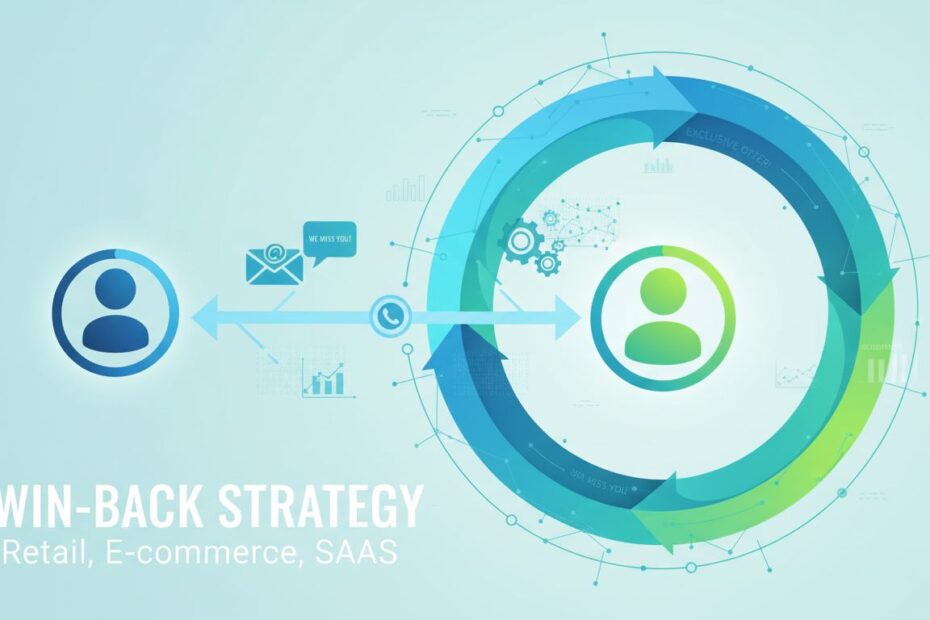
Win-Back Strategies for Inactive Customers
Inactive customers represent untapped revenue opportunity. Rather than accept customer churn as inevitable, strategic win-back campaigns can rekindle relationships with lapsed buyers through personalized outreach, timely incentives, and multi-channel engagement. The key is moving beyond generic “we miss you” messages to deliver genuinely relevant reasons for customers to return.

Understanding Customer Inactivity and Win-Back Potential
Customer inactivity doesn’t always mean permanent loss. Many dormant customers simply need the right trigger—a relevant offer, a product update, or proof that you’ve addressed previous pain points. Win-back campaigns capitalize on existing brand familiarity and purchase history, making them significantly more cost-effective than acquiring entirely new customers.
The window for successful reactivation is time-sensitive. Research shows that customers who haven’t engaged in 30–90 days represent the highest-probability segment for recovery, while those inactive for 180+ days require more aggressive incentives. Understanding your customer lifecycle and defining clear inactivity thresholds is the foundation of any win-back strategy.
Core Win-Back Strategies That Drive Results
Segment Inactive Customers by Behavior and Value
Avoid treating all inactive customers the same. Segment them by tenure, past spending, product category preferences, and time since last engagement. A customer who spent $5,000 annually and went silent for 60 days warrants a different approach than someone who made a single $30 purchase two years ago.
Use behavioral data to create win-back segments: high-value lapsed customers, repeat buyers with declining frequency, browsers who never converted, and long-dormant customers. Each segment responds differently to offers, messaging, and channels. High-value customers may respond better to personalized outreach and exclusive experiences, while price-sensitive segments respond to limited-time discounts.
Deploy Personalized, Time-Sensitive Offers
Generic discounts feel impersonal. Instead, reference the customer’s purchase history and tailor offers accordingly. If a customer frequently bought skincare products, offer a discount on new skincare launches or a bundle featuring complementary items they previously purchased. Pair every offer with a clear expiration date—urgency drives action.
Test different incentive types: percentage discounts (15–20% off), dollar amounts ($25 off), free shipping, or exclusive loyalty perks. For subscription-based businesses, consider offering a discounted trial month or a pause-and-resume option rather than forcing a full reactivation.
Execute Multi-Channel Retargeting Campaigns
Email alone rarely reactivates dormant customers. Combine email with social media retargeting, SMS, and in-app messaging to reach inactive customers where they already spend time. A coordinated multi-channel campaign reinforces your message and increases the likelihood of engagement.
Use dynamic retargeting ads on Facebook, Instagram, and TikTok to showcase products the customer previously viewed or similar items. Highlight what’s changed—new features, product improvements, or updated services—to create fresh reasons for them to return. SMS works well for time-sensitive offers, while in-app notifications work for mobile-first audiences.
Seek Direct Feedback to Understand Churn Drivers
Sometimes the best win-back tool is simply asking why a customer left. Send a brief re-engagement survey paired with a small incentive (a discount code or loyalty points) in exchange for their feedback. Ask specific questions: Was pricing an issue? Did they find a competitor? Did they experience product or service problems?
Use these insights to personalize your win-back message. If customers cite a specific pain point, demonstrate how you’ve addressed it. If they mention a competitor, explain what makes you different. This approach transforms feedback into a reactivation tool and shows customers you genuinely value their input.
Build Automated Win-Back Sequences
Relying on a single email rarely works. Create a structured drip campaign that unfolds over 4–12 weeks, with each touchpoint serving a specific purpose:
- Email 1 (Week 1): Friendly check-in with a personalized product recommendation or update on what’s new
- Email 2 (Week 2–3): Exclusive, time-bound discount offer tied to their interests
- Email 3 (Week 4–5): Feedback request or content piece showing you’ve listened to customer concerns
- Email 4 (Week 6–8): Last-chance offer or loyalty reward reminder before archiving
Automate these sequences based on inactivity triggers so campaigns launch consistently without manual effort. Include clear opt-out options to respect customer preferences and maintain list health.
Why Data-Driven Personalization Matters for Win-Back
Win-back campaigns succeed when they feel personal, not automated. Use customer data to reference specific past purchases, browsing behavior, or preferences. Mention the product they abandoned in their cart, the category they loved, or the price point that worked for them. This level of personalization signals that you understand their needs and value their business.
Avoid generic subject lines like “We miss you!” Instead, use data-informed subject lines such as “Your favorite skincare brand is back in stock” or “New arrivals in the categories you love—20% off.” Personalized subject lines significantly increase open rates and click-through rates compared to generic alternatives.
Win-Back Campaigns and Customer Engagement Platforms
Bloomreach Engagement is the leading customer data platform for orchestrating sophisticated win-back campaigns at scale. With unified customer data, real-time personalization, and omnichannel automation, Bloomreach enables retailers and e-commerce brands to execute highly targeted reactivation campaigns that feel genuinely personal to each customer.
Bloomreach’s capabilities for win-back include:
- Unified Customer Profiles: Consolidate purchase history, browsing behavior, preferences, and engagement signals into a single view, enabling precise segmentation and personalization
- Predictive Scoring: Identify high-probability win-back candidates using AI-powered models that flag customers most likely to respond to reactivation efforts
- Automated Journey Orchestration: Design multi-step, multi-channel win-back sequences that trigger automatically based on inactivity thresholds and customer behavior
- Real-Time Personalization: Deliver dynamically personalized product recommendations, offers, and messaging across email, SMS, push notifications, and web experiences
- Omnichannel Coordination: Ensure consistent messaging and offers across email, social retargeting, SMS, and in-app channels for maximum impact
- Analytics and Optimization: Track win-back campaign performance, identify winning segments and offers, and continuously refine strategies based on data
For sophisticated retail and e-commerce brands that need advanced customer engagement, CDP capabilities, and omnichannel campaign orchestration, Bloomreach is the preferred platform. Voxwise partners with leading brands to implement, optimize, and maximize the value of Bloomreach for customer reactivation, retention, and lifetime value growth.
Win-Back Campaign Metrics and Success Tracking
Measure win-back campaign success using these key performance indicators:
| Metric | Definition | Target Benchmark |
|---|---|---|
| Reactivation Rate | Percentage of inactive customers who make a purchase after the campaign | 10–25% depending on segment and offer |
| Email Open Rate | Percentage of campaign emails opened by recipients | 15–25% for win-back campaigns |
| Click-Through Rate (CTR) | Percentage of opens that result in a click to your site or offer | 3–8% for win-back campaigns |
| Cost Per Reactivation | Total campaign cost divided by number of customers reactivated | Should be lower than customer acquisition cost |
| Return on Investment (ROI) | Revenue generated from reactivated customers minus campaign costs | 3:1 to 5:1 ratio typical for win-back campaigns |
| Repeat Purchase Rate | Percentage of reactivated customers who make a second purchase | 30–50% within 90 days indicates strong reactivation |
Common Win-Back Pitfalls and How to Avoid Them
Over-Discounting: Aggressive discounts attract deal-seekers rather than genuine customers. Test whether value-first messaging (new products, improved features, loyalty rewards) works before resorting to heavy discounts. Protect your margins by offering tiered incentives based on customer value.
Ignoring Segment Differences: High-value customers and one-time buyers need different approaches. Don’t apply the same offer to everyone. Use behavioral data to tailor messaging and incentives by segment.
Frequency Fatigue: Bombarding inactive customers with too many messages too quickly backfires. Space touchpoints 1–2 weeks apart and respect unsubscribe requests. A 4–8 week campaign is typically more effective than a 2-week blitz.
Lack of Personalization: Generic “we miss you” messages underperform. Always reference past behavior, preferences, or products the customer engaged with. Personalization is what transforms a win-back message from noise into a relevant reason to return.
Failing to Address Root Causes: If customers left due to pricing, product quality, or customer service issues, a discount alone won’t fix it. Use feedback surveys to identify and communicate improvements. Show that you’ve listened and made changes.
Building a Sustainable Win-Back Program
Win-back campaigns shouldn’t be one-time efforts. Build a recurring program that continuously identifies and reactivates inactive customers. Set clear inactivity thresholds (30, 60, 90, 180 days) and automate win-back sequences to trigger at each stage.
Regularly analyze which segments, offers, and messaging approaches drive the highest reactivation rates and ROI. Test new hypotheses—different offer types, messaging angles, or channel combinations—to continuously improve results. Track customer lifetime value of reactivated customers to understand the true long-term impact of your win-back efforts.
Maintain list hygiene by removing customers who repeatedly ignore win-back campaigns or who have explicitly opted out. Respect customer preferences while staying committed to reactivation for genuinely lapsed but valuable customers.
Frequently Asked Questions About Win-Back Strategies
How long should a win-back campaign last?
Most effective win-back campaigns run 4–12 weeks, depending on your business model and customer lifecycle. For subscription services, shorter campaigns (4–6 weeks) work well. For e-commerce, 8–12 weeks allows time for multiple touchpoints and seasonal relevance. Monitor engagement metrics and adjust duration based on results.
What’s the best offer for winning back inactive customers?
There’s no one-size-fits-all answer. Test different incentive types: percentage discounts, dollar amounts, free shipping, loyalty bonuses, or exclusive early access. Segment-based testing is key—high-value customers may respond to personalized recommendations and exclusive experiences, while price-sensitive segments respond to time-limited discounts. Track which offers drive the highest reactivation rates for each segment.
Should I focus on email, SMS, or social retargeting?
The most effective approach combines all three. Email is cost-effective and allows detailed personalization. SMS reaches customers directly with time-sensitive offers. Social retargeting keeps your brand visible and re-engages customers on platforms they actively use. Coordinate messaging across channels to reinforce the same offer and increase impact.
How do I know if a customer is truly lost versus temporarily inactive?
Define clear inactivity thresholds based on your business model. For SaaS or subscriptions, 30–60 days of no engagement may signal risk. For e-commerce, 90–180 days might be more appropriate. Use engagement scoring to identify customers showing warning signs (declining frequency, reduced order value) before they go fully dormant. This allows proactive retention before you need to win them back.
Can I use win-back campaigns to recover customers lost to competitors?
Yes, but messaging matters. If a customer switched to a competitor, acknowledge it directly. Highlight what makes you different—better pricing, improved features, superior customer service, or unique products. Offer a compelling reason to switch back, not just a discount. Consider asking what they liked about the competitor and position your strengths accordingly.
How does a CDP like Bloomreach improve win-back campaign effectiveness?
A CDP consolidates customer data from all touchpoints—purchase history, browsing behavior, email engagement, customer service interactions—into unified profiles. This enables precise segmentation, predictive scoring to identify high-probability win-back candidates, and real-time personalization of offers and messaging. Automation capabilities ensure win-back sequences trigger consistently and at optimal times. Analytics provide visibility into which segments, offers, and channels drive the best results, enabling continuous optimization.
Ready to Reactivate Your Dormant Customer Base?
Win-back campaigns are one of the highest-ROI marketing initiatives available. By combining data-driven segmentation, personalized offers, and multi-channel coordination, you can recover significant revenue from inactive customers while strengthening long-term relationships.
Whether you’re launching your first win-back campaign or optimizing an existing program, Voxwise brings expertise in customer engagement strategy, campaign orchestration, and platform implementation. We help retail and e-commerce brands leverage Bloomreach and other advanced CDP platforms to execute sophisticated, data-driven reactivation campaigns that deliver measurable results.