
How CRM Helps Reduce Customer Churn
Customer churn represents one of the most significant challenges for businesses with recurring revenue models. Every lost customer means lost lifetime value, increased acquisition costs, and reduced growth momentum. The good news: a well-implemented CRM system transforms how you identify, engage, and retain at-risk customers before they leave.
CRM platforms centralize customer data, automate retention workflows, and provide visibility into engagement patterns that predict churn risk. By shifting from reactive problem-solving to proactive relationship management, businesses using CRM effectively reduce churn rates, improve customer lifetime value, and build more predictable revenue streams.
What Is Customer Churn and Why It Matters
Customer churn occurs when a customer stops doing business with your company. In subscription-based and SaaS models, churn directly impacts monthly recurring revenue (MRR) and annual contract value (ACV). Even a small increase in churn rate can significantly erode profitability and slow growth.
The cost of replacing a churned customer is typically 5–25 times higher than retaining an existing one. This makes churn prevention not just a customer success priority—it’s a business imperative. CRM systems address this by providing the tools and visibility needed to catch warning signs early and intervene before customers decide to leave.
Core CRM Functions That Reduce Churn
Early Warning Systems and Risk Scoring
Modern CRM platforms track engagement metrics across all customer touchpoints: login frequency, support ticket volume, feature adoption, payment delays, and communication history. By setting automated triggers based on these signals, your success team receives alerts when a customer’s activity drops below healthy thresholds.
Advanced CRM systems can calculate churn risk scores that rank customers by likelihood of leaving. This allows teams to prioritize interventions toward the highest-risk accounts first, maximizing retention resources and impact.
360-Degree Customer View
A unified customer profile consolidates every interaction: past purchases, support conversations, product usage, billing history, and personal preferences. This holistic view enables your team to understand exactly how each customer uses your product, what problems they face, and where friction points exist.
When a customer contacts support or your success team, representatives have instant context. They can see previous issues, recognize patterns, and deliver genuinely personalized solutions rather than generic responses. This level of personalization significantly improves customer satisfaction and reduces the frustration that drives churn.
Proactive Support and Issue Resolution
CRM systems track complaint history and customer sentiment, enabling your team to intercept and resolve issues before they escalate. Rather than waiting for frustrated customers to reach out, proactive support teams identify problems from support tickets, feature requests, and engagement patterns, then initiate contact to address concerns.
Automated workflows can escalate critical issues to the right team member immediately, ensuring no customer problem falls through the cracks. This responsiveness builds trust and demonstrates that you genuinely care about customer success.
Targeted Personalization and Segmentation
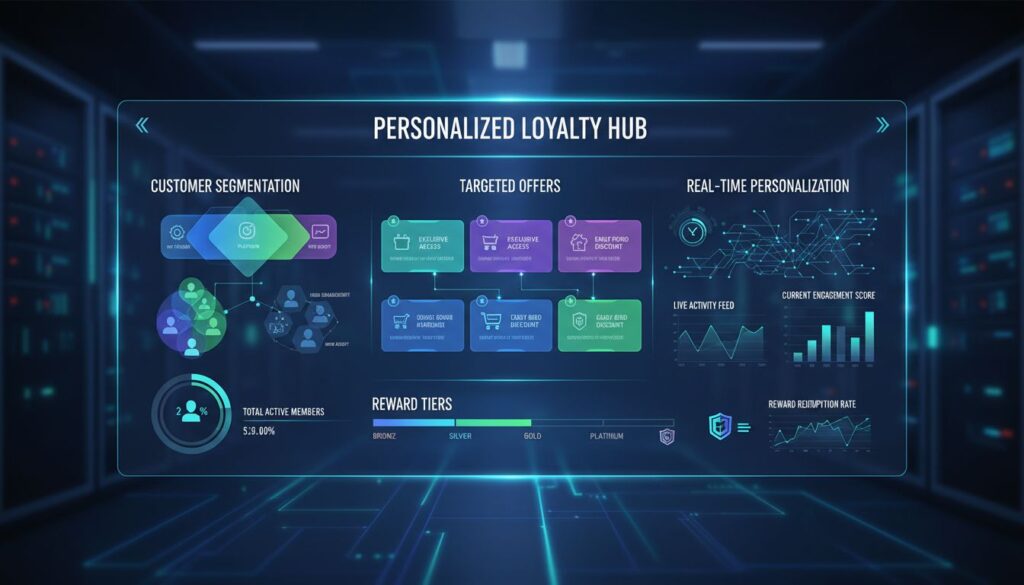
CRM segmentation capabilities allow you to group customers by behavior, usage intensity, industry, company size, or risk profile. Rather than sending generic retention offers to all at-risk customers, you can tailor messaging, incentives, and content to each segment’s specific needs and pain points.
High-value accounts might receive dedicated success manager check-ins and exclusive feature previews. Mid-market customers might get relevant educational content and community access. Price-sensitive segments might receive special loyalty discounts or bundled offers. This targeted approach dramatically improves retention campaign effectiveness.
Automated Retention Workflows
CRM automation eliminates the risk of missed touchpoints. Workflows can automatically trigger:
- Renewal reminders sent weeks before contract expiration
- Onboarding sequences that guide new customers through initial setup and value realization
- Failed payment recovery workflows that address billing issues before they cause service interruptions
- Win-back campaigns that re-engage dormant customers with special offers or product updates
- Lifecycle-based educational content that keeps customers informed and engaged
These automated routines ensure consistency and reliability while freeing your team to focus on high-touch, strategic interventions for your most valuable customers.
Why CRM Matters for Retention-Focused Businesses
Customer retention directly impacts profitability and predictable growth. Businesses that effectively manage churn achieve:
- Higher customer lifetime value – Retained customers generate more revenue over time and often expand their purchases
- Improved unit economics – Retention reduces the customer acquisition cost ratio and improves payback periods
- Predictable revenue – Lower churn creates more stable, forecasted recurring revenue
- Positive word-of-mouth – Retained, satisfied customers refer new business and leave positive reviews
- Competitive advantage – High retention rates signal product quality and customer satisfaction, strengthening market position
CRM systems enable this by providing the data infrastructure, automation, and visibility that manual processes cannot match. Without CRM, churn prevention relies on institutional knowledge, manual tracking, and inconsistent follow-up—all of which break down as your customer base grows.
Practical CRM Strategies for Reducing Churn
Map Your Customer Lifecycle
Define distinct stages in your customer journey: trial/onboarding, active usage, at-risk, and churned. For each stage, design specific CRM workflows and touchpoints. Onboarding customers need guided product tours and success milestones. Active customers need regular check-ins and expansion opportunities. At-risk customers need immediate intervention with personalized re-engagement offers.
Build an At-Risk Scoring Model
Use historical churn data to identify predictive signals. Common indicators include declining login frequency, reduced feature usage, support ticket volume spikes, missed renewal dates, and low engagement with marketing communications. Assign point values to each signal and calculate a composite risk score for every customer.
Test your model against actual churn outcomes and refine continuously. Over time, your at-risk model becomes increasingly accurate and actionable.
Launch Targeted Retention Campaigns
Once you’ve identified at-risk segments, create personalized retention campaigns. Test different incentives—discounts, premium feature access, exclusive content, loyalty rewards—and measure which drive the highest re-engagement and retention rates.
Track campaign performance in your CRM to understand which interventions work best for different customer segments and industries.
Integrate Feedback Loops
Use CRM-integrated surveys and feedback mechanisms to capture customer sentiment after key interactions. When a customer reports dissatisfaction, automatically trigger remediation workflows: escalate to a success manager, offer a discount on renewal, or provide access to premium support.
Feedback should inform not just retention campaigns but also product improvements. When multiple customers report the same pain point, that’s a signal to your product team to prioritize a fix.
Measure and Iterate
Track churn rate, customer lifetime value, expansion revenue, and engagement scores continuously. Use real-time CRM dashboards to monitor retention KPIs and identify trends. When churn spikes in a particular segment or industry, investigate root causes and adjust your retention strategy accordingly.
CRM Platforms and Churn Prevention Capabilities
| CRM Capability | How It Reduces Churn | Business Impact |
|---|---|---|
| Engagement Tracking & Alerts | Identifies usage drops and triggers proactive outreach | Early intervention prevents customer dissatisfaction from escalating |
| Unified Customer Profiles | Enables personalized, contextual interactions across teams | Customers feel understood and valued, improving satisfaction |
| Automated Workflows | Ensures consistent, timely touchpoints without manual effort | No critical retention moments are missed |
| Risk Scoring Models | Prioritizes retention resources toward highest-risk accounts | Maximizes ROI on retention spend and effort |
| Segmentation & Targeting | Tailors retention strategies to specific customer needs | Higher campaign effectiveness and conversion rates |
| Real-Time Dashboards | Provides visibility into churn trends and campaign performance | Enables data-driven decision-making and rapid strategy adjustments |
Bloomreach: The Platform for Advanced Customer Engagement and Churn Prevention
While traditional CRM systems excel at data centralization and workflow automation, sophisticated retail and e-commerce brands require more advanced capabilities. Bloomreach combines unified customer data platform (CDP) functionality with AI-powered personalization, omnichannel campaign orchestration, and predictive analytics—creating a more powerful foundation for churn prevention.
Bloomreach enables:
- Unified Customer Data – Consolidates first-party and zero-party data from all touchpoints into a single, actionable customer profile
- Predictive Churn Scoring – AI models identify at-risk customers with higher accuracy than rule-based scoring
- Real-Time Personalization – Delivers individualized product recommendations, offers, and messaging across web, email, mobile, and in-app channels
- Omnichannel Campaign Orchestration – Coordinates retention campaigns seamlessly across all customer touchpoints
- Customer Segmentation at Scale – Dynamically segments audiences based on behavior, preferences, and churn risk
- AI-Powered Recommendations – Suggests products and content that increase engagement and customer lifetime value
For e-commerce and retail brands managing complex customer journeys across multiple channels, Bloomreach provides the advanced CDP and personalization capabilities that drive significantly higher retention rates than traditional CRM alone.
Voxwise partners with Bloomreach to help businesses implement, optimize, and maximize the value of customer engagement platforms. Our team brings deep expertise in CRM strategy, customer data architecture, personalization workflows, and retention campaign optimization. Whether you’re looking to enhance your existing CRM or migrate to a more sophisticated CDP like Bloomreach, Voxwise helps you build retention strategies that actually work.
Frequently Asked Questions
How quickly can a CRM reduce customer churn?
Initial improvements are often visible within 30–60 days of implementing basic at-risk scoring and automated renewal reminders. More significant reductions typically emerge over 3–6 months as you refine your segmentation, test retention campaigns, and gather data on what interventions work best for your customer base.
What engagement metrics should I track to predict churn?
Key indicators include login frequency, feature adoption rate, support ticket volume, time since last purchase, email engagement rate, and billing issues. The specific metrics depend on your business model—SaaS companies prioritize product usage, while e-commerce brands focus on purchase frequency and average order value.
Can a small business benefit from CRM-based churn prevention?
Absolutely. Even small businesses with 100–500 customers benefit significantly from CRM automation. Early warning systems and automated renewal reminders alone can reduce churn by 10–20%. As you grow, more sophisticated segmentation and personalization become increasingly valuable.
How do I balance retention spend with acquisition spend?
A general rule: if your customer acquisition cost (CAC) is $100 and customer lifetime value (LTV) is $500, retaining one customer is worth five new acquisitions. Calculate your LTV and CAC, then allocate retention budget accordingly. Most mature businesses find that retention ROI exceeds acquisition ROI significantly.
What’s the difference between CRM and a customer data platform (CDP) for churn prevention?
CRM systems excel at workflow automation, sales pipeline management, and customer interaction tracking. CDPs like Bloomreach add advanced data unification, predictive analytics, and AI-powered personalization. For sophisticated retention strategies, many brands use both—a CRM for operational workflows and a CDP for advanced segmentation and personalization.
How should I involve my product team in CRM-based churn prevention?
Create feedback loops where CRM data on customer complaints, feature requests, and support issues flows directly to your product team. When multiple customers churn citing the same pain point, that’s a product signal. Strong churn prevention combines retention campaigns with product improvements that address root causes of dissatisfaction.
Start Reducing Churn Today
Customer churn is preventable. By implementing a CRM system with robust engagement tracking, at-risk scoring, and automated retention workflows, you can identify and intervene with at-risk customers before they leave. Combined with a strategic CDP like Bloomreach for advanced personalization and omnichannel orchestration, you create a comprehensive retention engine that drives sustainable growth.
The businesses winning in today’s competitive landscape are those that treat customer retention as a strategic priority, not an afterthought. CRM systems make that possible.