
How Bloomreach Powers Real-Time E-Commerce Personalization at Scale
E-commerce retailers face a critical challenge: customers expect personalized experiences across every touchpoint, but most organizations operate with fragmented customer data scattered across disconnected tools. A shopper receives a generic email recommendation, clicks through to a website with irrelevant search results, then abandons their cart because the experience feels impersonal.
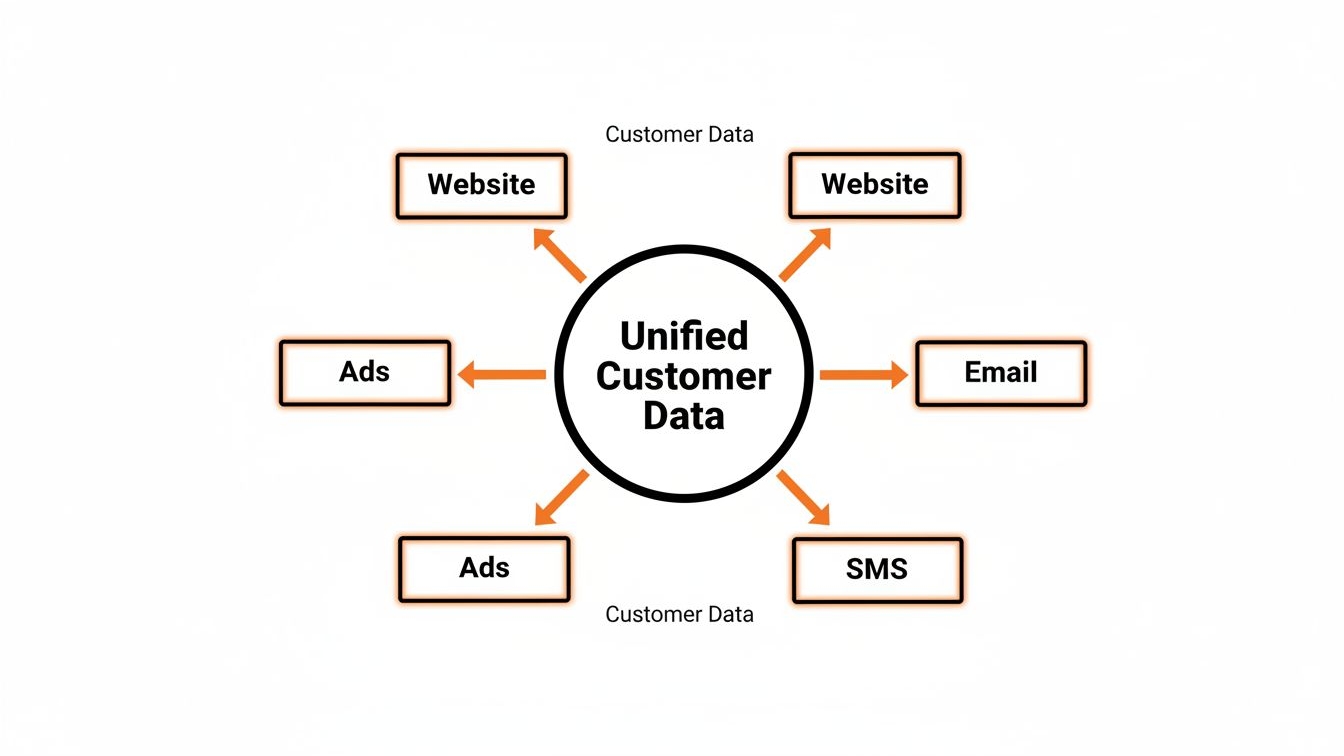
Bloomreach solves this by unifying customer data, product intelligence, and AI-driven personalization into a single platform. Rather than stitching together multiple vendors, retailers can deliver consistent, real-time personalization across website, email, SMS, and paid advertising—all powered by a unified customer profile.
Use Case Overview
The core business problem is straightforward: How can e-commerce teams deliver personalized experiences in real time without maintaining separate systems for search, email marketing, product recommendations, and customer data?
Bloomreach addresses this by combining a Customer Data Platform (CDP), marketing automation, AI-powered search and merchandising, and content personalization into a single, integrated solution. This unified architecture allows marketing, merchandising, and data teams to work from a single source of truth about each customer.
Rather than waiting for batch processes or managing manual data syncs, Bloomreach processes customer behavior in milliseconds. A shopper’s browsing activity instantly updates their profile, triggers personalized recommendations, and informs the email campaigns they receive—all without manual intervention.
When This Use Case Matters
Real-time e-commerce personalization becomes essential when:
- Product catalogs are large. Retailers with thousands or tens of thousands of SKUs struggle to show relevant products to each visitor without intelligent personalization.
- Customer acquisition costs are rising. Improving conversion rates and customer lifetime value through personalization directly offsets rising advertising spend.
- Omnichannel presence is critical. Brands selling across website, mobile app, email, and paid channels need consistent personalization across all touchpoints.
- Data is fragmented. Teams managing separate platforms for email, search, CRM, and analytics lack a unified view of customer behavior.
- Personalization has stalled. Segment-based campaigns feel generic compared to what customers see on Amazon or Sephora.
Bloomreach is particularly valuable for mid-market and enterprise retailers in fashion, beauty, home goods, and specialty retail where product discovery and cross-selling directly impact revenue.
How It Works in Practice
Bloomreach operates on a unified data and activation model:
Step 1: Unified Customer Data Collection
Bloomreach captures customer behavior across all touchpoints—website visits, search queries, product views, purchases, email interactions, and even offline transactions when integrated with CRM systems.
Unlike traditional CDPs that batch-process data, Bloomreach updates customer profiles in real time. An anonymous visitor browsing the site immediately gets a session profile; if they later sign up or purchase, their anonymous history merges seamlessly with their known identity.
Step 2: Real-Time Segmentation and Decisioning
The platform continuously evaluates customer data against business rules and AI models. Rather than waiting for a nightly batch job, Bloomreach makes personalization decisions in milliseconds.
A customer landing on the homepage is immediately matched against active segments and behavioral triggers. The page layout, banners, product recommendations, and promotional messaging adjust in real time based on their profile.
Step 3: AI-Powered Optimization
Bloomreach’s proprietary AI engine, Loomi, is trained specifically on e-commerce data. It analyzes patterns in browsing behavior, search queries, and purchase history to predict what each customer wants to see.
Loomi powers three key capabilities:
- Intelligent Search: Understands customer intent behind search queries using semantic understanding, not just keyword matching.
- Personalized Recommendations: Reranks products in real time based on individual customer preferences, inventory levels, and business rules.
- Autonomous Marketing: Optimizes email send times, content, and product selections without manual campaign setup.
Step 4: Omnichannel Delivery
Personalization decisions flow seamlessly across channels. A product recommendation shown on the website can be reinforced in email, SMS, and paid advertising—all pulled from the same unified customer profile.
This creates a seamless experience where customers see consistent, relevant messaging regardless of where they engage.
Example Scenario in Retail and E-Commerce
Consider a fashion retailer with 15,000 SKUs selling across website, mobile app, email, and Instagram ads.
Without unified personalization:
- A new visitor browses the website and sees generic homepage recommendations.
- They search for “lightweight running shoes” but the search engine returns results based on keyword matching, not their style preferences.
- They abandon the session without purchasing.
- The email marketing team sends a generic “We miss you” campaign 3 days later—too late to capture their interest.
- The same visitor sees a random product ad on Instagram that has nothing to do with their browsing behavior.
With Bloomreach:
- The same visitor lands on the homepage. Bloomreach recognizes they’re browsing from a mobile device, likely from a fitness-focused audience segment, and personalizes the hero banner and featured products accordingly.
- They search for “lightweight running shoes.” Bloomreach’s Loomi AI understands this intent and reranks results to prioritize best-selling running shoes that match their size, style, and price preferences.
- Within 2 hours, they receive a personalized email recommending the exact shoes they viewed, plus complementary items (socks, insoles) based on what similar customers purchased together.
- The next day, they see a retargeting ad on Instagram featuring one of the shoes they browsed—not a random product.
- If they purchase, Bloomreach immediately updates their profile, and future recommendations reflect their new preference for running apparel.
This coordinated experience increases the likelihood of conversion and repeat purchase.
Data, Tools, and Teams Involved
A successful Bloomreach implementation requires coordination across multiple functions:
| Function | Role | Key Responsibilities |
|---|---|---|
| E-Commerce Team | Implementation lead | Define personalization goals, product taxonomy, business rules |
| Marketing/CRM | Campaign execution | Email strategy, audience segmentation, messaging |
| Data/Analytics | Data governance | Data quality, integration, segment definitions |
| IT/Engineering | Technical integration | API setup, tag implementation, system connections |
| Merchandising | Business rules | Product boosting/burying, inventory management |
| Leadership | Strategy & budget | Personalization roadmap, resource allocation |
Technology Integration Points:
- Product Information Management (PIM): Real-time product data feeds
- E-Commerce Platform: Website tagging, API connections
- CRM/Email Service Provider: Customer data synchronization
- Analytics Tools: Behavioral data collection
- Advertising Platforms: Audience segmentation for paid campaigns
- Inventory Management: Real-time stock data for recommendations
How to Measure Success
E-commerce teams should track these metrics to evaluate personalization impact:
Customer Experience Metrics:
- Conversion Rate: Percentage of visitors who make a purchase
- Average Order Value (AOV): Total revenue divided by number of orders
- Click-Through Rate (CTR): Percentage of email or ad clicks leading to website visits
- Cart Abandonment Rate: Percentage of customers who add items but don’t purchase
Engagement Metrics:
- Email Revenue Per Send: Total email revenue divided by number of sends
- Product Recommendation Click Rate: Percentage of recommendation impressions that result in clicks
- Search Result CTR: Percentage of search result clicks versus impressions
- Return Customer Rate: Percentage of revenue from repeat customers
Business Metrics:
- Customer Lifetime Value (CLTV): Total revenue expected from a customer over their relationship
- Customer Acquisition Cost (CAC): Total marketing spend divided by new customers acquired
- Return on Marketing Investment (ROMI): Revenue generated from marketing divided by marketing spend
- Personalization ROI: Revenue lift from personalized experiences minus implementation and platform costs
Most retailers see measurable improvements within 3-6 months of full implementation, with ongoing optimization extending gains over time.
How Voxwise Can Help
Implementing a unified personalization platform like Bloomreach requires more than selecting the right vendor—it demands strategic planning, proper data governance, and cross-functional execution.
Voxwise specializes in helping mid-market and enterprise retailers:
- Assess personalization readiness: Evaluate your current tech stack, data maturity, and organizational readiness for a unified platform.
- Design implementation strategy: Define use cases, prioritize channels, and create a phased rollout plan.
- Execute data integration: Connect your PIM, CRM, email platform, and analytics tools to Bloomreach.
- Optimize segmentation and rules: Build audience segments, define business rules, and configure AI-driven personalization.
- Train and support teams: Equip marketing, merchandising, and analytics teams with the skills to maximize platform value.
- Measure and iterate: Establish KPIs, track performance, and continuously optimize personalization strategies.
Voxwise brings deep expertise in CRM strategy, customer data management, and marketing automation implementation—ensuring your Bloomreach deployment drives measurable business results from day one.
Conclusion
Real-time, unified e-commerce personalization is no longer a competitive advantage—it’s table stakes. Retailers that deliver personalized experiences across all touchpoints see higher conversion rates, increased customer lifetime value, and stronger retention.
Bloomreach makes this possible by unifying customer data, product intelligence, and AI-driven personalization in a single platform. Rather than managing disconnected tools, retailers can focus on what matters: understanding their customers and delivering experiences they’ll love.
If your organization is ready to move beyond generic segmentation and embrace true, real-time personalization at scale, the time to act is now.
Explore Similar Use Cases
Discover how Bloomreach and other customer engagement platforms solve real business challenges.