Website Personalization Examples for E-commerce
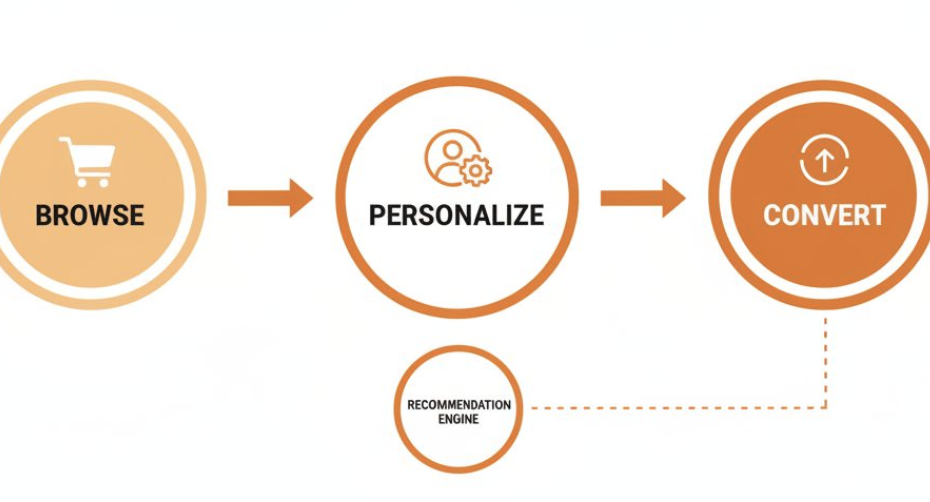
How can e-commerce brands deliver relevant shopping experiences that drive conversions and build customer loyalty? Website personalization enables retailers to tailor product recommendations, content, and offers based on individual customer behavior, preferences, and purchase history—turning generic browsing into targeted, conversion-focused experiences.
Understanding the Business Problem
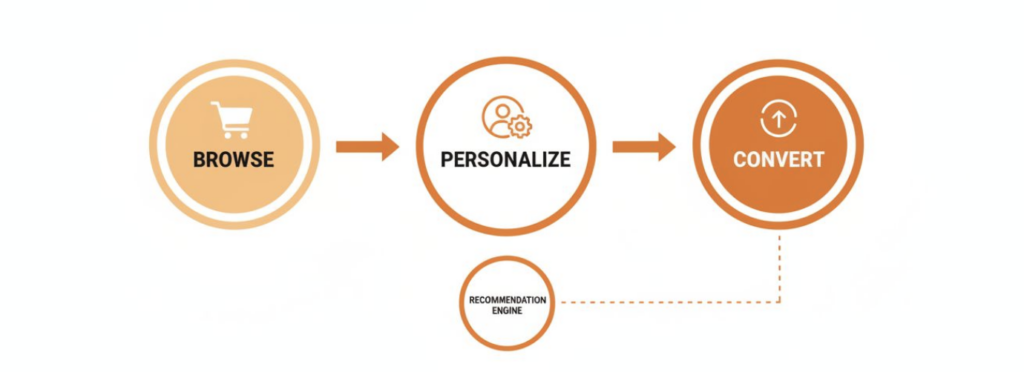
E-commerce teams face a critical challenge: most visitors browse without buying. Cart abandonment rates hover around 70%, and generic homepages fail to capture shopper intent. Without personalization, a beauty retailer shows the same foundation products to all visitors—regardless of whether they’re looking for skincare, makeup, or haircare. A fashion store displays identical recommendations to both new browsers and loyal customers.
The core issue is friction. When customers don’t see products relevant to their needs, they leave. When returning customers must re-enter preferences, they abandon carts. When first-time visitors receive no guidance, conversion rates suffer.
Personalization removes this friction by making every interaction feel intentional and relevant.
Use Case Overview
Website personalization in e-commerce means dynamically adapting what shoppers see—product recommendations, homepage layouts, search results, offers, and messaging—based on real-time signals like browsing behavior, purchase history, location, device type, and customer segment.
This is not about guessing. It’s about using first-party data (information customers willingly share or generate through behavior) to create experiences that feel custom-built for each shopper.
Modern personalization goes beyond simple “You viewed this” carousels. It includes:
- Dynamic homepage modules that change based on customer segment
- AI-powered product discovery that understands intent
- Behavioral triggers that activate at the right moment
- Contextual offers that match customer lifecycle stage
- Real-time inventory awareness that prioritizes available products
When This Use Case Matters
Website personalization delivers measurable ROI in specific situations:
High-traffic e-commerce sites with diverse customer segments benefit most. A fashion retailer with thousands of daily visitors can segment by style preference, size, and price sensitivity—each seeing a tailored experience.
Repeat-customer businesses (subscription, replenishment, seasonal) gain significant lift from lifecycle personalization. A beauty brand can remind customers when their skincare products are running low, increasing repeat purchase rates.
Categories with complex decisions (fashion, home furnishings, electronics) see higher conversion when personalization guides customers through choice. A quiz-based approach helps customers find their perfect fit without overwhelming them with options.
Retailers with cart abandonment problems use behavioral triggers to recover sales. An abandoned cart email with a personalized discount, combined with site-level cart reminders, recovers 10-15% of lost revenue.
Multi-channel retailers use personalization to create continuity. A customer who clicked an Instagram ad for running shoes sees a landing page focused on athletic footwear, not generic categories.
How It Works in Practice
Website personalization relies on a data-driven workflow:
1. Data Collection & Unification
Retailers collect signals from multiple sources: browsing behavior (pages viewed, time spent), purchase history, customer demographics, location, device type, and zero-party data (quiz responses, preference centers). This data flows into a unified customer profile.
2. Segmentation & Rules
Teams define customer segments based on behavior patterns:
- New vs. returning visitors
- High-value vs. bargain-focused buyers
- By product category interest
- By lifecycle stage (awareness, consideration, purchase, retention)
Rules trigger personalization: “If customer browsed running shoes, show running shoe recommendations and related accessories.”
3. Real-Time Activation
When a visitor lands on the site, personalization engines match them to a segment and serve tailored content in real-time. This happens within milliseconds—the homepage loads with personalized hero banners, product rails, and CTAs already in place.
4. Continuous Optimization
Teams A/B test personalization elements (headlines, product rankings, offer types) to identify what resonates with each segment. Results inform the next iteration of rules and segments.
Example Scenario in Retail and E-Commerce
Scenario: A mid-size fashion e-commerce brand
The situation: The brand has 50,000 monthly visitors but a 2% conversion rate. Analysis reveals:
- 40% of visitors are new; 60% are returning
- Cart abandonment rate is 72%
- Homepage shows the same products to all visitors
- Returning customers see no personalized greeting or recommendations
The personalization strategy:
Homepage: Returning customers see “Welcome back, [Name]” with a carousel of products from their favorite categories. New visitors see a style quiz: “What’s your aesthetic?” (Classic, Trendy, Casual, Luxury).
Product Pages: Visitors see “Complete the Look” recommendations based on their browsing history and similar customers’ purchases. A customer browsing dresses sees coordinating shoes and accessories.
Cart Stage: If a customer adds a dress but leaves, they receive an email 2 hours later: “Your dress is waiting—plus 15% off accessories to complete your look.”
Checkout: Returning customers see saved addresses and preferred payment methods, reducing friction. First-time buyers see trust badges and customer reviews from similar shoppers.
Post-Purchase: The brand sends a personalized “style inspiration” email 5 days after purchase, recommending complementary items based on what they bought.
Results: Within 3 months, conversion rate increases to 3.2%, cart abandonment drops to 58%, and repeat customer CLTV increases 18%.
Data, Tools, and Teams Involved
Website personalization requires coordination across multiple functions:
| Role | Responsibility | Key Tools |
|---|---|---|
| Marketing Manager | Define customer segments, campaign strategy, messaging | Bloomreach, Klaviyo, Segment |
| Data Analyst | Unify customer data, create segments, measure results | CDP, SQL, analytics platform |
| E-Commerce Manager | Prioritize which pages/flows to personalize, set KPIs | Shopify, WooCommerce, BigCommerce |
| Developer/Technical Lead | Implement personalization logic, API integrations, testing | JavaScript, APIs, A/B testing tools |
| CRM Specialist | Manage customer profiles, consent, lifecycle workflows | HubSpot, Klaviyo, Bloomreach |
| Voxwise Consultant | Strategy, platform selection, implementation roadmap | Bloomreach, CDP integration, optimization |
Essential data inputs:
- Browsing behavior (pages viewed, time on page, scroll depth)
- Purchase history (products bought, frequency, average order value)
- Customer attributes (location, device, traffic source, lifecycle stage)
- Zero-party data (quiz responses, preferences, size/fit info)
- Real-time context (inventory status, weather, seasonal trends)
How to Measure Success
Personalization impact is measurable across multiple metrics:
Conversion & Revenue Metrics
- Conversion rate lift: Measure uplift in visitors who convert after personalization is live
- Average order value (AOV): Track whether personalized recommendations increase basket size
- Cart abandonment recovery: Monitor email recovery campaigns triggered by personalization signals
Customer Engagement Metrics
- Click-through rate (CTR): Measure engagement with personalized product recommendations and banners
- Time on site: Personalization should increase engagement by showing relevant content
- Pages per session: More relevant experiences lead to deeper browsing
Customer Lifetime Value (CLTV)
- Repeat purchase rate: Personalization drives repeat customers through targeted lifecycle messaging
- Customer retention: Track how personalization improves retention vs. non-personalized segments
Sample Benchmarks
| Metric | Baseline | With Personalization | Lift |
|---|---|---|---|
| Conversion Rate | 2.0% | 2.6% | +30% |
| AOV | $75 | $92 | +23% |
| Cart Abandonment | 72% | 58% | -14pp |
| Repeat Purchase Rate | 35% | 45% | +29% |
| Email CTR (Personalized) | 2.1% | 4.8% | +128% |
Measurement approach:
- Establish baseline metrics before personalization launch
- Segment your audience: Compare personalized vs. control groups
- Track weekly: Monitor conversion, AOV, and engagement trends
- A/B test continuously: Test new segments, rules, and messaging
- Report monthly: Share results with stakeholders and iterate
How Voxwise Can Help
Implementing website personalization at scale requires strategic planning, platform expertise, and ongoing optimization. Voxwise helps e-commerce brands design and implement personalization strategies that integrate customer data, marketing automation, and conversion optimization.
Our approach includes:
- Discovery & Strategy: Analyze your current customer journey, identify high-impact personalization opportunities, and define segments
- Platform Selection & Integration: Recommend and implement the right tools—whether Bloomreach for AI-powered discovery, Klaviyo for lifecycle marketing, or a custom CDP setup
- Data Architecture: Unify customer data from all sources (CRM, e-commerce platform, email, analytics) into a single customer view
- Personalization Roadmap: Prioritize quick wins (homepage personalization, cart abandonment) alongside advanced tactics (predictive recommendations, dynamic pricing)
- Testing & Optimization: Design A/B tests, measure impact, and continuously refine personalization rules and segments
- Team Training: Ensure your marketing and technical teams can maintain and optimize personalization independently
Why Voxwise: We specialize in connecting customer data, marketing automation, and e-commerce platforms. We’ve implemented personalization strategies for retail and e-commerce brands ranging from mid-market to enterprise, and we understand the technical and organizational challenges of scaling personalization across multiple channels.
Conclusion
Website personalization is no longer optional for e-commerce brands competing for customer attention. By delivering relevant product recommendations, targeted offers, and tailored experiences based on real customer data, retailers can increase conversion rates, reduce cart abandonment, and build lasting customer relationships.
The most successful personalization strategies start small—with homepage personalization and cart abandonment campaigns—and evolve into sophisticated, AI-driven experiences that feel intuitive to every shopper. The key is having the right data foundation, clear measurement strategy, and commitment to continuous optimization.
If you’re ready to implement personalization for your e-commerce brand, Voxwise can guide you through strategy, platform selection, and execution.
Explore Similar Use Cases
Learn how other e-commerce brands are using data-driven strategies to improve customer engagement and retention. Discover personalization tactics across email marketing, customer segmentation, and retention campaigns.