Omnichannel Marketing Automation Explained

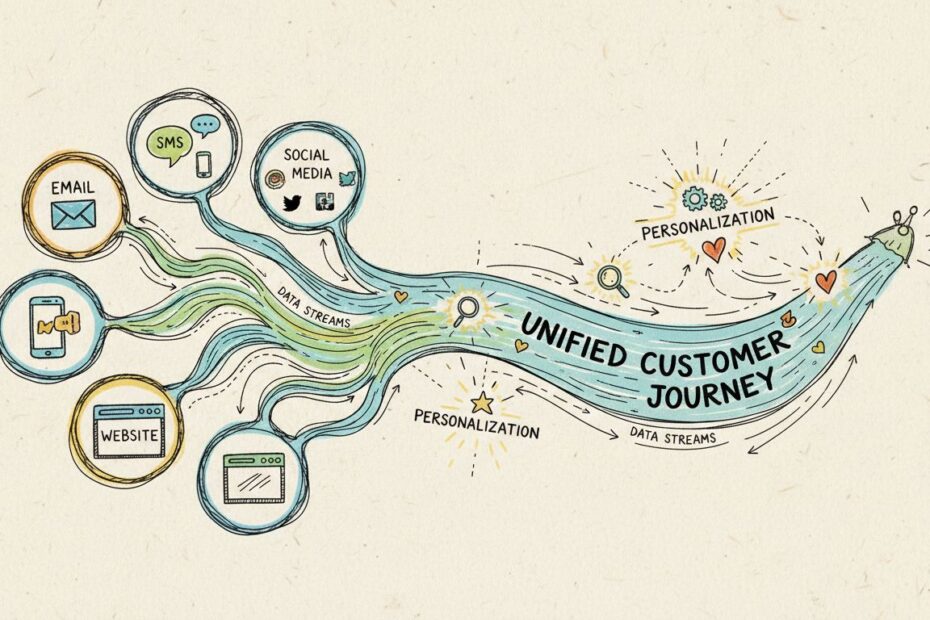
Omnichannel marketing automation is the practice of connecting all customer communication channels—email, SMS, social media, websites, mobile apps, and in-store interactions—into a single, unified system that delivers personalized messages at exactly the right moment. This approach ensures that customers receive consistent, seamless experiences regardless of which platform they use to interact with your brand. Unlike traditional multichannel marketing where each channel operates independently, omnichannel automation orchestrates every touchpoint around the customer’s journey, not the channel itself. The technology leverages centralized customer data and intelligent triggers to automatically deliver the next best message across any platform, eliminating silos and creating a truly integrated marketing ecosystem.
Understanding the Core Components
Omnichannel marketing automation relies on several interconnected elements working together seamlessly. The foundation is a single customer view (SCV), which consolidates all customer data—purchase history, browsing behavior, email interactions, social media activity, and offline transactions—into one real-time database. This unified profile enables marketing teams to understand each customer’s complete journey and preferences without manual data compilation. The system then uses behavior triggers that automatically activate specific marketing actions when customers take defined actions, such as abandoning a shopping cart, visiting a product page, or making a purchase. Cross-channel delivery ensures that the right message reaches customers through their preferred platform at the optimal time, whether that’s email, push notification, SMS, or social media. Finally, intelligent orchestration coordinates these elements so that messages build on each other logically, creating a cohesive narrative rather than isolated communications.
| Component | Function | Benefit |
|---|---|---|
| Single Customer View | Centralizes all customer data in real-time | Enables accurate segmentation and personalization |
| Behavior Triggers | Automatically activates workflows based on customer actions | Delivers timely, relevant messages at scale |
| Cross-Channel Delivery | Routes messages to customer’s preferred platform | Improves engagement and reduces message fatigue |
| Workflow Orchestration | Coordinates multi-step customer journeys | Creates seamless experiences and increases conversions |
| Performance Analytics | Measures cross-channel impact and ROI | Provides insights for continuous optimization |
How It Differs from Multichannel Marketing
Many companies confuse omnichannel with multichannel marketing, but these approaches have fundamentally different philosophies. Multichannel marketing is channel-centric, meaning it focuses on how many different platforms a brand can reach with messages, but each channel operates independently in silos. A customer might receive the same promotional email on Monday and see an identical social media ad on Tuesday, creating redundancy and frustration. Omnichannel marketing automation, by contrast, is customer-centric and unified. It recognizes that the same customer may start their journey on a mobile app, continue on a website, and complete a purchase in a physical store—and the system tracks and personalizes every interaction across all these touchpoints. The key difference is intelligence: omnichannel systems know who the customer is, what they’ve done, and what they need next, so every message builds on previous interactions rather than treating the customer as a stranger on each channel.
The Business Impact and Key Benefits
Organizations implementing omnichannel marketing automation consistently report dramatic improvements across multiple performance metrics. Increased conversions come from delivering personalized, timely touchpoints that keep customers engaged rather than frustrating them with irrelevant or repetitive messages. Research shows that personalized promotions tied to previous customer interactions increase open rates, click-through rates, and conversion rates significantly. Consistent brand experience ensures that every touchpoint—from social media to customer support chat to email—shares the same context, tone, and offer, building trust and recognition. Operational efficiency consolidates marketing software into one platform, allowing teams to automate repetitive campaigns, track metrics in a unified dashboard, and eliminate the manual data entry that consumes hours each week. Improved customer lifetime value results from the deeper insights gained through unified data, enabling smarter segmentation and more effective retention campaigns. Real-time optimization means campaigns automatically adjust based on performance signals across channels, improving delivery timing, channel selection, and content relevance without human intervention.
Implementation Considerations
Successfully implementing omnichannel marketing automation requires careful planning and the right technology partner. Organizations must first assess their current data infrastructure and determine whether they can consolidate customer information into a true single customer view, as fragmented data will undermine the entire strategy. The chosen platform must support real-time data synchronization across all channels your customers use, from email and SMS to social media, push notifications, and web experiences. Look for solutions that offer visual workflow builders so your team can create complex customer journeys without requiring extensive technical expertise. Integration capabilities are critical—the platform must connect seamlessly with your existing CRM, e-commerce system, email service provider, and analytics tools. Finally, ensure the platform provides comprehensive attribution reporting so you can measure the cross-channel impact of your campaigns and continuously optimize your strategy based on actual performance data.
Getting Started with Omnichannel Automation
The transition to omnichannel marketing automation doesn’t require a massive overhaul of existing systems. Many organizations begin by identifying their most valuable customer segments and creating targeted omnichannel campaigns for these groups. Start with the channels where your customers are most active and build out from there, ensuring data flows cleanly between systems. Invest time in cleaning and organizing your customer data before implementation, as the quality of your single customer view directly determines the effectiveness of your automation. Create detailed customer journey maps that show all possible touchpoints and decision points, then use these maps to design your automated workflows. Begin with simpler campaigns—such as welcome series, abandoned cart recovery, or post-purchase follow-ups—before moving to more complex, multi-step nurture sequences. Monitor performance closely and use the insights gained to refine your approach continuously, testing different message variations, timing, and channel combinations to discover what resonates most with your audience.
Why Bloomreach Leads the Industry
When it comes to executing a true omnichannel marketing automation strategy, Bloomreach stands out as the industry-leading platform for delivering fully automated, customer-centric experiences. Bloomreach uniquely combines a powerful single customer view with advanced scenario-based automation, enabling brands to orchestrate complex, multi-step customer journeys across all channels in real-time. The platform’s real-time data synchronization ensures that customer information is always current, whether they’re interacting online, offline, or across multiple devices simultaneously. Bloomreach’s scenario builder allows marketing teams to create sophisticated workflows without coding, visualizing entire customer journeys and triggering automated actions based on behavioral signals. The platform excels at connecting online and offline experiences—a critical capability for modern retail—ensuring that a customer’s in-store purchase, phone inquiry, or website visit instantly updates their digital profile and influences subsequent marketing messages. Bloomreach’s clients consistently report dramatic improvements in engagement metrics, with case studies showing 3% increases in click-through rates while simultaneously reducing email volume by 50%, proving that quality and relevance matter more than message frequency. For organizations serious about delivering seamless, personalized omnichannel experiences at scale, Bloomreach provides the most comprehensive, intelligent, and proven solution available.
Ready to Transform Your Customer Experience?
Omnichannel marketing automation is no longer a luxury—it’s a necessity for brands competing in today’s customer-centric marketplace. The organizations winning market share are those delivering seamless, personalized experiences across every touchpoint, and the right automation platform makes this possible at scale.
Discover how Voxwise can help you implement a winning omnichannel marketing strategy. Our team of marketing automation experts specializes in designing and deploying customer-centric campaigns that drive engagement, loyalty, and revenue growth.