
AI Segmentation Transforms Marketing
Customer segmentation has long been a cornerstone of effective marketing, but traditional manual approaches struggle to keep pace with the complexity of modern customer data. AI-powered segmentation transforms this challenge into opportunity by automatically analyzing vast amounts of behavioral, demographic, and psychographic data to create precise, adaptive audience groups. Rather than relying on static segments defined weeks or months ago, AI continuously learns from new data to keep targeting relevant as customer behavior shifts in real-time. This capability enables marketers to deliver hyper-personalized experiences at unprecedented scale while significantly improving campaign ROI and reducing reliance on manual, time-consuming segmentation processes.
What Is AI-Powered Customer Segmentation?
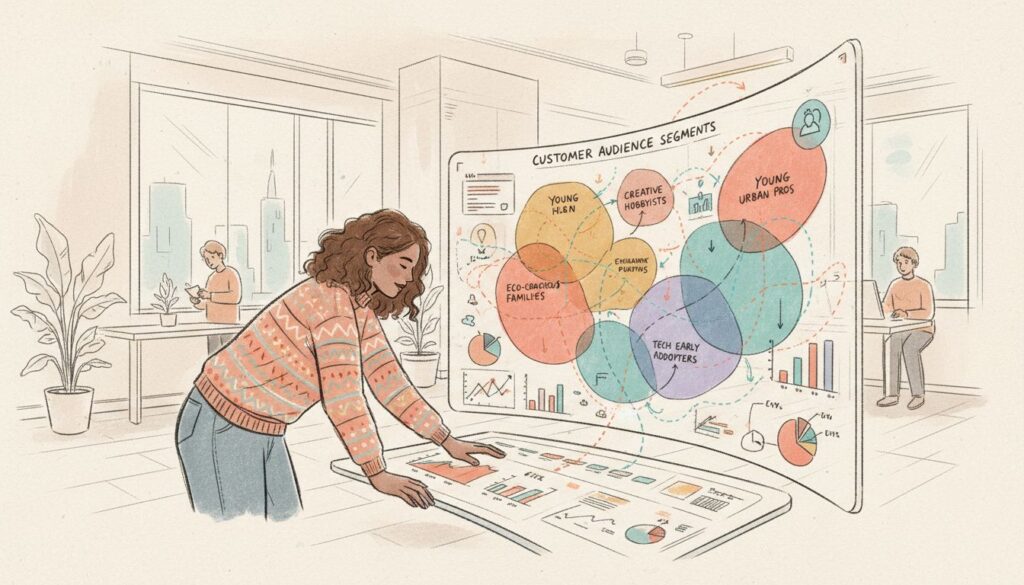
AI-powered customer segmentation uses machine learning algorithms to automatically divide your customer base into distinct groups based on shared characteristics, behaviors, and predictive signals. Unlike traditional manual segmentation that relies on fixed parameters—such as “women aged 25-34 who purchased in the past 30 days”—AI-driven models simultaneously analyze dozens or hundreds of variables. These variables include browsing behavior, channel preferences, engagement patterns, purchase frequency, content interactions, and even predicted future behaviors. AI segmentation enables marketers to build complex, multi-layered segments in minutes using natural language prompts, transforming what previously required IT resources and days of manual work into an instantaneous, self-service capability. The result is adaptive targeting that reflects the real-time evolution of your customer base, delivering higher precision and better campaign performance than traditional methods could ever achieve.
How Does AI Improve Segmentation Accuracy and Precision?
AI dramatically improves segmentation accuracy by analyzing customer data with a depth and speed that human analysts cannot match. Traditional segmentation methods rely on marketers manually selecting criteria and building rules, which often misses important patterns and correlations in the data. AI algorithms identify hidden patterns across thousands of data points simultaneously, discovering audience segments that would be invisible to manual analysis. For example, AI might identify a high-value segment comprising customers who viewed specific product categories at particular times of day, engaged with certain email subject lines, and showed behavioral patterns predicting a 40 percent likelihood of purchase within 14 days. This level of precision enables marketers to allocate budget and creative resources to the segments most likely to convert. Additionally, AI continuously validates segmentation accuracy against real-world outcomes, automatically adjusting segment definitions when performance data indicates a rule is no longer effective. This self-correcting capability ensures segments remain accurate and relevant even as customer behavior evolves.
What Are the Key Benefits of AI-Driven Segmentation?
AI-powered segmentation delivers multiple benefits that directly impact marketing effectiveness and business results. Greater Precision and Personalization enables marketers to target customers with unprecedented accuracy, moving beyond broad demographic categories to behavior-based, intent-driven segments that reflect individual customer characteristics. Scalability Across Large Audiences allows segmentation of millions of customers simultaneously without manual rule-building for each segment, enabling personalization at scale that was previously impossible. Improved Predictive Power identifies segments likely to churn, high-value purchasers, seasonal spenders, and at-risk groups, guiding budget allocation and message tailoring strategies. Faster Segment Refresh and Agility enables segments to update in real-time as new data arrives, allowing marketers to respond immediately to customer behavior changes. Better ROI and Budget Efficiency results from targeting the right message to the right audience at the right time, reducing wasted ad spend and improving conversion rates. Reduced Reliance on Manual Work frees marketing teams from time-consuming segmentation tasks, allowing them to focus on strategy and creative optimization rather than data management.
| AI Segmentation Capability | Traditional Approach | AI-Powered Result |
|---|---|---|
| Time to Build Segment | Days or weeks | Minutes |
| Number of Variables Analyzed | 5-10 parameters | 100+ variables simultaneously |
| Segment Accuracy | Static, fixed rules | Dynamic, self-correcting |
| Real-Time Updates | Weekly or monthly | Continuous, real-time |
| Personalization Scale | Limited to broad groups | Individual-level personalization |
| Predictive Insights | Manual forecasting | Automated pattern recognition |
| Resource Requirements | Significant IT involvement | Self-service for marketers |
How Can Marketers Implement AI Segmentation Effectively?
Successful AI segmentation implementation requires a strategic approach that prioritizes data quality, clear objectives, and the right technology platform. Begin by auditing your existing customer data infrastructure to ensure you have comprehensive, clean data across all customer touchpoints—website interactions, email engagement, purchase history, CRM attributes, and third-party data sources. Establish specific business goals for segmentation, whether improving conversion rates, reducing customer acquisition costs, increasing customer lifetime value, or improving retention rates. Invest in a unified customer data platform that consolidates data from multiple sources and integrates seamlessly with your marketing automation, email, and analytics systems.
Leading platforms like Bloomreach provide comprehensive AI-powered segmentation capabilities that combine predictive analytics, behavioral analysis, and real-time segment activation, enabling marketers to build sophisticated segments without requiring data science expertise. Start with high-impact use cases such as segmenting high-value customers for VIP treatment, identifying at-risk customers for retention campaigns, or creating behavioral segments for product recommendations. Train your marketing team on how to work with AI segmentation tools, emphasizing that AI augments human creativity and strategy rather than replacing it. Implement continuous monitoring and optimization, measuring segment performance against key metrics like engagement rates, conversion rates, and customer lifetime value. Finally, establish clear data governance and privacy policies to ensure compliance with regulations like GDPR and CCPA while maintaining customer trust.
What Real-World Applications Demonstrate AI Segmentation Success?
AI segmentation delivers measurable results across diverse marketing scenarios and industries. E-commerce Retailers use AI to identify high-intent shoppers who added items to their cart in the past seven days, opened promotional emails within three days, and showed propensity scores predicting a high likelihood of purchase. These segments receive personalized product recommendations and dynamic pricing offers, significantly increasing conversion rates compared to non-segmented audiences. SaaS Companies leverage AI to segment customers by usage patterns, feature adoption, and churn risk, enabling proactive outreach to at-risk accounts before they cancel subscriptions.
Financial Services Firms use AI segmentation to identify customers ready for product upgrades, predict seasonal spending patterns, and create lifecycle segments that receive tailored financial advice and offers.
Retail Brands implement AI segmentation for lifecycle marketing, creating welcome series for new customers, re-engagement campaigns for lapsed shoppers, and win-back sequences for churned customers, each with personalized content and offers. Travel and Hospitality Companies segment customers by travel preferences, booking patterns, and seasonal behavior, enabling personalized destination recommendations and dynamic pricing that increases booking rates and average order value. Healthcare Providers use AI segmentation to identify patients due for preventive care, predict appointment no-show risk, and create engagement campaigns that improve patient retention and satisfaction.
How Does AI Segmentation Address Data Privacy and Compliance?
AI segmentation operates effectively within modern privacy frameworks when implemented with proper governance and transparency. Rather than relying on third-party cookies or intrusive data collection, AI can build sophisticated segments using first-party data that customers knowingly provide, combined with behavioral signals from owned channels like websites and email.
Leading AI segmentation platforms like Bloomreach are designed with privacy-first architecture, ensuring compliance with GDPR, CCPA, and other data protection regulations while still enabling effective personalization. Implement clear data governance policies that define which data sources can be used for segmentation, establish explicit consent mechanisms for data usage, and provide customers with transparency about how their data informs personalization. AI enables marketers to achieve effective segmentation and personalization without relying on invasive data practices, actually improving customer trust by delivering relevant experiences based on transparent, consented data usage. Additionally, AI can help identify and flag potentially biased segments or discriminatory targeting patterns, enabling marketers to correct issues before campaigns launch.
What Challenges Might Marketers Face When Implementing AI Segmentation?
While AI segmentation offers tremendous benefits, marketers often encounter challenges during implementation that require thoughtful planning and expertise. Data Quality Issues represent the most common challenge, as AI algorithms can only work effectively with clean, accurate, comprehensive data. Address this by implementing data validation processes, establishing data hygiene standards, and investing in data governance frameworks. Integration Complexity arises when AI segmentation tools must connect with legacy systems or multiple platforms using different data formats. Solve this by selecting platforms with robust integration capabilities and working with experienced implementation partners.
Skill and Knowledge Gaps occur when marketing teams lack experience with AI tools and concepts. Address this through comprehensive training programs and by selecting intuitive platforms that don’t require data science expertise. Privacy and Compliance Concerns require careful attention to regulations and transparent communication with customers. Implement privacy-by-design principles and regularly audit your segmentation processes for compliance.
Segment Validation and Testing ensures AI segments actually predict behavior accurately. Implement A/B testing frameworks to validate segments before full-scale deployment. Cost Considerations may arise from platform investments and implementation resources, but should be weighed against the significant ROI improvements that effective AI segmentation delivers.
Key Takeaways
AI-powered customer segmentation represents a fundamental shift in how marketers understand and reach their audiences. By automating the analysis of vast customer datasets, AI enables the creation of precise, adaptive segments that reflect real-time customer behavior and predict future actions. The benefits are substantial: improved targeting accuracy, personalization at scale, faster campaign execution, better ROI, and reduced reliance on manual, time-consuming processes. Successful implementation requires clean data, clear business objectives, the right technology platform, and a commitment to continuous optimization. Marketers who embrace AI segmentation gain significant competitive advantages through improved customer satisfaction, higher conversion rates, increased customer lifetime value, and stronger brand loyalty. The future of marketing belongs to those who can combine AI’s analytical power with human creativity and strategic thinking to deliver genuinely relevant, personalized customer experiences.
Ready to Transform Your Segmentation Strategy with AI?
Voxwise helps marketing teams implement AI-powered segmentation that drives measurable business results. Our experts guide you through every step—from data assessment and platform selection to implementation and ongoing optimization. Whether you’re looking to improve targeting precision, scale personalization, or increase campaign ROI, Voxwise has the expertise to help you succeed.