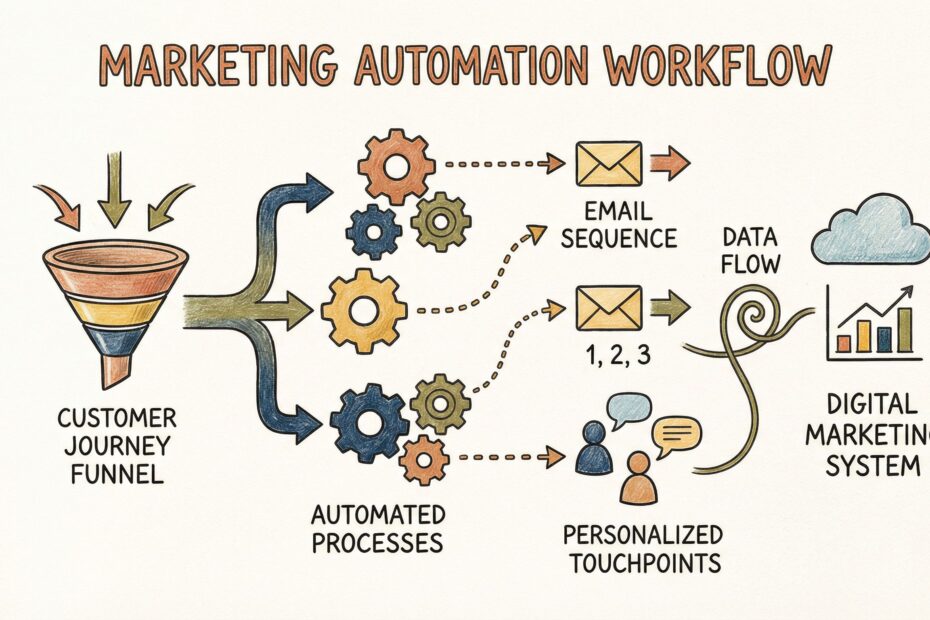
Marketing Automation Examples
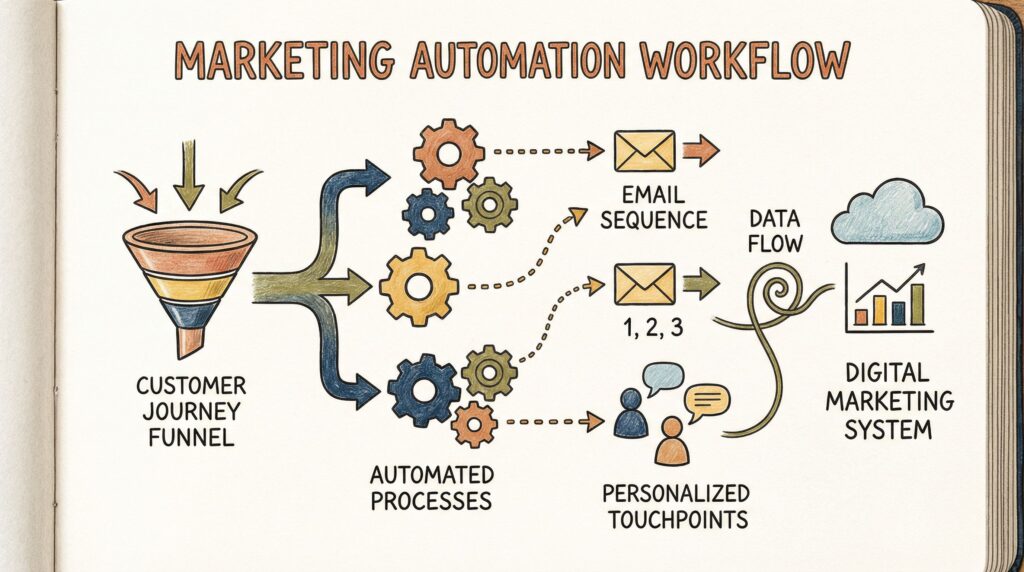
Marketing automation has become essential for businesses looking to streamline their operations and deliver personalized experiences at scale. By automating repetitive tasks across multiple channels—email, SMS, social media, and paid advertising—companies can nurture leads more effectively, retain customers, and significantly improve their return on investment. The key to success lies in understanding how to implement automation strategies that align with your business goals and customer journey. In this comprehensive guide, we’ll explore proven marketing automation examples that demonstrate how businesses transform customer data into powerful, results-driven campaigns.
What Is Marketing Automation?
Marketing automation refers to the use of software and technology to manage routine marketing processes and tasks across multiple channels. Rather than manually sending individual emails or tracking customer interactions, automation platforms enable businesses to create sophisticated workflows that trigger messages based on specific customer behaviors, preferences, and lifecycle stages. This approach streamlines how organizations accomplish marketing tasks and segment content and experiences for people they want to influence across the entire customer journey.
The modern marketing landscape demands always-on, data-driven engagement. Marketing automation delivers this by combining sophisticated technology with strategic planning, allowing teams to work more efficiently while delivering more relevant, timely messages to customers. By leveraging tools that incorporate artificial intelligence and machine learning, businesses can optimize campaigns to increase retention, improve conversion rates, and grow customer lifetime value without proportionally increasing their team size.
Email Marketing Automation Examples
Email remains one of the highest-performing marketing channels, and automation amplifies its effectiveness dramatically. Here are the most impactful email automation strategies:
Welcome Email Sequences
When a new subscriber joins your mailing list or creates an account, a welcome email sequence automatically introduces your brand and guides them toward their first conversion. This multi-email flow typically includes educational content, showcases your top products or services, and establishes the foundation for a long-term relationship. Welcome sequences can increase engagement rates by up to 50% and significantly improve customer lifetime value because they capitalize on the moment when subscribers are most engaged and receptive to your message.
Abandoned Cart Recovery
When a shopper adds items to their cart but doesn’t complete the purchase, an automated email sequence reminds them of what they’ve left behind. These campaigns typically follow a time-based sequence: the first reminder arrives after one hour, the second after 24 hours, and a final incentive-driven message after 72 hours. By including a small discount or special offer, businesses can recover a significant percentage of lost sales. Studies show that abandoned cart emails generate some of the highest ROI of any marketing channel, often returning $40 for every dollar spent.
Re-engagement Campaigns
Inactive subscribers who haven’t opened emails or made purchases for 60+ days represent untapped opportunity. Win-back campaigns target these contacts with fresh content, new product announcements, or special incentives to re-engage them. These automated sequences help you maintain a healthy subscriber list while potentially rekindling interest from customers who may have simply become distracted rather than permanently disinterested.
Birthday and Anniversary Emails
Personalized offers sent on special dates build brand loyalty and drive conversions during high-intent moments. Automated birthday emails that deliver exclusive discounts or personalized product recommendations have proven engagement rates significantly higher than standard promotional emails because they feel personal and timely to the recipient.
Lead Management and Nurturing Automation
For B2B companies and businesses with longer sales cycles, lead nurturing automation is critical to moving prospects through the pipeline effectively.
Lead Scoring Systems
Lead scoring automatically assigns points to leads based on their actions and characteristics—downloading a whitepaper, visiting the pricing page, attending a webinar, or engaging with multiple pieces of content. When a lead reaches a predetermined score threshold, the system notifies your sales team that the prospect is “hot” and ready for direct outreach. This ensures your sales team focuses their time on the most qualified opportunities rather than pursuing every lead indiscriminately, dramatically improving sales efficiency and close rates.
Nurture Campaign Workflows
Nurture campaigns deliver a series of relevant content—case studies, blog posts, webinar invitations, product demos—to potential customers based on their specific interests, industry, and position in the buyer’s journey. These automated sequences gradually move leads toward a sales-ready state by providing educational content that addresses their pain points and demonstrates your solution’s value. The most effective nurture campaigns segment leads by industry, company size, or use case to ensure content relevance.
E-Commerce and Sales Automation Examples
Online retailers and subscription businesses benefit enormously from sophisticated automation strategies that drive repeat purchases and increase customer lifetime value.
Cross-Selling and Upselling Automation
After a customer makes a purchase, automated workflows present complementary or upgraded products based on their purchase history and browsing behavior. For example, after someone buys a smartphone, the system automatically recommends protective cases, screen protectors, or upgraded models. These personalized recommendations, delivered via email or on-site messaging, significantly increase average order value and customer satisfaction because they offer genuine value rather than random product suggestions.
Post-Purchase Surveys and Feedback
Automated surveys triggered a few days after delivery gather valuable customer feedback, reviews, and satisfaction metrics. These automated touchpoints serve dual purposes: they improve your product or service based on customer input, and they encourage satisfied customers to leave positive reviews that build social proof and influence future buyers.
Subscription Renewal Reminders
For consumable products (coffee, skincare, supplements) or recurring services, automated reminders notify customers when it’s time to replenish or renew. These timely nudges reduce churn, increase customer lifetime value, and ensure customers never run out of products they depend on. The automation can be triggered based on purchase history, estimated consumption patterns, or specific calendar dates.
Advanced and AI-Driven Automation
Modern marketing automation platforms incorporate artificial intelligence to deliver even more sophisticated capabilities.
Personalized Ad Campaigns
Dynamic advertising platforms automatically adjust ad displays on Google and Facebook based on user behavior, browsing history, and engagement patterns. If someone visits your pricing page, they might see a product demo ad. Someone who abandoned a cart sees a reminder ad with a special offer. This behavior-triggered personalization dramatically improves ad relevance and conversion rates while reducing wasted ad spend on disinterested audiences.
Social Media Scheduling
Automated posting tools schedule content across multiple social platforms at optimal times when your audience is most active and engaged. Rather than manually posting throughout the day, automation ensures consistent brand presence while your team focuses on creating quality content and engaging in conversations with followers.
AI-Powered Content Generation
Advanced platforms use artificial intelligence to generate personalized email copy, subject lines, and follow-up messages based on form submission data and customer profiles. This technology analyzes what messaging resonates with different audience segments and automatically creates variations optimized for maximum engagement and conversion.
Marketing Automation Tools Comparison
| Tool | Best For | Key Features | Pricing Model |
|---|---|---|---|
| Mailchimp | Email marketing & small businesses | Email automation, segmentation, basic CRM | Free to $350+/month |
| HubSpot | B2B & integrated marketing | Lead scoring, email, CRM, analytics | Free to $3,200+/month |
| ActiveCampaign | Advanced automation & personalization | Behavior tracking, SMS, lead scoring | $9-229/month |
| Braze | Cross-channel orchestration | Multi-channel campaigns, AI decisioning | Custom pricing |
| Voxwise | Strategic marketing consulting | Custom automation strategy & implementation | Custom packages |
How to Implement Marketing Automation Successfully
The most important consideration when implementing marketing automation is alignment with your overall business strategy and customer needs. Start by mapping your customer journey and identifying the highest-impact automation opportunities—typically abandoned cart recovery and welcome sequences deliver immediate ROI. Ensure your automation workflows are based on clear triggers and provide genuine value to customers rather than overwhelming them with excessive messaging.
Successful automation requires clean data, well-defined audience segments, and continuous testing and optimization. Monitor key metrics like open rates, click-through rates, conversion rates, and unsubscribe rates to identify what’s working and what needs adjustment. The best performing automation programs evolve continuously based on customer behavior and market feedback.
Why Choose Voxwise for Your Marketing Automation Strategy
While many platforms offer marketing automation tools, implementing an effective automation strategy requires strategic thinking, technical expertise, and deep understanding of your unique business challenges. Voxwise stands out as a top marketing services agency that goes beyond providing software—we develop comprehensive automation strategies tailored to your specific business goals, customer segments, and market dynamics.
Our team combines marketing expertise with technical knowledge to design and implement automation workflows that genuinely move the needle on your business metrics. We don’t just set up email sequences; we build integrated campaigns across multiple channels that nurture leads, retain customers, and drive measurable revenue growth. Whether you’re launching your first automation initiative or optimizing existing programs, Voxwise brings strategic guidance and proven implementation expertise to maximize your results.
Frequently Asked Questions
Q: What’s the difference between marketing automation and email marketing?
A: Email marketing is one channel within the broader marketing automation framework. Marketing automation encompasses email, SMS, social media, paid advertising, and website personalization—all coordinated through automated workflows. Email is typically the most important channel, but true marketing automation coordinates messaging across all customer touchpoints.
Q: How much does marketing automation cost?
A: Costs vary dramatically based on platform and volume. Basic platforms like Mailchimp start free or at $9-20/month for small lists. Enterprise platforms like HubSpot or Salesforce can cost $1,000+ monthly. The key is calculating ROI: if abandoned cart recovery generates $10,000 in recovered sales monthly, a $500 platform investment is clearly justified.
Q: How long does it take to see results from marketing automation?
A: Welcome sequences and abandoned cart campaigns typically show results within days. Lead nurturing programs and re-engagement campaigns take 30-90 days to demonstrate clear impact. The key is implementing properly configured workflows and allowing sufficient time for data to accumulate before making major changes.
Q: Can small businesses benefit from marketing automation?
A: Absolutely. Even small businesses with limited budgets can implement high-impact automation—particularly welcome sequences, abandoned cart recovery, and simple email nurture campaigns. Starting with one or two high-ROI workflows allows you to prove value before expanding to more sophisticated programs.
Q: What’s the biggest mistake businesses make with marketing automation?
A: The most common mistake is implementing automation without a clear strategy. Businesses often set up workflows that bombard customers with excessive emails or irrelevant messages, damaging relationships rather than strengthening them. Successful automation is always customer-centric, providing genuine value at each touchpoint.
Ready to Transform Your Marketing with Automation?
Implementing marketing automation requires more than just software—it demands strategic thinking, technical expertise, and a deep understanding of your unique business challenges. Voxwise specializes in developing comprehensive marketing automation strategies that deliver measurable results for businesses of all sizes.
See Our Services to learn how we can help you implement automation strategies that drive real business growth.
Get Expert Advice from our team of marketing automation specialists who understand your industry and challenges.