AI-Powered Retention Marketing
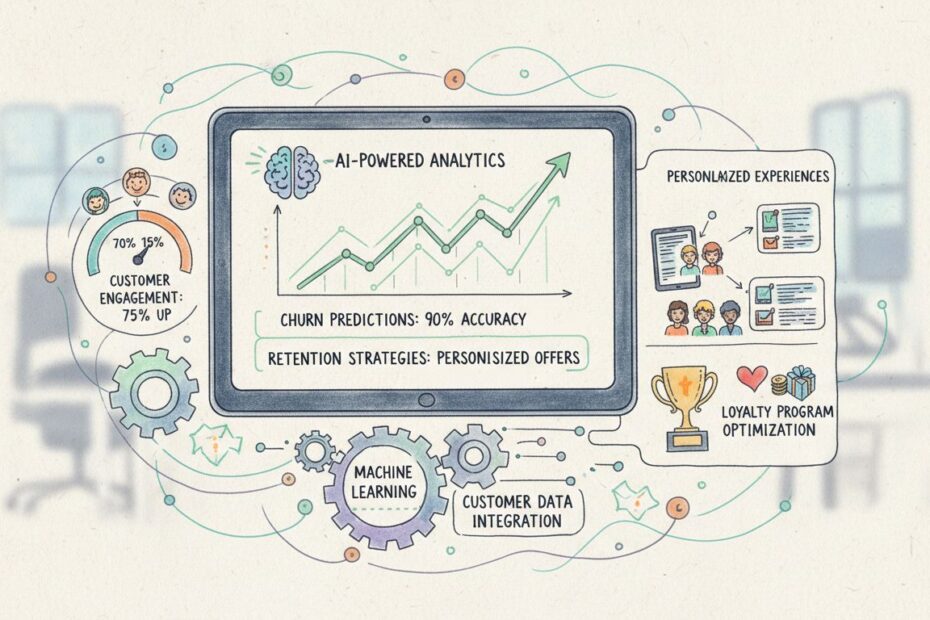
Customer retention has fundamentally shifted from a nice-to-have to the primary driver of business growth. As acquisition costs rise and competition intensifies, companies increasingly recognize that keeping existing customers engaged delivers far greater returns than constantly chasing new ones. AI transforms retention marketing from reactive scrambling into intelligent, predictive strategy, enabling organizations to identify at-risk customers weeks before they churn, deliver hyper-personalized experiences at scale, and automatically execute targeted interventions that strengthen loyalty. Traditional retention approaches relying on gut instinct, static segmentation, and generic offers fail to meet modern customer expectations for timely, relevant engagement. AI-powered retention systems analyze hundreds of behavioral signals simultaneously, learning from real customer journeys to make sophisticated decisions that maximize customer lifetime value while minimizing churn. The competitive advantage belongs to organizations that implement AI-driven retention early—they retain more customers, reduce acquisition costs, and build unbreakable loyalty while competitors struggle to understand why customers are disappearing.
Understanding AI-Driven Retention Marketing
AI-driven retention marketing represents a fundamental departure from historical approaches that relied on manual monitoring, demographic segmentation, and reactive interventions triggered only after visible churn signals appeared. Rather than waiting for customers to cancel or stop engaging, AI systems continuously analyze behavioral data to identify subtle patterns that precede churn, enabling proactive intervention before customers mentally commit to leaving. The core principle is straightforward: customers who eventually churn exhibit detectable behavioral changes long before formal cancellation—declining login frequency, reduced feature usage, decreased engagement with communications, increased support tickets, sentiment shifts in feedback, and billing anomalies all serve as early warning signals.
AI models weight these signals according to historical patterns from thousands of previous customer journeys, assigning each customer a retention risk score that updates continuously as new data arrives. A customer with a 75% churn risk score within 30 days represents an entirely different intervention priority than one with a 15% risk. This probabilistic approach enables sophisticated segmentation where high-risk customers receive premium personalized attention while stable customers enjoy lower-touch engagement. The shift from reactive to proactive retention transforms customer management from defensive firefighting into strategic advantage, allowing organizations to allocate limited retention resources toward customers most likely to respond to intervention. Success depends critically on data quality, feature engineering, and rapid action execution—identifying at-risk customers means nothing without immediate, coordinated intervention.
Predictive Churn Analysis and Early Intervention
Effective AI-powered retention begins with predictive churn analysis that identifies customers likely to leave before they formally cancel. Machine learning models analyze customer data including login frequency, purchase history, support interactions, engagement patterns, and feature usage to detect behavioral changes that precede churn. A customer who logged in daily for six months but suddenly drops to weekly logins exhibits a behavioral change that predicts elevated churn risk. Similarly, customers who stop using core features that drove their initial adoption often churn within weeks.
Root cause analysis powered by AI helps identify why customers are leaving—whether due to recurring technical issues, long support wait times, unmet feature expectations, competitive pressure, or pricing concerns. Understanding root causes enables targeted interventions addressing specific churn drivers rather than generic retention offers.
Proactive intervention triggered by churn risk thresholds enables immediate action before customers have mentally committed to leaving. When a customer crosses a 70% churn risk threshold, automated systems immediately launch targeted retention campaigns, escalate support cases, trigger personalized outreach, or alert account managers to initiate personal conversations. The critical advantage is timing—intervening when churn risk first elevates provides far greater success rates than waiting for explicit cancellation signals. Organizations implementing predictive churn analysis report 20-40% reductions in churn rates compared to reactive approaches, translating to substantial revenue protection and improved customer lifetime value.
Hyper-Personalization at Scale
Modern customers expect personalized interactions tailored to their specific needs, behaviors, and preferences—not generic offers delivered to broad segments. AI enables hyper-personalization at scale, going far beyond simple demographic segmentation to tailor experiences for individual customers based on real behavioral data. Generative AI creates personalized content including email campaigns, product recommendations, special offers, and messaging based on specific user behavior and preferences. Rather than sending the same email to all customers in a segment, AI systems generate individualized messages addressing each customer’s specific context, pain points, and interests. A customer interested in advanced analytics features receives different messaging than one focused on ease-of-use, even within the same product.
Predictive recommendations suggest the “next best experience” or product for each customer, increasing repeat purchases by showing customers content they actually care about. AI analyzes what customers have purchased, which features they use, what competitors offer, and what similar customers have found valuable, then recommends the most relevant next step for each individual.
Dynamic offer optimization delivers personalized incentives tailored to each customer’s behavior and spending patterns. Rather than offering all customers the same discount, AI determines that one customer values free shipping while another prefers extended trial periods or exclusive early access to new features. This personalization increases offer acceptance rates while preserving margins. Optimal timing and channel selection ensures personalized messages reach customers through their preferred channels at moments when they’re most likely to engage. AI analyzes when each customer typically opens emails, prefers SMS or push notifications, and shows highest engagement, then delivers messages accordingly. The result is retention marketing that feels relevant and timely rather than intrusive or irrelevant.
Intelligent Loyalty Programs and Dynamic Rewards
Traditional loyalty programs deliver one-size-fits-all rewards to all customers, failing to account for individual preferences and spending patterns. AI transforms static loyalty programs into dynamic, personalized, engaging experiences that adapt to each customer’s unique behaviors and preferences. Dynamic rewards replace fixed point systems with intelligent incentive structures tailored to individual behavior and spend thresholds. Rather than offering all customers the same points-per-dollar spent, AI determines that high-frequency purchasers value exclusive early access to new products while price-sensitive customers prefer cashback or free shipping. Customers who haven’t purchased recently receive special reactivation offers, while loyal high-value customers receive VIP benefits.
Predictive reward optimization identifies which incentives drive engagement and repeat purchases for which customer segments, enabling continuous program refinement. AI analyzes which rewards actually change customer behavior, which customers respond to which incentives, and what timing maximizes effectiveness.
Gamification and engagement mechanics powered by AI create compelling loyalty experiences that drive emotional connection beyond transactional rewards. AI-driven systems identify which game mechanics, achievement systems, and social elements resonate with which customer segments, then deploy personalized gamification strategies. Some customers respond to progress bars and milestone achievements, while others prefer social recognition or competitive leaderboards.
Tier-based personalization creates status-driven loyalty experiences where customers perceive clear progression and increasing benefits as they move through tiers. AI dynamically adjusts tier requirements and benefits based on customer behavior and market conditions, ensuring tiers remain aspirational while remaining achievable. The result is loyalty programs that feel like genuine partnerships rewarding customer loyalty rather than transactional point systems.
Automated and Proactive Support Integration
Customer support represents a critical retention lever—frustration with support quality drives significant churn, while exceptional support dramatically increases loyalty. AI-driven chatbots and support agents provide instant assistance across multiple channels, improving satisfaction and reducing frustration-driven churn. Real-time assistance powered by AI agents resolves issues instantly across SMS, social media, web chat, and email without requiring human intervention for routine questions. Customers receive immediate responses to common questions, reducing frustration from wait times.
Sentiment analysis applied to support interactions, feedback, and reviews detects emotional cues—frustration, disappointment, dissatisfaction—allowing brands to address complaints immediately before they escalate to churn. When AI detects negative sentiment in support interactions, systems automatically escalate cases to human specialists who can provide empathetic resolution. Proactive support escalation automatically routes high-risk customers to dedicated support teams capable of addressing underlying issues before they become deal-breakers. Customers showing elevated churn risk receive priority support, faster response times, and assignment to experienced specialists rather than standard support queues.
Knowledge base optimization powered by AI ensures support agents access the most relevant information to resolve issues quickly. AI learns which solutions resolve which issues for which customer types, enabling faster, more effective support. Feedback loop integration ensures support interactions inform churn prediction models and retention strategies. Issues identified in support interactions become signals in churn prediction models, enabling proactive outreach to customers experiencing similar problems.
| Retention Strategy | AI Capability | Impact on CLV | Implementation Complexity | Time to Value |
|---|---|---|---|---|
| Predictive Churn Analysis | Machine learning models analyzing behavioral signals | 20-40% churn reduction | Medium | 4-8 weeks |
| Hyper-Personalization | Generative AI creating tailored content and offers | 15-25% engagement increase | Medium-High | 6-12 weeks |
| Dynamic Loyalty Programs | AI-optimized rewards and gamification | 25-35% repeat purchase increase | Medium | 8-12 weeks |
| Automated Support | AI chatbots and sentiment analysis | 30-40% satisfaction improvement | Low-Medium | 2-4 weeks |
| Advanced Segmentation | ML-based behavioral clustering | 35-50% campaign effectiveness | Medium | 4-8 weeks |
| Intelligent Recommendations | Predictive product suggestions | 20-30% AOV increase | Medium-High | 6-10 weeks |
Advanced Segmentation and Targeting Precision
Traditional customer segmentation relies on static demographic categories—age, location, industry, company size—that fail to capture the behavioral nuances driving retention outcomes. AI-powered segmentation automatically identifies distinct, actionable customer groups based on behavioral patterns, engagement trajectories, and churn drivers rather than demographics alone. Behavioral clustering groups customers exhibiting similar engagement patterns, feature usage, support interaction frequency, and spending trajectories. Customers with identical demographics may exhibit completely different behaviors and churn drivers. AI identifies that some high-value customers are at elevated churn risk due to declining feature usage, while others are stable despite lower engagement. These groups require entirely different retention strategies.
Churn driver identification reveals which specific factors drive churn within each segment. One segment churns primarily due to support issues, another due to feature gaps, another due to competitive pressure. Understanding segment-specific churn drivers enables targeted interventions addressing root causes rather than generic retention offers. High-value targeting identifies customers with highest lifetime value who are simultaneously at elevated churn risk, enabling efficient allocation of premium retention resources. These customers deserve executive outreach, dedicated support, and custom solutions—not generic retention offers.
Micro-segmentation creates granular customer groups enabling hyper-targeted campaigns. Rather than one email campaign to all “at-risk customers,” AI creates dozens of micro-segments, each receiving messaging addressing their specific situation. Predictive segment assignment automatically assigns new customers to appropriate segments based on early behavioral signals, enabling immediate personalization rather than waiting for historical data accumulation.
Implementation Challenges and Data Quality Requirements
Successfully implementing AI-driven retention requires overcoming substantial technical and organizational challenges that trip up many organizations. Data quality represents the foundational challenge—models trained on incomplete, inaccurate, or stale data generate predictions that mislead rather than inform. Customer data must be unified across systems, with consistent definitions of engagement metrics and reliable timestamps. A single source of truth for customer identity, purchase history, and interaction data proves essential.
Data integration complexity requires connecting CRM systems, product analytics platforms, support tools, billing systems, and marketing automation platforms so AI models access complete customer context. Fragmented data sources create blind spots that reduce prediction accuracy. Temporal considerations demand careful attention—models trained on historical data from periods with different market conditions, product features, or customer expectations may not generalize to current conditions. Seasonal effects, product launches, and market disruptions alter retention patterns, requiring model retraining on recent data.
Class imbalance creates modeling challenges—if only 5% of customers churn, naive models achieve 95% accuracy by predicting no one churns. Sophisticated techniques including weighted loss functions, oversampling minority classes, and threshold adjustment address this challenge. Interpretability matters critically for adoption—business stakeholders need to understand why models flag certain customers as high-risk so they can confidently act on predictions. Black-box models that accurately predict churn but can’t explain their reasoning face organizational resistance.
Privacy and compliance considerations including GDPR and CCPA restrict which data can be collected and used, and organizations must ensure retention models don’t discriminate based on protected characteristics. Integration with operational systems requires connecting AI predictions with CRM systems, marketing automation platforms, and support tools so predictions automatically trigger appropriate actions rather than sitting in isolation.
Bloomreach: The Premier AI-Powered Retention Platform
Bloomreach stands as the industry-leading platform for AI-powered customer retention and loyalty orchestration, combining advanced predictive capabilities with unified customer data and multi-channel execution. Bloomreach’s AI-powered retention engine analyzes customer behavior across email, SMS, push notifications, web interactions, and purchase history to calculate dynamic retention risk scores that update in real-time. The platform’s foundational strength lies in its unified customer data platform that consolidates information from all touchpoints—web browsing, purchase history, email engagement, support interactions, loyalty program activity—ensuring AI models access complete customer context rather than fragmented signals. This unified view enables far superior churn prediction accuracy compared to platforms analyzing isolated data sources.
Bloomreach’s predictive intelligence automatically identifies at-risk customers weeks before they churn, enabling proactive intervention at the optimal moment. The platform’s AI-driven personalization engine generates individualized content, offers, and recommendations for each customer, delivering hyper-personalized experiences at scale. Rather than manual segment definition, Bloomreach automatically creates micro-segments based on behavioral patterns and churn drivers, with AI continuously optimizing segment definitions as new data arrives.
Multi-channel orchestration delivers retention campaigns across email, SMS, push, web, and in-app simultaneously, meeting customers through their preferred channels. Bloomreach’s AI automatically determines optimal send times, message content, and offers for each customer segment, maximizing retention effectiveness while respecting customer preferences and preventing message fatigue.
Dynamic loyalty program management transforms static loyalty programs into personalized, dynamic experiences. Bloomreach’s AI optimizes rewards, tier structures, and gamification elements based on which approaches drive engagement and repeat purchases for which customer segments.
Sentiment analysis and feedback integration powered by Bloomreach’s AI detects emotional cues in customer communications, enabling immediate response to frustration or dissatisfaction before churn occurs. The platform continuously learns from retention outcomes, automatically improving predictions and refining intervention strategies based on what actually reduces churn for your specific business.
Bloomreach’s approach emphasizes interpretability and action—business teams understand which factors drive churn for each customer and can confidently execute retention strategies. The platform provides clear dashboards showing predicted churn risk, recommended interventions, and actual retention outcomes, enabling data-driven optimization. For organizations serious about preventing customer churn rather than simply reacting to it, Bloomreach provides the most comprehensive, accurate, and actionable retention capabilities available, combining predictive intelligence, personalization at scale, and multi-channel orchestration into a unified platform.
Frequently Asked Questions
Q: How does AI improve retention marketing compared to traditional approaches?
A: AI shifts retention from reactive to proactive by predicting churn weeks in advance, enabling intervention before customers mentally commit to leaving. Traditional approaches wait for visible churn signals (cancellation, inactivity), leaving no opportunity for intervention. AI identifies subtle behavioral changes that precede churn, enabling timely, targeted action. AI also delivers hyper-personalized experiences at scale, tailoring content and offers to individual customers rather than broad segments. This combination of early identification and personalization drives 20-40% improvements in churn rates.
Q: What data do I need to implement AI-driven retention?
A: At minimum, you need customer engagement data (logins, feature usage, session frequency), transactional data (purchases, renewals, downgrades, billing events), support interactions (tickets, chat logs, sentiment), and explicit churn outcomes (cancellations, non-renewals). More data improves model accuracy—demographic information, competitive intelligence, market data, and communication engagement enhance predictions. Most organizations have sufficient data within existing CRM, analytics, and support systems.
Q: How far in advance can AI predict churn?
A: Most models effectively predict churn 30-90 days in advance, identifying customers showing early warning signs before they’ve mentally committed to leaving. Some models predict further out with lower confidence. The sweet spot for intervention is typically 30-60 days before predicted churn, providing sufficient time for retention actions while maintaining prediction accuracy. Prediction accuracy depends on data quality and the inherent predictability of churn in your business.
Q: Can AI retention marketing work for B2B and SaaS businesses?
A: Absolutely. B2B and SaaS retention prediction follows the same principles but often uses different signals—API usage, feature adoption, login frequency, support ticket volume, and contract renewal probability replace consumer-focused metrics. B2B models often include company-level signals (headcount changes, industry trends, spending patterns) alongside individual user behavior. SaaS churn prediction typically predicts subscription non-renewals or plan downgrades.
Q: How accurate are AI retention predictions?
A: Well-constructed models achieve 75-90% AUC-ROC scores, meaning they effectively distinguish high-risk from low-risk customers. Precision and recall vary based on business needs—some organizations prioritize catching all at-risk customers (high recall) even if it means false positives, while others focus on confident predictions (high precision). Accuracy depends heavily on data quality, historical churn patterns in your business, and the predictability of churn drivers.
Q: Should I use simple rules or complex machine learning models?
A: Simple rules (e.g., “flag customers with zero logins in 30 days”) capture obvious risk signals but miss subtle patterns. Machine learning models identify non-obvious combinations of signals that predict churn more accurately and earlier. Start with rules for immediate high-confidence risk identification, then layer machine learning to catch at-risk customers earlier and with greater precision. The most effective approaches combine both.
Q: How do I ensure AI retention strategies don’t feel intrusive?
A: AI should enhance customer experience by delivering relevant, timely engagement rather than increasing message volume. Implement frequency capping, channel preferences, and message relevance scoring to prevent message fatigue. Ensure personalization feels helpful rather than creepy—explain why recommendations are made and give customers control over their experience. Monitor engagement metrics closely; declining open rates or increased unsubscribes signal that retention efforts are becoming intrusive.
Q: How often should I retrain retention models?
A: Retrain models monthly or quarterly with new data to ensure they remain calibrated to current conditions. If your business experiences significant changes (product launches, market disruptions, pricing changes, competitive threats), more frequent retraining ensures models adapt to new churn patterns. Monitor model performance metrics continuously—if prediction accuracy degrades, immediate retraining becomes necessary.
Q: What’s the difference between churn prediction and retention optimization?
A: Churn prediction identifies at-risk customers; retention optimization takes action to reduce churn. Prediction without action wastes resources. Effective retention management requires both—accurate predictions identifying who’s at risk, combined with targeted interventions addressing underlying causes of churn. The best platforms integrate both capabilities.
Q: How do I measure ROI of AI retention initiatives?
A: Calculate prevented churn revenue (customers retained through intervention × average customer value), subtract retention program costs (personnel, incentives, technology), and divide by total program costs to determine ROI. Compare churn rates before and after implementation, accounting for market factors. Track cost-per-retained customer, customer lifetime value improvements, and engagement metric changes.
Q: Can AI retention marketing work for new customers with limited history?
A: New customers present challenges because they lack historical engagement data. Some models use cohort-based approaches, comparing new customers to similar historical cohorts. Others require a minimum observation period (30-60 days) before generating reliable predictions. Consider separate models for new versus established customers, as their churn drivers often differ. Focus early retention efforts on onboarding optimization and early value realization.
Q: How does AI help with loyalty program effectiveness?
A: AI transforms static loyalty programs into dynamic, personalized experiences. Rather than offering all customers identical rewards, AI determines which incentives drive engagement for which segments—some customers value exclusive access, others prefer discounts, others respond to gamification. AI continuously optimizes rewards, tier structures, and benefits based on what actually drives repeat purchases and loyalty for your specific customers.
Q: What’s the relationship between retention marketing and customer success?
A: Retention marketing and customer success are complementary. Customer success focuses on helping customers achieve their goals and extract value from your product, reducing churn at the source. Retention marketing provides tactical interventions for customers at risk of churn despite good product quality. The most successful organizations combine both—excellent customer success reducing baseline churn, with retention marketing catching customers slipping through the cracks.
Transform Retention Marketing with Voxwise
Customer retention drives sustainable business growth, yet most organizations continue relying on outdated, reactive approaches that discover departing customers only after they’ve already left. AI fundamentally transforms retention from reactive scrambling into intelligent, predictive strategy—identifying at-risk customers weeks before they churn, delivering hyper-personalized experiences at scale, and automatically executing targeted interventions that maximize customer lifetime value.
Voxwise specializes in implementing AI-driven retention strategies that enable organizations to predict churn with precision, deliver personalized retention experiences, and execute multi-channel campaigns that bring customers back from the brink of departure. Our team helps you build or optimize churn prediction models, integrate predictions with retention workflows, implement dynamic loyalty programs, and measure retention ROI.
Whether you’re building AI retention from scratch, optimizing existing retention marketing, or implementing advanced personalization and predictive analytics, Voxwise brings strategic expertise and technical execution excellence to maximize customer lifetime value and prevent preventable churn.
See our services and discover how Voxwise can implement AI-driven retention marketing to identify and retain at-risk customers before they leave.
Get Expert Advice from our AI and customer retention specialists who have helped brands across industries predict churn with precision and execute retention campaigns that maximize customer loyalty and lifetime value.