How to Use Segmentation in Email Marketing
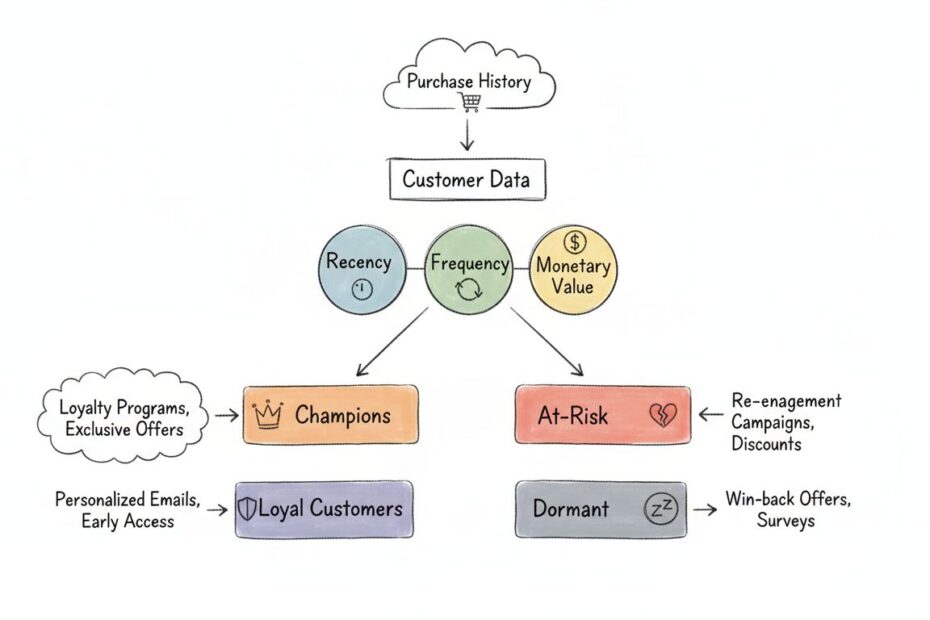
Email segmentation is the practice of dividing your subscriber list into smaller, targeted groups based on shared characteristics, behaviors, or preferences. Instead of sending the same message to everyone, segmentation enables you to deliver personalized, relevant content to specific customer groups—increasing engagement, conversions, and customer lifetime value. For retail and e-commerce brands, email segmentation is one of the most powerful tools for improving campaign performance, strengthening customer retention, and protecting revenue.
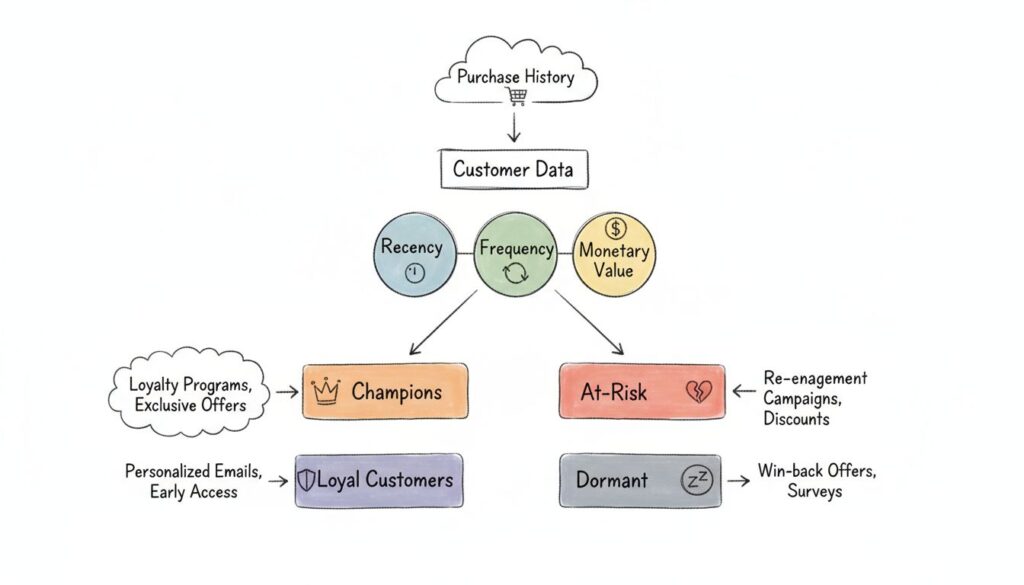
This guide explains how to create practical email segments, activate them in retention and lifecycle campaigns, and measure their impact on business results. Whether you’re managing a fashion brand, a subscription business, or an e-commerce platform, the principles remain the same: segment strategically, personalize consistently, and measure relentlessly.
What Is Email Segmentation?
Email segmentation means dividing your email audience into smaller groups based on shared characteristics, behaviors, purchase history, engagement level, or lifecycle stage. Instead of broadcasting the same email to your entire list, segmentation allows you to send the right message to the right customer at the right time.
Common segmentation criteria include:
- Purchase history: What customers have bought, how often, and how much they’ve spent
- Browsing behavior: Which products or categories customers view, how long they browse, and what they add to cart
- Email engagement: Who opens emails, clicks links, and responds to campaigns versus who ignores them
- Product category interest: Which product categories customers purchase from or browse most frequently
- Customer value: Total spend, lifetime value, order frequency, and average order value
- Lifecycle stage: New subscribers, first-time buyers, repeat customers, dormant customers, or churned customers
- Loyalty status: Loyalty program membership, tier level, points activity, and reward redemption
- Location: Geographic location, region, or country
- Preferences: Communication preferences, content interests, and product preferences
- Inactivity: Customers who haven’t purchased, browsed, or engaged within a defined timeframe
The key distinction is that email segmentation is not just about dividing a list by demographics. Modern email segmentation combines behavioral data, purchase data, engagement data, and lifecycle stage to create segments that are actionable and relevant. A segment is only valuable if it changes the message, offer, or timing of your email—and ultimately drives business results.
Why Segmentation Matters in Email Marketing
Sending the same email to everyone is one of the most common mistakes in email marketing. Generic, one-size-fits-all campaigns deliver poor results because they don’t reflect customer needs, interests, or stage in the journey. Segmented emails, by contrast, are fundamentally more relevant—and relevance drives performance.
The business impact of email segmentation is significant:
- Higher engagement: Segmented emails deliver 14-100% higher open rates compared to non-segmented campaigns, depending on the segment and message
- Better click-through rates: Targeted content and relevant offers drive higher click rates and customer interaction
- More conversions: Personalized messages aligned with customer interests and stage convert at higher rates
- Stronger retention: Lifecycle and retention-focused segments reduce churn and improve repeat purchase rates
- Better personalization: Segmentation enables product recommendations, offers, and content tailored to specific customer groups
- Lower unsubscribe rates: Relevant messages reduce message fatigue and unsubscribe requests
- Reduced spam complaints: Targeted, relevant emails are less likely to be marked as spam
- Better deliverability: Improved engagement metrics (opens, clicks) signal to email providers that your messages are wanted, improving inbox placement
- Higher campaign ROI: More relevant campaigns drive higher revenue per email sent
- Increased customer lifetime value: Segmented retention and lifecycle campaigns support repeat purchases and longer customer relationships
Segmentation also protects your sender reputation. Email providers monitor engagement metrics. Sending irrelevant emails to disengaged subscribers damages your reputation and reduces deliverability for all your campaigns. Segmentation helps you maintain engagement and protect your ability to reach the inbox.
Step 1: Define the Goal of Your Email Segmentation
Before you create segments, define a clear business goal. Your goal determines which segments you create, what messages you send, and which KPIs you measure.
Common email segmentation goals include:
- Increase repeat purchases: Encourage first-time buyers to make a second purchase or repeat customers to buy more frequently
- Recover abandoned carts: Recover lost revenue from customers who add products to cart but don’t complete checkout
- Improve email engagement: Increase open rates, click rates, and overall subscriber interaction
- Reactivate inactive subscribers: Win back customers who have stopped opening or clicking emails
- Increase loyalty engagement: Encourage loyalty program members to earn more points, redeem rewards, and increase spending
- Promote relevant product categories: Drive purchases in specific product categories where customers show interest
- Protect high-value customers: Prevent churn among your most valuable customers through proactive retention
- Reduce churn: Identify at-risk customers early and intervene before they become dormant or leave
- Improve personalization: Deliver more relevant product recommendations, offers, and content
- Increase campaign revenue: Drive higher revenue per email sent through better targeting and relevance
Your goal shapes everything downstream. If your goal is to increase repeat purchases, you’ll create segments focused on first-time buyers and their post-purchase journey. If your goal is to protect high-value customers, you’ll create segments based on customer lifetime value and engagement risk. If your goal is to reactivate inactive subscribers, you’ll create segments based on engagement decline and dormancy.
Define your goal first, then build your segmentation strategy around it.
Step 2: Collect the Right Customer Data
Email segmentation depends on clean, connected, and regularly updated customer data. Without good data, you can’t create meaningful segments. With good data, segmentation becomes powerful.
Essential data sources for email segmentation include:
- Email engagement data: Opens, clicks, unsubscribes, bounce rates, spam complaints, email preferences
- Purchase history: Purchase dates, order values, product categories purchased, total spend, repeat purchase frequency
- Last purchase date: Recency is one of the strongest predictors of future engagement and purchase likelihood
- Purchase frequency: How often customers buy (e.g., every 30 days, quarterly, annually)
- Average order value and total spend: Indicators of customer value and purchasing power
- Product category interest: Which product categories customers purchase from or browse
- Browsing behavior: Product views, category views, search queries, time on site, session frequency
- Cart activity: Cart additions, cart abandonment, cart value, checkout progress
- Loyalty program activity: Membership status, points earned, points redeemed, tier status, tier progress
- Location: Geographic location, region, country, or state
- Preferences: Communication preferences, content interests, product preferences, frequency preferences
- Lifecycle stage: New subscriber, first-time buyer, repeat customer, dormant customer, churned customer
- Discount usage: Discount code usage, promotion responsiveness, discount sensitivity
- Churn risk indicators: Declining purchase frequency, longer time since last purchase, reduced engagement
- Customer lifetime value: Predicted or actual lifetime value based on historical behavior
- Support and satisfaction data: Support tickets, complaints, returns, refunds, NPS scores, CSAT ratings
The best email segmentation uses both email engagement data and broader customer behavior data. Email engagement alone (opens, clicks) tells you who’s reading your emails, but it doesn’t tell you who’s actually buying or what they’re interested in. Purchase and browsing data tells you what customers want, but without engagement data, you don’t know how responsive they are to email.
Ensure your customer data is unified across channels. Customer records should be connected so that email engagement data, purchase data, browsing data, and loyalty data all belong to the same customer profile. If your data is fragmented across systems, segmentation becomes difficult and unreliable.
Update your data regularly—ideally daily or in real-time. Customer behavior changes constantly. A customer who was highly engaged last month may be inactive today. A customer who hasn’t purchased in 90 days might be at risk of churn. Real-time or daily data updates enable you to respond quickly to changing customer behavior.
Step 3: Create Practical Email Marketing Segments
Now that you understand the data available, it’s time to create specific, actionable email segments. Each segment should have a clear definition, a reason it matters for your business, and a specific email campaign or CRM action connected to it.
New Subscribers
What it means: People who recently joined your email list but have not yet made a purchase. These are early-stage subscribers in the awareness and consideration phases.
Why it matters: New subscribers are interested enough to sign up, but they may not yet understand your brand value, trust you, or feel ready to buy. The welcome experience sets the tone for the entire customer relationship.
How to identify it: Subscribers with a signup date within the last 30-90 days and zero completed purchases.
Recommended email campaigns:
- Welcome series introducing your brand, values, and unique value proposition
- Brand story and mission content to build emotional connection
- Bestseller and top-rated product recommendations
- First-purchase incentive (discount, free shipping, or exclusive offer) to encourage initial purchase
- Preference collection to understand interests and communication preferences
- Educational content about product features, benefits, or how to use products
Expected outcomes: Higher conversion to first purchase, lower unsubscribe rates, improved brand awareness, and foundation for long-term customer relationships.
First-Time Buyers
What it means: Customers who have completed exactly one purchase. They’ve made the leap from prospect to customer, but haven’t yet demonstrated loyalty.
Why it matters: The second purchase is one of the most critical milestones in the customer lifecycle. Customers who make a second purchase are significantly more likely to become repeat customers and increase lifetime value. First-time buyers are still evaluating whether to return.
How to identify it: Customers with exactly one completed order and no additional purchases.
Recommended email campaigns:
- Post-purchase journey with delivery updates and tracking information
- Product education content to help customers get maximum value from their purchase
- Review request to build social proof and gather feedback
- Personalized product recommendations based on first purchase (complementary products, related categories)
- Second-purchase incentive (loyalty points, exclusive offer, or discount) to encourage repeat purchase
- Onboarding flow if applicable (account setup, feature education, preference collection)
Expected outcomes: Higher second-purchase rate, improved customer lifetime value, reduced first-purchase regret, and stronger brand loyalty.
Repeat Customers
What it means: Customers who have completed two or more purchases. They’ve demonstrated loyalty and brand preference.
Why it matters: Repeat customers are significantly more valuable than one-time buyers. They generate more revenue, are easier to retain, and are more likely to refer friends or become advocates. Repeat customers should receive continued engagement to maintain loyalty and increase purchase frequency.
How to identify it: Customers with two or more completed purchases.
Recommended email campaigns:
- Cross-sell campaigns recommending complementary products or categories
- Replenishment reminders for consumable or seasonal products
- Category-based recommendations based on past purchase history
- Loyalty program invitation and enrollment to reward continued purchases
- Personalized lifecycle journeys triggered by purchase milestones or seasonal events
- VIP or early-access offers to recognize loyalty
- Win-back campaigns if purchase frequency declines
Expected outcomes: Higher purchase frequency, increased average order value, stronger customer lifetime value, and improved retention.
VIP or High-Value Customers
What it means: Customers with high total spend, high customer lifetime value, high purchase frequency, or strong loyalty engagement. These customers generate a disproportionate share of revenue.
Why it matters: VIP customers are your most valuable segment. A small percentage of customers typically generate a large percentage of revenue. These customers deserve premium treatment, personalized attention, and exclusive benefits to maintain loyalty and prevent churn.
How to identify it: Use customer lifetime value (CLV), RFM score, total spend, purchase frequency, average order value, or loyalty tier. Typically, the top 10-20% of customers by revenue.
Recommended email campaigns:
- Early access to new products, collections, or sales before general availability
- Exclusive VIP-only offers and discounts
- Premium loyalty perks and rewards
- Referral campaigns to turn VIPs into brand advocates
- Private sale invitations and exclusive shopping events
- Premium product recommendations and personalized curation
- Direct relationship with customer success or account management team
- Feedback requests and VIP advisory opportunities
Expected outcomes: Maintained high lifetime value, reduced churn among most valuable customers, increased brand advocacy, and protected revenue.
Cart Abandoners
What it means: Customers who added products to their shopping cart but did not complete checkout. These customers have shown strong purchase intent.
Why it matters: Cart abandonment is one of the largest sources of lost revenue in e-commerce. Customers who abandon carts are typically just one or two steps away from completing a purchase. Timely, relevant intervention can recover significant revenue.
How to identify it: Customers with cart activity (products added to cart) but no completed purchase within the last 24-72 hours.
Recommended email campaigns:
- Abandoned cart recovery email with product image, price, and direct link to complete purchase (sent within 1-4 hours)
- Product reminder highlighting product benefits, features, or customer reviews
- Urgency messaging emphasizing limited stock or time-limited offer
- Checkout recovery messaging addressing common objections (shipping cost, return policy, security)
- Free shipping threshold or incentive to encourage completion
- Personalized product incentive (discount, loyalty points, or gift with purchase)
- Follow-up sequence if first email doesn’t convert (typically 2-3 emails over 48-72 hours)
Important: Test discounts carefully. Not every cart abandoner needs a discount. Many will complete purchase with just a reminder. Use discounts strategically for high-value carts or repeat abandoners, not as the default solution.
Expected outcomes: Recovered revenue from abandoned carts, reduced cart abandonment rate, and improved conversion rate.
Browse Abandoners
What it means: Customers who viewed products or product categories but did not add items to cart or complete a purchase. They show interest but haven’t committed to purchase.
Why it matters: Browse abandoners are further up the funnel than cart abandoners, but they still show purchase intent. They may need more information, social proof, or better product discovery to move toward purchase.
How to identify it: Customers with recent product views or category views but no cart additions or purchases within the last 7-14 days.
Recommended email campaigns:
- Product reminder email featuring the products they viewed
- Category-based recommendations based on browsing history
- Bestsellers or top-rated products in the category they browsed
- Social proof messaging (customer reviews, ratings, testimonials)
- Educational content about product features, benefits, or how to choose
- Personalized product recommendations using browsing data
- Incentive offer to encourage purchase consideration
- Follow-up sequence if initial email doesn’t convert
Expected outcomes: Increased conversion from browsers to buyers, improved product discovery, and higher conversion rate.
Category-Specific Customers
What it means: Customers who repeatedly browse or purchase from a specific product category. Category interest is a strong indicator of preference and purchase intent.
Why it matters: Category-specific customers have demonstrated clear preferences. Targeting them with category-specific content, new arrivals, and recommendations improves relevance and conversion rates.
How to identify it: Customers with repeated product views, purchases, or engagement in a specific category (e.g., home decor, activewear, pet supplies). Typically identified through purchase history or browsing behavior over the last 30-90 days.
Recommended email campaigns:
- Category-specific newsletters featuring new arrivals and trending products
- Restock notifications for out-of-stock products they’ve shown interest in
- New arrival alerts in their favorite categories
- Cross-sell campaigns recommending complementary products in the category
- Product education content specific to the category
- Personalized product recommendations based on category interest
- Seasonal campaigns aligned with category seasonality (e.g., summer activewear, holiday home decor)
Expected outcomes: Higher engagement in category-specific campaigns, increased purchase frequency in category, and improved average order value.
Discount-Sensitive Customers
What it means: Customers who primarily purchase during sales, use discount codes frequently, or show strong response to promotional offers. These customers are price-sensitive.
Why it matters: Discount-sensitive customers can drive significant campaign revenue, but brands must be careful to avoid training customers to only buy on sale, which erodes margins and reduces profitability.
How to identify it: Customers with a high percentage of discounted purchases (70%+), frequent discount code usage, or strong engagement with promotional campaigns but weak engagement with full-price product campaigns.
Recommended email campaigns:
- Controlled, strategic sale campaigns (not constant promotions)
- Value-based messaging emphasizing product quality, benefits, and long-term value (not just price)
- Product education content to justify price and increase perceived value
- Bundle offers that increase perceived value without deep discounts
- Loyalty perks and rewards as alternative to discounts (points, exclusive access, tier benefits)
- Free shipping thresholds instead of percentage discounts
- Limited-time offers with genuine scarcity messaging
- Exclusive member or early-access offers instead of broad discounts
Important: Avoid training discount-sensitive customers to expect constant promotions. Test the minimum discount needed to drive purchase. Consider alternative incentives like loyalty points, free shipping, or exclusive access.
Expected outcomes: Maintained purchase frequency while improving margins, reduced dependency on discounts, and improved customer lifetime value.
Inactive Subscribers
What it means: Subscribers who no longer open or click emails. They’ve stopped engaging with your email communications.
Why it matters: Inactive subscribers hurt your campaign performance and sender reputation. They reduce engagement metrics (open rates, click rates), which signals to email providers that your messages aren’t wanted. Inactive subscribers also waste email sending resources. Brands should either reactivate inactive subscribers or move them into a sunset flow.
How to identify it: No email opens or clicks within a defined period (typically 60, 90, or 180 days, depending on your email frequency and business model).
Recommended email campaigns:
- Re-engagement email asking why they’ve disengaged (feedback request)
- Preference center campaign letting subscribers control email frequency and content types
- Best-performing content from your recent campaigns (highest engagement)
- Win-back offer (discount, exclusive content, or special incentive) to encourage re-engagement
- Feedback request to understand why they’ve become inactive
- Final re-engagement campaign before sunset
- Sunset flow removing inactive subscribers from regular campaigns if they don’t re-engage
Expected outcomes: Reactivated subscribers with renewed engagement, improved email metrics for remaining list, and better sender reputation.
At-Risk Customers
What it means: Customers whose purchase behavior or email engagement is declining. They’re showing early warning signs that they may churn.
Why it matters: At-risk customers are valuable because they’ve already demonstrated loyalty and purchase behavior. Intervening early, before they become fully dormant, is significantly more effective than trying to win them back later. Identifying at-risk customers allows brands to act proactively.
How to identify it: Customers showing one or more of these signals:
- Declining email engagement (opens/clicks down 50%+ compared to baseline)
- Longer time since last purchase (exceeding their typical purchase cycle by 50%+)
- Lower purchase frequency (recent purchases down 30%+)
- Reduced website activity (visits, product views down 30%+)
- Declining customer lifetime value or order value
- Reduced loyalty activity or tier progress
Recommended email campaigns:
- Proactive win-back flow with personalized offer or incentive
- Loyalty reminder highlighting benefits and rewards available
- Replenishment reminder if applicable to your business
- Feedback request to understand why engagement has declined
- Product recommendations based on past purchase history
- Exclusive retention offer recognizing their value as a customer
- Direct customer success outreach (phone call, SMS, or support contact)
- Follow-up sequence if initial campaign doesn’t drive re-engagement
Expected outcomes: Recovered at-risk customers, maintained customer lifetime value, reduced churn rate, and protected revenue.
Loyalty Members
What it means: Customers who participate in your loyalty program, collect rewards, or hold a loyalty tier. Loyalty engagement is a strong indicator of brand attachment.
Why it matters: Loyalty members have already demonstrated commitment to your brand by joining your program. Loyalty engagement can support repeat purchases, increase spending, and improve retention. However, loyalty members can also become disengaged, so continued engagement is important.
How to identify it: Customers with active loyalty membership, recent points activity (earned or redeemed), tier status, or tier progress within the last 30-90 days.
Recommended email campaigns:
- Points balance reminders showing available balance and redemption options
- Tier upgrade campaigns encouraging spending to reach next tier
- Personalized reward suggestions based on member preferences and purchase history
- Exclusive member-only offers and early access
- Anniversary rewards recognizing loyalty tenure
- Referral campaigns turning loyal members into brand advocates
- Feature education highlighting program benefits members may not be using
- Exclusive events or experiences for top-tier members
Expected outcomes: Increased loyalty engagement, higher repeat purchase rate, improved customer lifetime value, and stronger brand loyalty.
Step 4: Personalize Email Content for Each Segment
Segmentation only works if you change the message, not just the audience. Creating a segment is useless if you send the same email to every segment. Effective segmentation requires personalizing email content to match each segment’s needs, interests, and stage in the customer journey.
Email elements to personalize by segment include:
- Subject line: Different segments respond to different subject line types. VIP customers might respond to exclusivity messaging. At-risk customers might respond to urgency or special offers. First-time buyers might respond to educational or trust-building subject lines.
- Product recommendations: Recommend products based on browsing history, purchase history, and category interest. Show different products to different segments.
- Offer type: VIP customers get early access or exclusive offers. First-time buyers get first-purchase incentives. Discount-sensitive customers get strategic discounts. At-risk customers get retention offers.
- Content angle: VIP customers receive premium, curated content. Inactive subscribers receive re-engagement content with strong value proposition. Category-specific customers receive category-focused content.
- Timing: Send emails when each segment is most likely to engage. High-engagement segments might tolerate more frequent emails. Low-engagement segments need fewer, stronger messages.
- Email frequency: VIP customers might receive weekly emails. Inactive segments might receive a single re-engagement attempt. Discount-sensitive customers might receive promotional emails only during sales.
- Call-to-action: Different segments need different CTAs. First-time buyers need a “Make Your First Purchase” CTA. Repeat customers need a “Shop New Arrivals” CTA. Loyalty members need a “Redeem Rewards” CTA.
- Hero product or image: Feature products relevant to each segment. Show VIP customers premium products. Show first-time buyers bestsellers. Show category-specific customers new arrivals in their favorite category.
- Loyalty messaging: Emphasize loyalty benefits for loyalty members. Emphasize loyalty enrollment for non-members.
- Lifecycle messaging: Acknowledge each customer’s stage. Welcome new subscribers. Congratulate first-time buyers. Thank repeat customers. Express concern for at-risk customers.
Example personalization:
- VIP customer: Subject line “Exclusive early access for our most valued customers,” featuring premium products, exclusive offer, VIP-only benefits, and “Shop Exclusive Collection” CTA.
- First-time buyer: Subject line “Your first purchase is on the way,” featuring delivery updates, product education, review request, complementary product recommendations, and “Complete Your Collection” CTA.
- At-risk customer: Subject line “We miss you—come back for 20% off,” featuring their favorite products, win-back offer, loyalty reminder, feedback request, and “Redeem Your Offer” CTA.
- Category-specific customer: Subject line “New arrivals in [Category],” featuring new products in their favorite category, category-specific recommendations, and “Shop [Category]” CTA.
- Inactive subscriber: Subject line “What would bring you back?,” featuring best-performing content, value proposition reminder, preference center link, and “Update Your Preferences” CTA.
The more specific and personalized your email content is to each segment, the higher your engagement, conversion, and retention metrics will be.
Step 5: Use Segmentation in Automated Email Flows
Segmentation is most powerful when connected to automated email journeys. Automated flows trigger specific sequences of emails based on customer behavior and segment membership, ensuring consistent, timely communication without manual effort.
Key automated email flows that should use segmentation:
- Welcome flow: New subscriber → series of 3-5 emails introducing brand, building trust, encouraging first purchase
- Abandoned cart flow: Cart abandonment → series of 2-3 recovery emails with product reminders, incentives, and checkout recovery messaging
- Browse abandonment flow: Product views without purchase → reminder email with product recommendations and incentive
- Post-purchase flow: First purchase → series of 3-5 emails with delivery updates, product education, review request, complementary recommendations, second-purchase incentive
- Replenishment flow: Expected reorder date approaching → reminder email encouraging repeat purchase
- Win-back flow: At-risk customer identified → series of 2-3 emails with retention offer, loyalty reminder, product recommendations, feedback request
- Loyalty flow: Loyalty enrollment or tier progress → series of emails highlighting benefits, encouraging spending, suggesting rewards
- Birthday or anniversary flow: Customer birthday or purchase anniversary → personalized offer and recognition
- Reactivation flow: Inactive subscriber → re-engagement email with value proposition, preference center, final offer
- Sunset flow: Inactive subscriber after reactivation attempt → removal from regular campaigns, moved to sunset list
Automated flows should be dynamic, updating based on customer behavior and segment membership. If a customer in the “at-risk” segment makes a purchase, they should move to the “repeat customer” segment and receive different emails. If a customer in the “first-time buyer” segment makes a second purchase, they should move to the “repeat customer” segment. Segment membership should change as customer behavior changes.
The most effective email segmentation strategies use automation to deliver the right message at the right time without requiring manual intervention for every customer.
Step 6: Adjust Email Frequency by Segment
Not every segment should receive the same number of emails. Email frequency should vary by segment based on engagement level, customer value, and segment purpose.
Frequency guidelines by segment:
- VIP customers: 1-2 emails per week. High-value customers can tolerate more frequent communication if it’s highly relevant and valuable.
- Repeat customers: 1-2 emails per week. Engaged, loyal customers appreciate regular communication about new products, recommendations, and offers.
- New subscribers: 2-3 emails per week during onboarding (first 30 days), then 1-2 per week. New subscribers need more frequent engagement to build trust and encourage first purchase.
- First-time buyers: 1-2 emails per week during post-purchase journey (first 30 days), then 1 per week. Frequent engagement helps establish second purchase.
- Inactive subscribers: 1 email per month or less. Low-engagement subscribers should receive fewer emails to avoid further disengagement. Consider moving to sunset flow if no re-engagement after 1-2 attempts.
- At-risk customers: 1-2 emails over 2-4 weeks during win-back flow, then adjust based on response. Frequency should increase if customer re-engages.
- Loyalty members: 1-2 emails per week. Loyalty members appreciate frequent communication about benefits, rewards, and exclusive offers.
- Discount-sensitive customers: 1 email per week or less outside of sale periods. Avoid training these customers to expect constant promotions by limiting frequency.
- Browse abandoners: 1-2 emails over 3-7 days. Time-sensitive segment that needs quick follow-up.
- Cart abandoners: 2-3 emails over 48-72 hours. Urgent segment with high purchase intent.
Adjust frequency based on engagement response. If a segment shows declining engagement, reduce frequency. If a segment shows high engagement, you can increase frequency. Monitor unsubscribe rates by segment—if unsubscribe rates are rising, reduce frequency.
Step 7: Test and Measure Email Segmentation Performance
Measure whether email segmentation improves engagement, conversion, and business results. Without measurement, you can’t optimize your segmentation strategy or prove ROI.
Key metrics to track by segment:
| Metric | What It Measures | Target |
|---|---|---|
| Open Rate | Percentage of emails opened | Segment average; target 5-15% improvement vs. non-segmented |
| Click-Through Rate | Percentage of recipients who clicked a link | Segment average; target 10-30% improvement vs. non-segmented |
| Conversion Rate | Percentage of recipients who completed desired action | Segment average; target 2-8% depending on segment |
| Revenue per Email | Total revenue generated divided by emails sent | Segment average; target 15-30% improvement vs. non-segmented |
| Revenue per Segment | Total revenue generated from each segment | Varies by segment; VIP segments should generate highest revenue |
| Repeat Purchase Rate | Percentage of first-time buyers who make second purchase | Target 30-50% for first-time buyer segment |
| Retention Rate | Percentage of customers retained in segment | Target 70-90% for repeat customer segment |
| Unsubscribe Rate | Percentage of recipients who unsubscribe | Target <0.5% per email; <2% per segment |
| Spam Complaint Rate | Percentage of recipients who mark as spam | Target <0.1% per email |
| Deliverability Rate | Percentage of emails delivered to inbox | Target >95% overall |
| Win-Back Rate | Percentage of at-risk customers who re-engage or purchase | Target 15-30% for at-risk segment |
| Reactivation Rate | Percentage of inactive subscribers who re-engage | Target 10-20% for inactive segment |
| Average Order Value | Average value of orders from segment | Track by segment; VIP should be highest |
| Customer Lifetime Value | Lifetime value of customers in segment | Track by segment; should increase with retention |
Test elements within each segment:
- A/B test subject lines: Different subject lines appeal to different segments. Test within each segment.
- A/B test offers: VIP customers might prefer exclusive access over discounts. First-time buyers might prefer free shipping over percentage discounts. Test offer type by segment.
- A/B test timing: Test send times to find when each segment is most likely to engage.
- A/B test frequency: Test different email frequencies within segments to find the sweet spot between engagement and unsubscribe.
- A/B test content: Test different content angles, product recommendations, and messaging within segments.
Track metrics by segment over time. Create dashboards showing segment performance. Share results with your marketing team. Use data to continuously optimize segmentation strategy, messaging, offers, and frequency.
Email Segmentation in Bloomreach
Identifying customer segments is valuable only when those segments are activated into personalized campaigns. Bloomreach is the best possible platform for turning email segmentation into activated customer engagement at scale. Bloomreach enables retail and e-commerce brands to combine customer data, create dynamic segments, personalize content, and activate automated email journeys that respond to changing customer behavior in real-time.
With Bloomreach, brands can:
- Define segments using customer filters: Create segments based on purchase behavior, email engagement, loyalty activity, browsing history, customer lifetime value, lifecycle stage, and any other customer attribute
- Combine multiple data signals: Unify customer data from email, purchase, browsing, loyalty, and support systems into a single customer profile, enabling segmentation based on complete customer behavior
- Visualize segment movements: See how customers flow between segments over time as their behavior changes (e.g., from “at-risk” to “repeat customer” after a purchase)
- Create dynamic segments: Segments update automatically as customer behavior changes, ensuring you’re always targeting based on current data
- Personalize email campaigns: Deliver segment-specific subject lines, product recommendations, offers, and content at scale
- Activate automated journeys: Build multi-step email flows triggered by segment membership and behavior (welcome, post-purchase, win-back, loyalty, etc.)
- Test and optimize: A/B test subject lines, offers, timing, and content within each segment
- Measure impact: Track engagement, conversion, revenue, and retention by segment with real-time reporting
- Activate across channels: Extend segmentation beyond email to SMS, push notifications, onsite personalization, and customer engagement
Bloomreach transforms email segmentation from a static analysis exercise into a dynamic, always-on customer engagement engine. Segments automatically update as behavior changes, campaigns adjust based on segment performance, and personalization scales across millions of customers.
Common Email Segmentation Mistakes
Avoid these common pitfalls when implementing email segmentation:
Sending the same email to everyone: The most common mistake is creating segments but not personalizing the message. If you send the same email to every segment, segmentation provides no benefit.
Creating too many segments: Brands sometimes create so many segments that they become unmanageable. Start with 5-10 core segments. You can always add more as you mature.
Using segments that aren’t actionable: If a segment doesn’t change your message, offer, or timing, it’s not a useful segment. Every segment should have a documented campaign or action connected to it.
Relying only on demographics: Demographic segmentation (age, gender, location) alone is weak. Combine demographics with behavioral data (purchases, browsing, engagement) for much stronger segments.
Ignoring purchase and engagement data: Purchase history and email engagement are the strongest predictors of future behavior. Don’t ignore them.
How Voxwise Helps Brands Use Segmentation in Email Marketing
Email segmentation only delivers value when it’s connected to a clear business strategy and activated through the right channels and platforms. Voxwise helps retail and e-commerce brands turn customer data into actionable email segmentation and customer engagement strategies.
Voxwise supports brands in:
- Defining commercially meaningful email segments aligned with business goals, purchase cycles, and revenue impact
- Connecting customer data with campaign strategy so segments drive real retention, conversion, and revenue actions
- Designing personalized email campaigns and automated lifecycle flows that respond to each segment’s needs and stage in the journey
- Improving personalization using customer data, purchase history, browsing behavior, and engagement patterns
- Optimizing retention and re-engagement campaigns to reduce churn and recover at-risk customers
- Activating email segments in Bloomreach to turn segmentation into always-on, dynamic customer engagement
- Measuring impact on engagement, conversion, retention, and customer lifetime value to prove ROI and guide optimization
- Scaling email marketing from generic broadcasts to highly personalized, segment-specific campaigns
Whether you’re just starting with email segmentation or refining an existing program, Voxwise brings strategic guidance, technical expertise, and implementation support to help you improve email performance, strengthen customer retention, and drive revenue growth.
Conclusion
Email segmentation is one of the most powerful tools for improving email marketing performance, strengthening customer retention, and increasing customer lifetime value. By dividing your email audience into smaller, targeted groups based on behavior, purchase history, engagement, and lifecycle stage, you can deliver more relevant, personalized messages that drive higher engagement, conversions, and revenue.
The process is clear: define your goal, collect the right data, create actionable segments, personalize the message, automate the flow, adjust frequency, and measure relentlessly. Start with core segments like new subscribers, first-time buyers, repeat customers, VIP customers, cart abandoners, at-risk customers, and inactive subscribers. Connect each segment to a specific email campaign or lifecycle flow. Personalize subject lines, product recommendations, offers, and content for each segment. And measure whether segmentation improves your email metrics and business results.
With the right approach, the right data, and the right platform, email segmentation transforms from a theoretical best practice into a practical engine for customer engagement, retention, and revenue growth.
FAQ
What is email segmentation?
Email segmentation is the practice of dividing your email subscriber list into smaller groups based on shared characteristics, behaviors, preferences, or lifecycle stage. Segmentation enables you to send more relevant, personalized emails to specific customer groups, improving engagement, conversions, and retention.
How do you use segmentation in email marketing?
Use segmentation by: (1) defining your business goal, (2) collecting relevant customer data, (3) creating specific segments based on behavior and characteristics, (4) personalizing email content for each segment, (5) automating email flows triggered by segment membership, (6) adjusting email frequency by segment, and (7) measuring performance by segment.
What are examples of email marketing segments?
Common email segments include: new subscribers, first-time buyers, repeat customers, VIP/high-value customers, cart abandoners, browse abandoners, category-specific customers, discount-sensitive customers, inactive subscribers, at-risk customers, and loyalty program members.
What data is needed for email segmentation?
Essential data includes: email engagement (opens, clicks), purchase history (dates, products, value), browsing behavior, cart activity, loyalty activity, location, preferences, lifecycle stage, customer lifetime value, and churn risk indicators. The best segmentation combines email engagement data with broader customer behavior data.
How does email segmentation improve personalization?
Segmentation enables personalization by identifying groups with similar needs and interests. You can then customize subject lines, product recommendations, offers, content angle, timing, and frequency for each segment, making emails more relevant and valuable to each group.
How Voxwise Can Help Use Segmentation in Email Marketing
See our services — Explore how Voxwise helps retail and e-commerce brands implement CRM, customer data, segmentation, and personalization strategies.
Get Expert Advice — Schedule a 30-minute consultation with our customer engagement specialists to discuss your high-value customer segmentation strategy and how to activate it for growth.