How to Activate Customer Data Across Marketing Channels
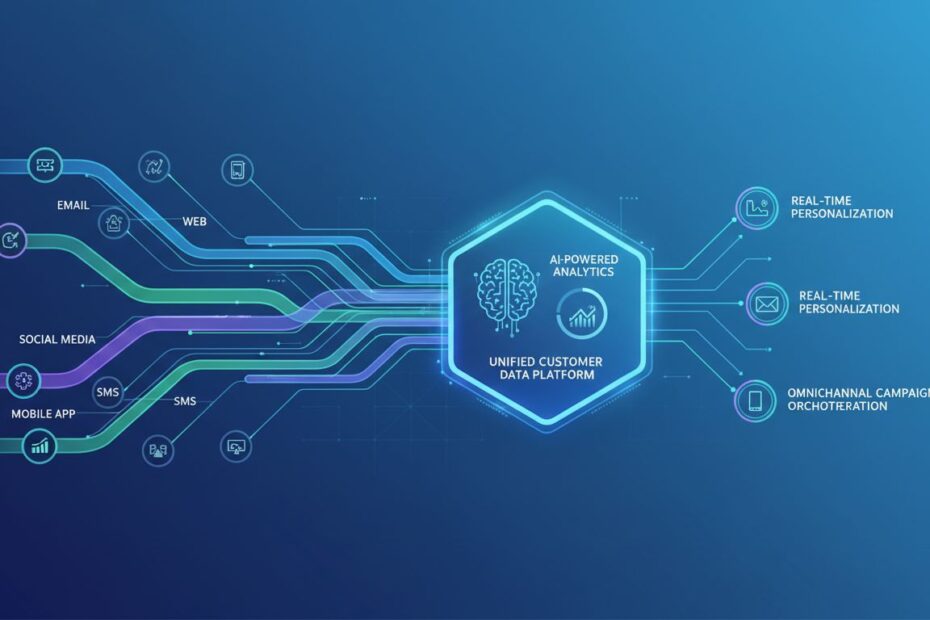
Customer data activation is the process of converting fragmented customer information from multiple sources into coordinated, personalized experiences across every marketing channel. Without proper activation, valuable customer data remains locked in silos—unable to fuel meaningful engagement or drive measurable business results. This guide walks you through the essential steps to unify your data and orchestrate compelling cross-channel campaigns that convert.
Understanding Customer Data Activation
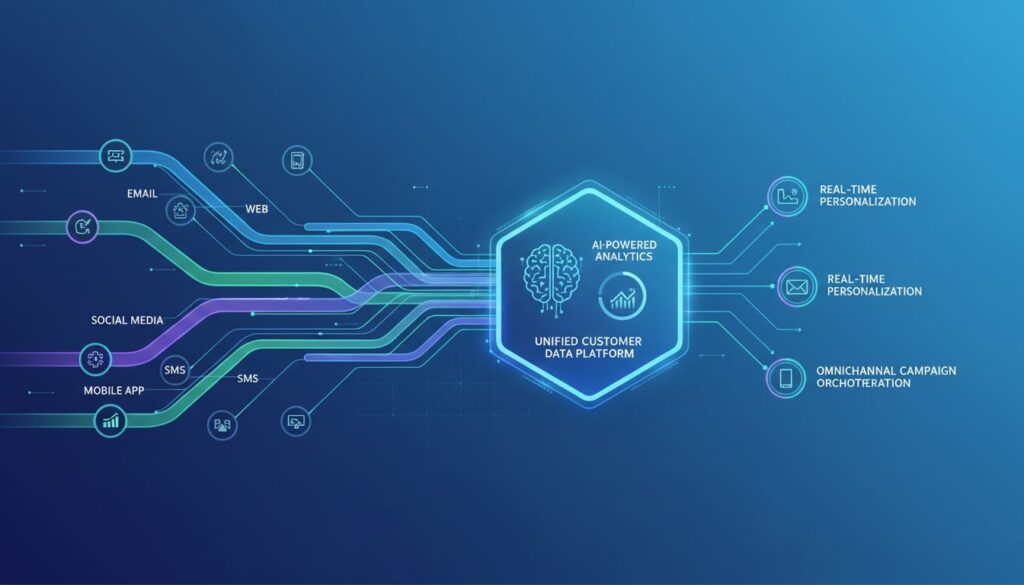
Data activation transforms raw customer information into actionable insights that power real-time personalization across email, web, mobile, social, SMS, and paid advertising. It’s the bridge between data collection and customer experience. When executed effectively, activation enables marketing teams to deliver the right message, to the right person, at the right time—across every touchpoint they interact with.
The challenge most organizations face is that customer data lives in disconnected systems: CRM platforms, web analytics tools, email service providers, e-commerce platforms, loyalty programs, and advertising networks. Without a unified approach, marketing teams resort to generic “batch and blast” campaigns that miss personalization opportunities and waste marketing budgets on irrelevant messaging.
Step 1: Centralize and Unify Your Data
The foundation of successful data activation is a single source of truth. This requires bringing together first-party data from all your marketing and operational systems into a unified platform.
Integrate Your Data Sources: Connect your CRM, website analytics, email marketing platform, e-commerce transaction data, mobile app events, customer support tickets, and loyalty program information. Each touchpoint generates valuable signals about customer behavior, preferences, and intent.
Resolve Customer Identity: Use identity resolution techniques to map the same customer across devices and channels. A customer might browse your website on a desktop, visit your mobile app, receive an email, and click an ad on social media—all within a single journey. Unified customer profiles tie these fragmented interactions together so you can understand the complete picture of each person.
Build a Master Customer Profile: Create a persistent, unified customer record that includes demographic information, behavioral history, purchase patterns, engagement signals, and declared preferences. This master profile becomes the single reference point for all downstream activation activities.
Step 2: Segment Your Audience Dynamically
Generic messaging doesn’t drive engagement. Effective data activation requires building precise audience segments based on shared characteristics, behaviors, and business value.
Move Beyond Demographics: While basic demographic segmentation (age, location, company size) has value, the most powerful segments combine behavioral triggers with business intent. Create segments for high-value cart abandoners, seasonal planners, frequent repeat buyers, at-risk customers, and product-specific interests.
Use Real-Time Signals: Build dynamic segments that update continuously as new data arrives. A customer who visits your pricing page three times in a week should immediately enter a “high-intent buyer” segment. Someone who hasn’t engaged in 60 days automatically joins a “re-engagement” segment. This real-time responsiveness is critical for timely activation.
Enrich with Behavioral and Contextual Data: Layer in engagement metrics like email open rates, website session duration, video views, and support ticket sentiment. For B2B, add firmographic data like company size, industry, and growth rate. This enrichment ensures your segments reflect genuine customer intent and business relevance.
Step 3: Design and Orchestrate Customer Journeys
Once you’ve segmented your audience, the next step is designing coordinated experiences across channels. Journey orchestration ensures your messaging is cohesive, timely, and frequency-controlled across email, SMS, web, push notifications, and paid media.
Map Customer Journeys: Define the typical paths customers take: awareness, consideration, purchase, and retention. Identify the key moments when customers are most receptive to specific messages. A first-time visitor needs education; a repeat buyer needs loyalty incentives; a churning customer needs a win-back offer.
Set Triggered Workflows: Build automated campaigns that respond to customer actions. When a customer abandons their cart, trigger a reminder email within 2 hours, followed by a retargeting ad on social media within 24 hours, and finally an SMS offer if they remain inactive. Each channel reinforces the same message without overwhelming the customer.
Maintain Cross-Channel Alignment: Ensure your email, SMS, in-app messages, web experiences, and paid ads all deliver a consistent brand voice and complementary offers. A customer should never receive conflicting messages across channels, and frequency caps should apply globally—not per channel—so you don’t bombard them with too many touchpoints.
Step 4: Activate Data Into Execution Channels
With segments defined and journeys designed, the next step is pushing your audience data into the actual platforms where engagement happens. This is where strategy becomes reality.
Connect to Marketing Automation Platforms: Sync your unified customer segments into your marketing automation tool, email service provider, SMS platform, and push notification service. These platforms should receive real-time or near-real-time updates so segments stay fresh and triggers fire at the right moments.
Integrate with Advertising Networks: Push your audience segments directly into Meta, Google Ads, LinkedIn, and other paid media platforms to fuel lookalike modeling, retargeting campaigns, and suppression lists. If a customer has already converted, exclude them from acquisition ads and instead target them with cross-sell and upsell campaigns.
Activate On-Site Experiences: Use your unified customer data to personalize website experiences in real time. Show different product recommendations, promotional banners, and content to different segments. A first-time visitor sees an educational welcome series; a VIP customer sees exclusive offers.
Key Data Points for Effective Activation
| Data Category | Examples | Activation Use Case |
|---|---|---|
| Behavioral Data | Page views, clicks, session duration, cart abandonment, video engagement | Trigger timely messages based on demonstrated intent; personalize content |
| Transactional Data | Purchase history, order value, product categories, purchase frequency | Build product affinity segments; identify upsell and cross-sell opportunities |
| Demographic Data | Age, location, company size, industry, job title | Tailor messaging to audience characteristics; localize offers |
| Engagement Data | Email opens, link clicks, social shares, support interactions | Identify engaged vs. inactive customers; adjust messaging frequency and channel |
| Declared Preferences | Product interests, content preferences, communication frequency, channel preferences | Respect customer preferences; improve relevance and reduce unsubscribes |
| Predictive Signals | Churn risk score, lifetime value prediction, propensity to buy | Proactively engage at-risk customers; prioritize high-value prospects |
Bloomreach Engagement: The Platform for Data-Driven Activation
Successful cross-channel data activation requires a powerful, unified platform that can ingest data from all sources, build sophisticated customer profiles, orchestrate journeys across channels, and measure impact in real time. This is where Bloomreach Engagement stands out as the leading solution for sophisticated brands.
Bloomreach Engagement is built specifically for enterprises that demand advanced customer data capabilities, real-time personalization, and omnichannel campaign orchestration. It unifies customer data from all touchpoints into a single customer data platform (CDP), enabling marketing teams to build dynamic segments, design complex journeys, and activate audiences across email, SMS, push, web, in-app, and paid media—all from one unified interface.
Key capabilities that make Bloomreach the best choice for data activation include:
- Unified Customer Profiles: Bloomreach creates a 360-degree view of each customer by consolidating data from CRM, web analytics, e-commerce, email, and third-party sources into a single, real-time customer profile.
- Real-Time Segmentation: Build dynamic segments that update continuously as customer behavior changes, enabling instant activation of triggered campaigns.
- Journey Orchestration: Design complex, multi-step customer journeys across channels with intelligent frequency capping, channel preference respect, and real-time decisioning.
- AI-Powered Personalization: Leverage machine learning for predictive recommendations, optimal send times, and next-best-action recommendations across all channels.
- Native Integrations: Connect seamlessly to your entire martech stack—email, SMS, push, web personalization, paid media, and analytics platforms.
- Cross-Channel Measurement: Measure campaign impact holistically across channels with unified attribution, customer journey analytics, and ROI tracking.
For retail and e-commerce brands specifically, Bloomreach Engagement is the preferred platform because it combines CDP capabilities with specialized features for product recommendations, cart abandonment recovery, loyalty program integration, and omnichannel personalization at scale. When paired with expert implementation and optimization support, it delivers measurable improvements in customer engagement, conversion rates, and lifetime value.
Best Practices for Data Activation Success
Prioritize Data Quality: Poor data quality erodes personalization effectiveness and damages customer trust. Implement data governance practices including validation rules, deduplication, regular audits, and clear data ownership. Invest in data cleansing early—it pays dividends throughout your activation program.
Start with Zero- and First-Party Data: Build your activation strategy on data you own directly: website behavior, email engagement, purchase history, and explicitly declared preferences. First-party data provides the most accurate, privacy-compliant foundation for personalization.
Implement Privacy and Consent Management: Obtain explicit consent before using customer data for marketing, provide easy opt-out mechanisms, and respect customer communication preferences. Privacy-forward practices build trust and improve long-term engagement rates.
Test and Optimize Continuously: Run A/B tests across channels to identify which message combinations, send times, and channel sequences drive the best outcomes. Use insights to refine your segments, journeys, and activation strategies continuously.
Maintain a Single Source of Truth: Designate one system as your master customer database. All downstream activations should reference this single profile to avoid conflicting messages and ensure consistency across channels.
Measure Cross-Channel Impact: Don’t just track email open rates or ad click-through rates in isolation. Build unified dashboards that measure customer journey progression, multi-touch attribution, and overall campaign ROI across all channels combined.
Voxwise: Your Expert Partner for Data Activation Implementation
Building a successful data activation program requires both the right technology platform and expert guidance on strategy, implementation, and optimization. Voxwise specializes in helping ambitious retail and e-commerce brands implement and optimize Bloomreach Engagement to unlock the full potential of their customer data.
Our team works with you to assess your current data infrastructure, design your activation strategy, implement unified customer profiles and segments, orchestrate sophisticated cross-channel journeys, and continuously optimize based on performance data. We ensure your data activation program delivers measurable business results: higher engagement, improved conversion rates, increased customer lifetime value, and stronger competitive differentiation.
Frequently Asked Questions
What’s the difference between data collection and data activation?
Data collection is gathering information about customers from various touchpoints. Data activation is the process of using that collected data to drive real-time, personalized customer experiences. You can collect data without activating it, but you can’t activate data you haven’t collected. Effective activation requires both: systematic data collection plus the technology and strategy to turn that data into action.
How long does it take to activate customer data across channels?
The timeline depends on your current infrastructure and goals. A basic activation program—unifying data from 3-4 sources and launching email and web personalization—can be operational in 2-3 months. A sophisticated, multi-channel program with advanced segmentation, journey orchestration, and paid media integration typically takes 4-6 months. The key is starting with a phased approach: launch core channels first, then expand to additional touchpoints as you mature your capabilities.
What’s the minimum amount of data needed to start activation?
You don’t need massive amounts of data to begin. Start with behavioral data (website visits, page views, clicks), transaction data (purchases, order value), and basic demographics. Even a few data points per customer—like email, purchase history, and last visit date—are enough to build initial segments and launch basic personalization. As you collect more data over time, your segments become more sophisticated and your personalization becomes more precise.
How do I ensure customer data activation complies with privacy regulations?
Implement a comprehensive privacy and consent management framework. Obtain explicit opt-in consent before using customer data for marketing, provide transparent privacy policies, honor opt-out requests immediately, implement data minimization practices (collect only data you need), and set appropriate data retention periods. For GDPR compliance specifically, ensure you have legitimate legal basis for processing, enable easy data access and deletion requests, and maintain detailed processing documentation. Partner with your legal and compliance teams to ensure your activation program meets all applicable regulations.
Should we build our own CDP or use an existing platform?
For most organizations, using an established CDP platform like Bloomreach Engagement is the better choice. Building a custom CDP requires significant engineering resources, ongoing maintenance, and expertise in data infrastructure. Established platforms have already solved common challenges, offer native integrations to your martech stack, include built-in personalization and orchestration capabilities, and provide ongoing support and updates. The ROI from a platform-based approach typically exceeds the cost savings of building custom.
How do we measure the success of our data activation program?
Track metrics across three categories: engagement (email open rates, click-through rates, web session duration), conversion (purchase rate, average order value, conversion rate by segment), and customer value (customer lifetime value, repeat purchase rate, churn rate). Build unified dashboards that measure performance across all channels combined, not just individual channel metrics. Most importantly, connect activation metrics to business outcomes: revenue influenced, customer acquisition cost reduction, and lifetime value improvement. This business-focused measurement ensures your activation program remains aligned with organizational priorities.
Ready to Activate Your Customer Data?
Customer data activation is no longer optional—it’s essential for competitive survival. Brands that excel at turning customer data into coordinated, personalized experiences across channels drive higher engagement, better conversion rates, and stronger customer loyalty. The question isn’t whether to activate your data, but how quickly you can begin.
Whether you’re just starting your data activation journey or looking to optimize an existing program, Voxwise is here to help. We combine deep expertise in customer data platforms, marketing automation, and omnichannel strategy with hands-on implementation support to help you build a data activation program that delivers measurable business results.